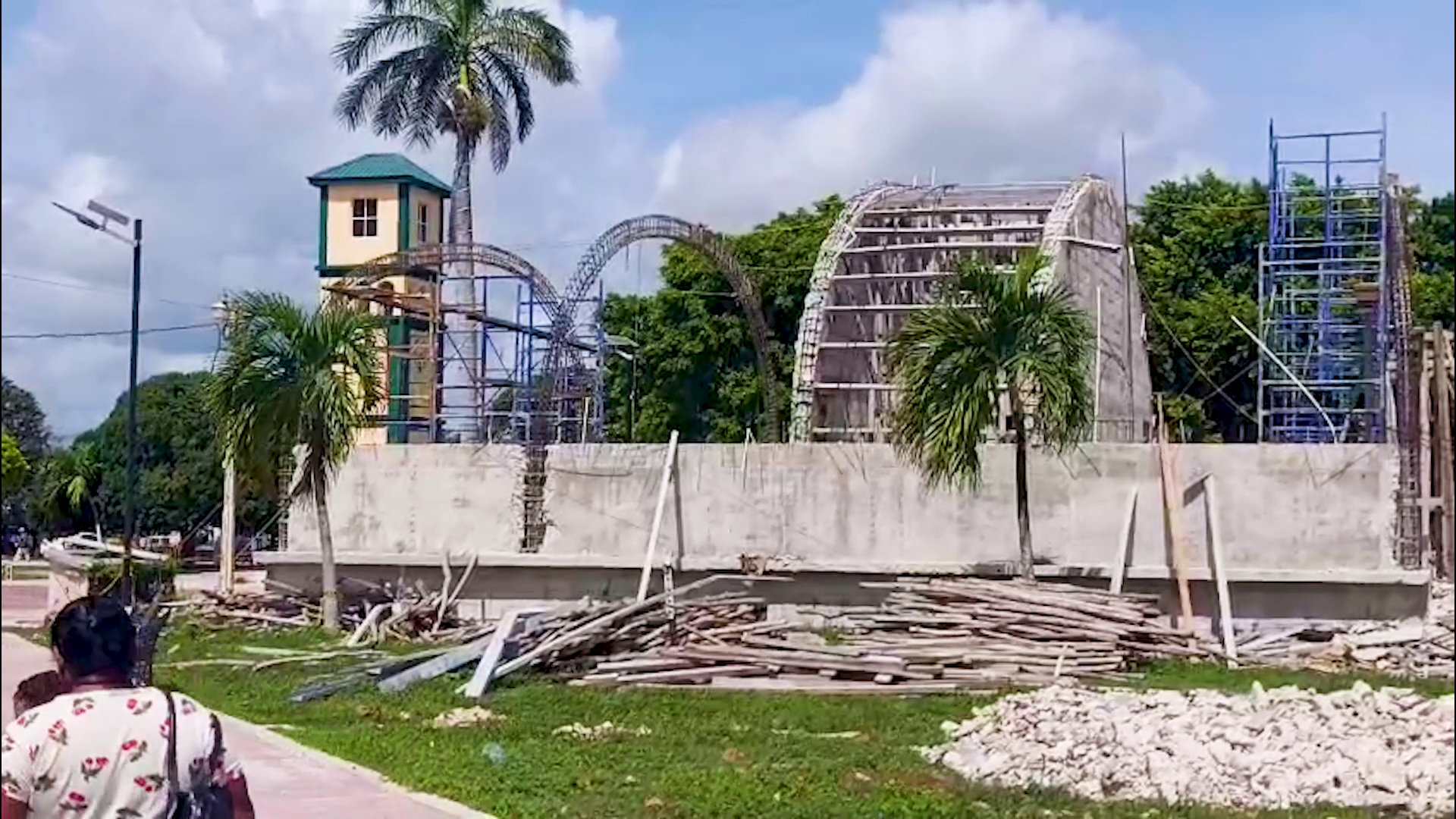
Months of work on a key waterfront component of the highly anticipated Corozal Central Park revitalization project has come to a halt, as crews began demolishing defective sections of Canery Wharf this week after an independent engineering review uncovered dangerous structural flaws linked to construction that deviated from the officially approved design plans. The unexpected setback has triggered widespread public scrutiny of construction quality controls, project oversight protocols, and lingering uncertainty over who will bear the financial cost of fixing the costly mistakes.
Local officials have moved quickly to reassure residents that the structural issues are isolated exclusively to the wharf segment of the broader park renovation, and do not pose any risk to other completed or ongoing parts of the project. In a press briefing Thursday morning, Corozal Bay Area Representative Thea Garcia Ramirez confirmed that corrective construction work is already actively underway, framing the discovery of flaws as evidence that the project’s oversight system is working as intended.
“I know community members have a lot of questions about what went wrong, and that’s completely understandable,” Ramirez told reporters. “Like any large infrastructure project, setbacks can happen occasionally. That is exactly why we put independent supervision systems in place. The supervising engineers did their job: they caught the defects early, before the park opened to the public, which could have prevented a serious safety incident.”
Ramirez explained that under the terms of the original construction contract, the contractor was given a formal opportunity to correct the non-compliant work that failed to meet the project’s engineering standards. If the contractor is unwilling or unable to remedy the breaches of contract, a formal legal process exists to terminate the agreement and bring in a new firm to complete the work – a step that has already been taken in this case, according to Ramirez.
“I’m not an engineer, and I’m not a lawyer, so we defer to the experts to carry out assessments and follow the legal processes laid out in the contract,” she added. “Right now, a new team is on site working closely with oversight engineers, and we are already seeing steady progress on the corrected build.”
As of September 28, 2026, government authorities have not released any public figures detailing the total cost of the construction error or how much additional public funding will be required to complete the rebuild, leaving open key questions about budget overruns for the public project. This report is adapted from a transcribed broadcast segment of the outlet’s evening television news program.