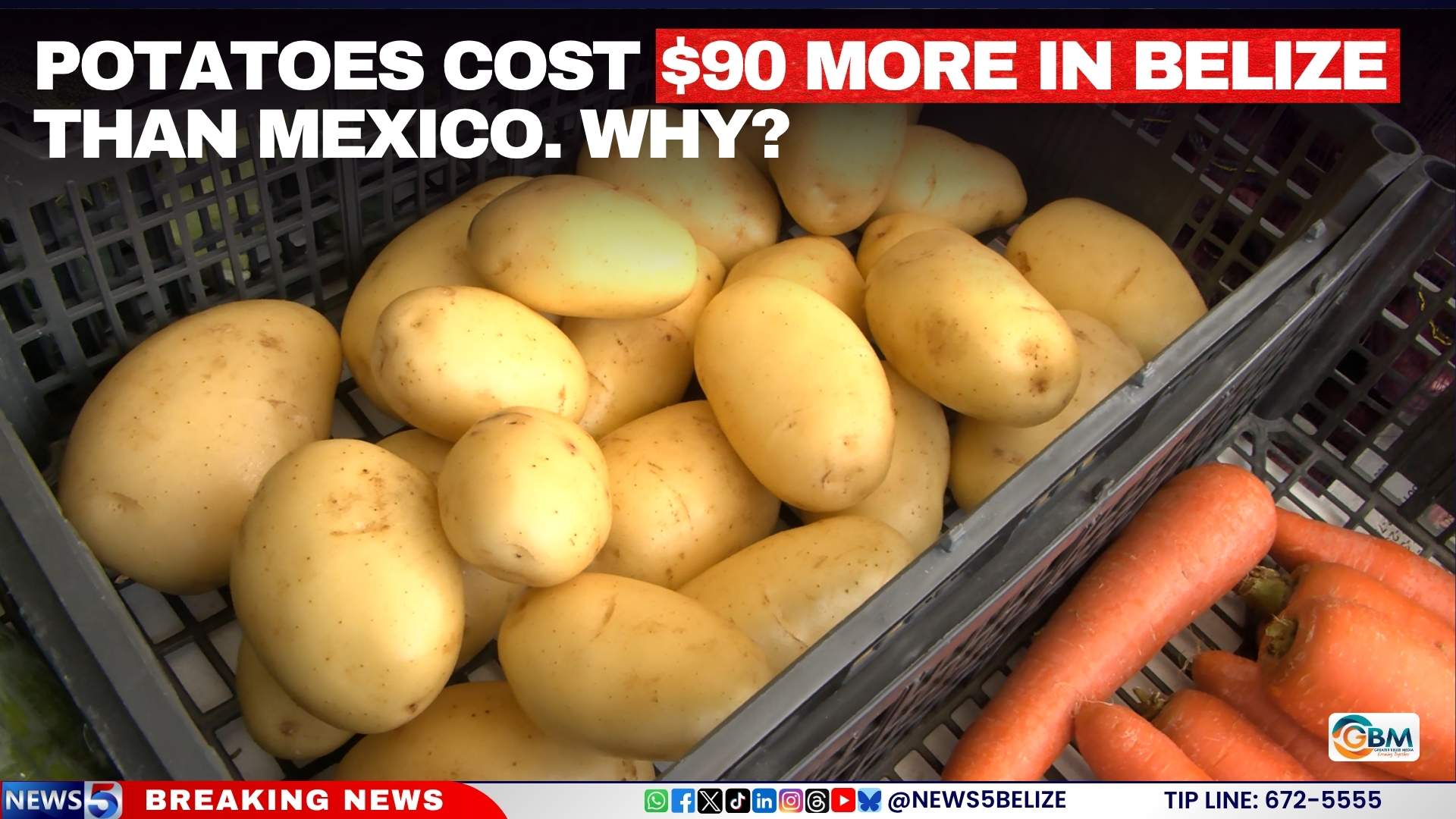
Across Belize, vendors and wholesale distributors are sounding the alarm over cripplingly high produce prices, which they attribute to the exclusive import monopoly held by the Belize Marketing and Development Corporation (BMDC) over key vegetable products.
At Belize City’s bustling Michael Finnegan Market, local vendors have raised dual complaints about both exorbitant costs and subpar quality of the produce they are forced to source through the state-controlled entity. Just miles away, at BMDC’s Orange Walk distribution hub, local outlet News Five observed convoys of trucks loading up on imported staples—including potatoes, onions, broccoli, cauliflower, carrots, lettuce and celery—bound for grocery stores and market stalls across the nation.
While some bulk buyers acknowledge that the quality of BMDC’s imported goods is acceptable for retail sale, nearly all agree that pricing remains the intractable core issue. Lester Lemus, a wholesaler operating in western Belize, explained that he currently pays more than $1.20 per pound for potatoes sourced through BMDC. Just across the border in Chetumal, Mexico, an identical sack of potatoes costs nearly $90 less—a gap that has squeezed margins and forced retailers to pass steep costs onto consumers.
When asked why he continues to source from BMDC despite the price difference, Lemus made clear that local vendors have no other option. “This is the only place we can buy. We don’t get import licenses for anything from the government. This is the only legal importer, and if we want to sell produce legally, we have to buy from them,” he said.
Lemus went on to note that the current system effectively functions as a monopoly, posing risks to both small businesses and ordinary consumers across the country. “As a business owner, I can absorb the extra costs to an extent, but as a Belizean, this should trouble all of us. Monopolies never benefit the general public in any way,” he added.
BMDC administrators have pushed back on claims of an abusive monopoly, noting that the agency does not oppose competition—including from informal cross-border traders. Administrator Valentin Carillo clarified that the restriction on multiple importers does not stem from BMDC policy, but rather from import permit regulations overseen by the Ministry of Agriculture, which controls permits for key vegetable products.
Senior Project Officer Sergio Tillett defended the current single-importer structure, arguing that opening up the market to multiple independent importers would make supply management far more difficult when domestic potato and vegetable production increases. “If you leave imports open to ten different importers, how can regulators control what volume of product enters the country? That would create a glut when local farmers harvest their crops, undercutting domestic producers,” Tillett argued.
BMDC leadership also cited external market factors driving up prices, including unfavorable exchange rate fluctuations and rising shipping and logistics costs across the northern border with Mexico. Carillo acknowledged that the agency has room to adjust, saying BMDC could trim its own profit margins to ease cost pressure on retailers and consumers. However, he added that the agency is required by regulation to remain financially self-sufficient, limiting how much it can cut prices.
As consumers across Belize continue to bear the burden of inflated produce costs, News Five has planned a primetime special investigation into the system that keeps BMDC as the sole legal importer, asking how much extra ordinary Belizeans are paying to keep the state-owned agency profitable. The broadcast is scheduled to air tonight at 6 p.m., and residents are encouraged to tune in for the full investigation.