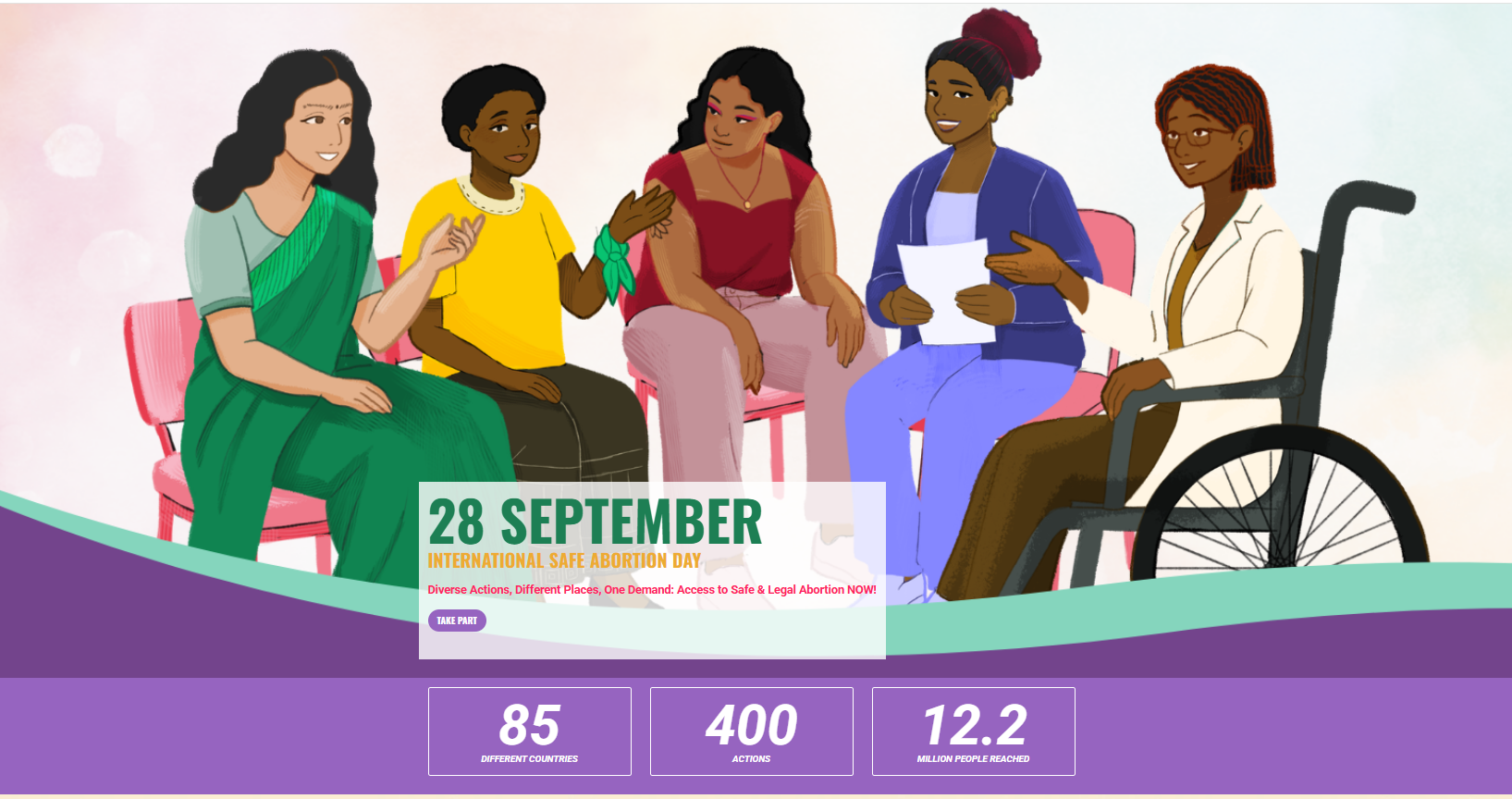
On International Safe Abortion Day, reproductive health advocates from the Caribbean are issuing a clear, urgent call: Access to Safe and Legal Abortion NOW. Contrary to common misperception, this annual observance is not about promoting abortion—it is centered on advancing safe care for women and girls, a goal that cannot be achieved under the region’s century-old restrictive criminal abortion laws.
For more than 150 years, the Caribbean has enforced severely restrictive criminal laws banning or severely limiting access to abortion. Paradoxically, this has left the region with the highest abortion rate in the world—a fact that undermines the argument put forward by many religious leaders who claim to defend the “sanctity of life” by opposing abortion access. Today, only two English-speaking Caribbean nations allow legal, safe abortion: Barbados and Guyana.
Public health data from these two countries makes the benefits of decriminalization unambiguous. In Barbados, over the first decade of legal abortion (1983–1992), hospital admissions for unsafe abortion complications dropped by 71%. In Guyana, which has permitted legal abortion for 30 years (1995–2025), that number has fallen by 97%, with almost zero life-threatening complications from unsafe procedures reported today.
To test whether this trend holds globally, reproductive health researchers analyzed data from 154 countries, categorizing them by abortion rate (high: >30, medium: 15–30, low: <15 per 1000 women of reproductive age) and regulatory status (criminalized vs legal). The findings were statistically significant: 62% of countries with high abortion rates criminalize abortion, while 96% of countries with low abortion rates allow legal abortion. This data directly contradicts unfounded claims that legalizing abortion encourages immoral behavior, erodes social values, weakens family planning, or leads to higher abortion rates. On the contrary, experience from Barbados and Guyana confirms that legalization correlates with fewer abortions, not more. In Barbados, the number of abortions performed at Queen Elizabeth Hospital fell by 53% over 10 years, with an even steeper 59% drop among teen patients. In Guyana, the overall abortion rate has fallen by 20% since legalization, while the rate of unintended pregnancy has dropped by 28%. The decline in unintended pregnancies is clear evidence that legalization improves family planning outcomes in the region. After abortion was legalized in Guyana, nearly all women who received abortions at Georgetown Public Hospital requested long-acting reversible contraception (LARC) such as intrauterine devices (IUDs) or implants. This widespread shift to more effective contraception has directly driven the reduction in unplanned pregnancies. Given this overwhelming global and regional evidence, and 150 years of documented catastrophic harm caused by criminal abortion laws, it would seem logical for Caribbean policymakers to embrace decriminalization as a common-sense public health measure. Unfortunately, regional political leadership remains captive to religious dogma, which refuses to accommodate empirical evidence. Policymakers continue to ignore the obvious harm caused by restrictive laws, bury their heads in the sand, and claim to defend the sanctity of life while allowing thousands of women and girls to suffer life-threatening complications from unsafe clandestine procedures. Out of fear of sending the wrong moral signal, Caribbean governments retain criminal abortion laws that do nothing to reduce the number of abortions. Instead, these laws create an unregulated, underground industry that guarantees harm disproportionately to poor women and girls—all done in the name of defending the sanctity of life. Advocates frame this as blatant hypocrisy and unnecessary cruelty that endangers the lives of the unborn, girls, and women across the region. This op-ed is signed by Dr. Tonia Frame, PhD, President of the Grenada Planned Parenthood Association (GPPA), a Trustee of the Caribbean Family Planning Affiliation (CFPA), and Assistant Professor in the Department of Public Health and Preventive Medicine at St George’s University, and Dr. Fred Nunes, PhD, founder of ASPIRE — Advocates for Safe Parenthood: Improving Reproductive Equity, Advisor to the CFPA and GPPA, and former Head of Management Studies at The UWI, Mona. NOW Grenada expressly disclaims any responsibility for the opinions and statements shared by contributors. Readers may report any abusive content per the outlet’s community guidelines.