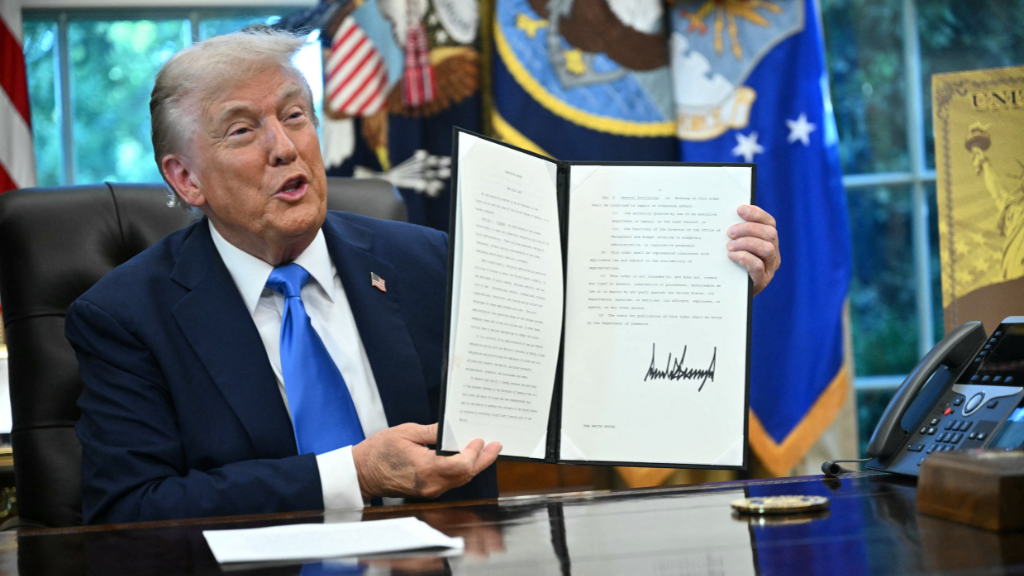
WASHINGTON – In a controversial move to slash federal spending that has reignited a decades-long debate over the separation of powers between the executive and legislative branches, the Trump administration has launched an effort to revoke $810 million in congressionally approved spending, with a large share of the cuts targeting programs that support refugees, immigrants and marginalized communities.
The White House made the announcement public on Friday, confirming that President Donald Trump is leveraging a little-used procedural tool called a “pocket rescission” to eliminate funding the administration has labeled as unnecessary and wasteful. Among all the proposed cuts, the single largest reduction targets $567 million allocated to Department of Health and Human Services programs that provide critical services to refugees, asylum seekers, unaccompanied migrant minors and other non-citizen groups. Additional cuts will extend to a range of other initiatives, from other immigration-related programs to public education, affordable housing, support for minority-owned small businesses and more.
In defending the policy shift, administration officials argue that the immigration-focused funding is no longer required, pointing to a sharp recent drop in illegal border crossings as the core justification for the cuts. However, the action has drawn sharp bipartisan and inter-branch criticism, with legal and constitutional scholars, as well as key congressional lawmakers, questioning whether the president has the authority to unilaterally cancel spending that has already been formally approved by Congress without explicit consent from elected lawmakers.
Senator Susan Collins, a Republican from Maine who serves as chair of the powerful Senate Appropriations Committee, has emerged as one of the most prominent critics of the move. Collins slammed the action as a direct violation of Congress’ constitutionally granted authority over federal spending, noting that legislative branch received the full $810 million rescission package with no advance consultation from the White House.
The core of the current dispute stems from the timing of the administration’s use of the pocket rescission mechanism. The proposal comes just weeks before the end of the current federal fiscal year, a timeline that leaves Congress with almost no time to review, debate or reject the proposed cuts before the existing funding is set to expire. This is not the first time questions have been raised about the legality of this approach: the nonpartisan Government Accountability Office, Congress’ official independent oversight body, has previously ruled that this type of unilateral rescission is not permitted under the 1974 Impoundment Control Act, the federal law that governs how executive branch can handle unspent congressionally allocated funds.