Not so long ago, securing access to your favorite track required more than a few clicks — it demanded patience. Fans would hover beside their radios, blank cassettes cued in the deck, waiting to hit record the second their chosen song began. Mahalia Cummins, a Barbadian music lover, holds vivid memories of this ritual: staying up late to capture radio tracks, hunting for CDs at Cave Shepherd’s iconic Number One Record Shop, and later shifting to digital purchases through Apple’s iTunes platform.
Looking back, Cummins says physical music ownership carried a unique weight. “Back in the day, when you had to essentially go and buy a physical copy of the music… you would cherish [it] because it was now yours. You owned it,” she shared. Cummins’ six-decade journey through music consumption — from cassettes to CDs, digital downloads to modern streaming — mirrors the sweeping shift in how Barbadians have discovered and enjoyed music since the country gained independence 60 years ago.
This evolution is the focus of a special national project called BIM@60, launched by the Barbados Museum & Historical Society in partnership with the National Cultural Foundation to mark the island’s 60th independence anniversary through the lens of music. At its core, the initiative asks a deceptively simple question: which songs have defined the Barbadian national story over the past 60 years?
The project started with a curated shortlist of more than 300 tracks, expanded with public submissions gathered during 60 days of cross-platform radio and television promotion. Now, BIM@60 is calling on all Barbadians — both residents and those living in the global diaspora — to narrow the list down to 60 defining songs that capture the nation’s identity. Far from just another greatest hits countdown, the initiative frames music as a living historical record: it preserves local experiences, collective celebrations, shared struggles, and distinct creative expression, while mapping how Barbadian society has transformed across generations.
A key part of that transformation is how music reaches audiences, and who holds the power to turn a track into a hit. In the 1960s and 1970s, radio, vinyl records, DJ sets, community dances, and live performances were the primary distribution channels for new music. These platforms carried the sounds of foundational Bajan artists from Jackie Opel and The Merrymen to Sing Out Barbados, and later calypsonians who wove everyday Barbadian life into sharp social and political commentary. While these traditional avenues still exist, they no longer hold a monopoly on audience attention.
Today, a new track can go viral long before it ever gets airtime on traditional radio: it can spread via WhatsApp group chats, land on thousands of personal streaming playlists, and get attached to hundreds of TikTok and Instagram Reels before traditional gatekeepers even notice. Where listeners once waited for others to schedule their music, they can now search, replay, share, and organically propel songs to fame on their own.
This new landscape raises a critical question for industry insiders: what actually counts as a Bajan hit in 2024? Veteran producer Nicolas Brancker, who has worked with legendary local acts including Krosfyah, Rupee, Alison Hinds, Square One, RPB and AC, says the definition matters more than ever in an era where viral online hype can make a track seem ubiquitous overnight.
“I do think we should make a distinction between popular songs based on hype and actual bona fide hits,” Brancker explained. “Some songs are gimmicks, novelties that generate interest, hype and attention but no real economic activity, they are not hits. They are popular.”
Brancker has watched the entire production process evolve alongside consumption: from the early days of live recordings at Rediffusion and CBC, through decades of multitrack studio recording, to today’s setup where just a microphone, audio interface and laptop can turn any space into a functional recording studio. But even with all this technological advancement, he notes, no tool can guarantee a hit.
“No one goes into the studio or [uses a] computer to make hits,” he said. “They may want to or even think that they are but they just can’t know. They can make the best thing they think they can make at the time and see what happens.” For Brancker, a genuine hit stands the test of time: it crosses national and demographic borders, and generates sustained commercial value for copyright and master recording owners.
He argues that the path to that success has shifted dramatically, with a “combination of algorithms and audience engagement” now driving music popularity — giving ordinary listeners a level of influence that was once held almost entirely by traditional industry gatekeepers.
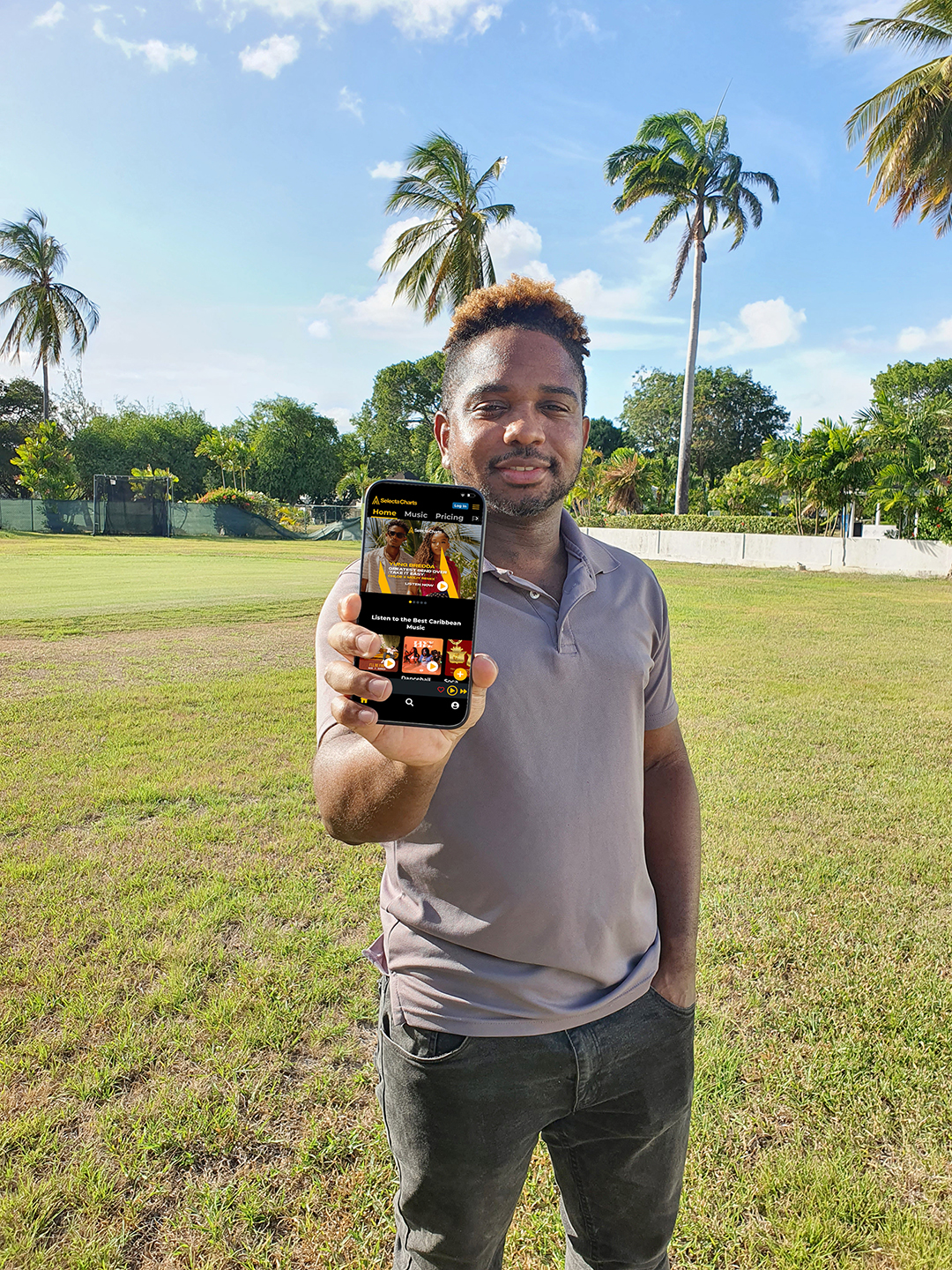
Paul Husbands, founder of regional music platform Selecta Charts, has watched this shift play out firsthand as technology put more control in listeners’ hands. When Husbands first began developing his platform back in 2011, CDs were still a core distribution method for local music. By the time the platform launched in 2017, he was already urging local artists to pivot to the future of the industry: streaming.
“Back in the day when you wanted to listen to music… you had to listen to it on the radio or even on TV. So, you had to wait for your favourite song to come out,” Husbands recalled. “With the advent of streaming platforms, you could go and listen to your favourite song on demand. So you can go and hit replay on all your favourite songs all day long.”
Social media has accelerated that shift even further, giving listeners not just control over when they listen, but the power to spread music organically. “Right now, social media is where music blows up first,” Husbands said. He points to breakout Barbadian artist Lastacia as a perfect example. In 2026, a TikTok video where Lastacia opened up about her personal relationship went viral, drawing massive new attention to her work. She leveraged that momentum to promote her track *Active* — which, remarkably, had already been released two years prior. “She walked into [her success],” Husbands noted. “It was not even an intention because she had made a video speaking about her man [on TikTok] and it went completely viral and so many eyes were on her.”
Even when viral attention lands, though, it takes more than views to make a song stick. Radio personality Astra Babb says relatability remains the key factor that turns a passing viral trend into a song audiences truly embrace. “Whether it’s about relationship issues, work problems, money problems, releasing stress, we want to see ourselves in the song,” she said.
Babb points to the genre of bashment soca, which has earned massive local and regional appeal in recent years partly because it offers much-needed escape. “There’s a lot going on in the world right now, and people are carrying enough already. So when they get the chance to put on music, they want to forget about all of that for a little while,” she explained. The genre also fits perfectly into modern social media culture, where listeners are no longer passive consumers: they dance to tracks, create original content, quote lyrics, share songs, and contribute to the viral momentum around a hit.
“They’re finding it themselves and, in many cases, helping decide what becomes popular,” Babb said. This shift has reshaped radio’s role in the industry, but not eliminated it, she added: “Social media can create the buzz; radio can amplify it and keep that song in people’s ears.”
Even DJs and live events still hold significant power. Cummins notes that repeated plays at festival events like Crop Over can still turn a track into a widely accepted hit. “If you go to 17 fêtes at Crop Over and somebody plays the same song all the time, at some point it got to be considered a hit, right?” That said, today’s fragmented landscape means a track can be a hit in one community while remaining unknown to mainstream radio listeners: an underground hit can draw massive audiences outside traditional industry channels.
Six decades after independence, the pathways for music are far more fragmented and unpredictable than they once were. A new track can go from a bedroom studio to a creator’s phone, to a friend’s chat, to a viral Reel, to a fête stage, to radio — or take any other unplanned route. There is no longer a single gatekeeper with the power to anoint a Bajan hit, and as the industry adapts to this new reality, another major shift is already on the horizon: generative artificial intelligence is beginning to reshape both music creation and discovery.
Cummins hopes AI will remain a tool for human artists, rather than a replacement for the human experience at the heart of music making. “My hope is that if we can’t get away from using AI, generative AI specifically, that it’s used by the artistes and people making music, the music makers, as a tool to assist the art, the organic art of song making,” she said. “If AI is now encroaching on the process of making art… and taking the creativity and the human experience out of it then to me that’s problem.”
From cassettes to CDs, from downloads to streaming, from radio to algorithmic playlists and viral social media, the infrastructure of music has transformed repeatedly. What comes next is impossible to predict, but Cummins says the core role of music remains unchanged. “Music is the universal language for a reason. It existed from the dawn of time and I think it will exist way past AI.”
That enduring connection between music, collective memory, and national identity is the heart of BIM@60. As Barbados reflects on 60 years of independence, the public has until October 15 to cast their votes for the 60 songs that best tell the nation’s story. Those interested can participate by visiting the Barbados Museum & Historical Society website, clicking “Learn more” on the project landing page, and logging in via Facebook, Google or LinkedIn to explore the shortlist and vote. Voters can select up to 10 tracks across categories and revise their choices before voting closes. Organizers are encouraging all Barbadians, at home and abroad, to share their musical memories and invite family and friends to take part in shaping the official soundtrack of modern Barbados: 60 Years, 60 Songs, One Nation’s Soundtrack.