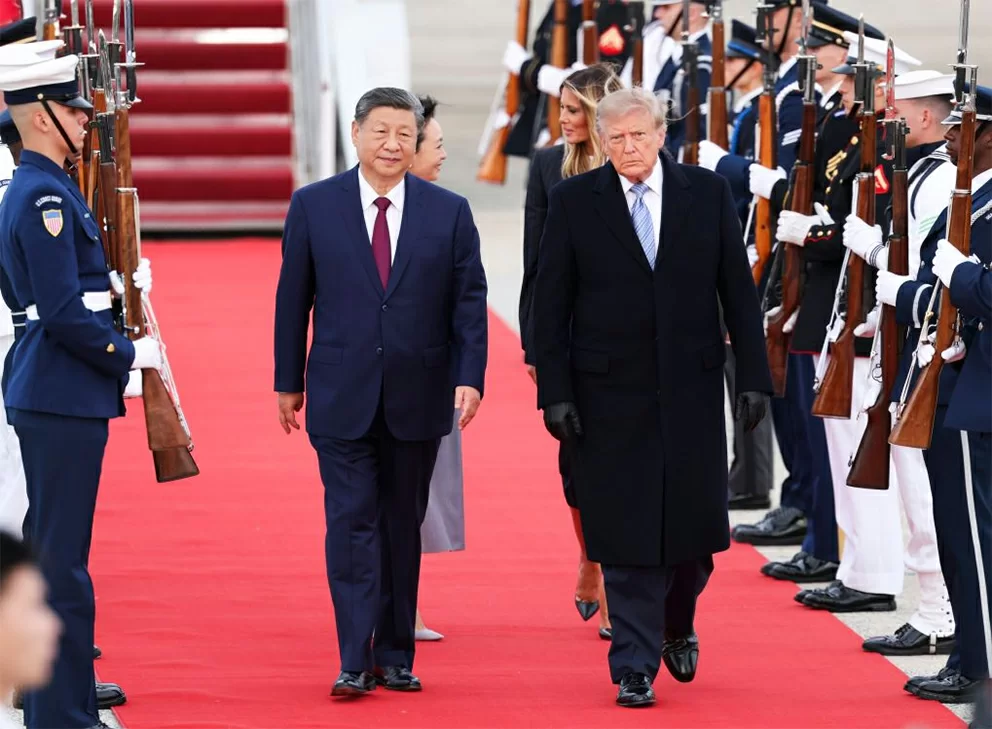
In a high-stakes diplomatic milestone that has reshaped the trajectory of bilateral relations, Chinese President Xi Jinping touched down at Joint Base Andrews on September 23, 2026, to begin a three-day state visit to the United States, hosted by U.S. President Donald Trump, who personally greeted the Chinese leader on arrival. Over the course of consultations held from September 23 to 25, the two top leaders concluded negotiations that produced eight concrete, actionable agreements spanning economic cooperation, artificial intelligence governance, counternarcotics, military coordination and multilateral engagement, marking one of the most significant breakthroughs in China-U.S. ties in recent years.
A core guiding principle anchored all discussions: both nations reaffirmed their shared commitment to building a “constructive China-U.S. relationship of strategic stability” rooted in the foundational values of mutual respect, fair dealing and reciprocal benefit. This overarching framework set the tone for all substantive talks on key policy areas.
On economic and trade ties, one of the most high-priority topics on the summit agenda, the two sides expressed full backing for existing consultation mechanisms between their respective economic and trade working groups, and formally endorsed the outcomes of recent bargaining sessions. Key commitments include advancing the establishment and expansion of a joint Board of Trade and additional cooperative dialogue frameworks, as well as implementing a reciprocal tariff reduction package valued at $30 billion. The leaders also agreed to carry forward previous economic and trade agreements reached during earlier talks in Kuala Lumpur, and issued a formal directive to their economic teams to begin full implementation of all new commitments without delay.
In the emerging domain of artificial intelligence governance, the two countries announced the creation of a formal, dedicated China-U.S. AI Dialogue. This platform will enable systematic exchanges of information and perspectives on both the transformative opportunities and growing systemic risks posed by advancing AI technologies. The first formal meeting of the new dialogue is scheduled for November 2026, and the sides also agreed to establish a direct communication channel to manage and de-escalate unplanned incidents involving AI systems.
On military relations, the two nations committed to finalizing a memorandum of understanding on crisis communication and conflict de-escalation as quickly as possible, to reduce the risk of unintended confrontation. They also agreed to continue longstanding cooperative work to recover the remains of U.S. service members listed as missing in action within Chinese territory.
Counternarcotics cooperation emerged as a standout example of practical collaboration between the two powers even amid broader disagreements. Both sides highlighted the tangible progress of joint law enforcement efforts, noting that Chinese and U.S. authorities have jointly dismantled multiple trafficking networks involving new psychoactive substances and precursor chemicals, leading to the arrest of dozens of suspects across both countries.
On regional and global issues, the two leaders aligned on the need for Iran to uphold its longstanding commitments to refrain from developing nuclear weapons. They also addressed freedom of navigation on international waterways, with both sides endorsing the principle that no country or international body has the right to impose unauthorized tolls on transit through these global common spaces. The talks also included a reflection on the shared history of China and the United States as wartime allies during the Second World War.
Looking ahead to multilateral leadership, China and the United States agreed to mutually support each other in hosting upcoming APEC Economic Leaders’ Meeting and G20 summit, with both presidents confirming their plans to attend each other’s scheduled events. This commitment underscores the two nations’ push to sustain high-level diplomatic engagement moving forward.
In a symbolic gesture designed to warm public sentiment amid years of strained relations, the summit also produced one widely noted cultural agreement: China will loan two giant pandas to Zoo Atlanta, continuing a decades-long tradition of panda diplomacy that has long served as a barometer of the warmth of bilateral people-to-people ties.