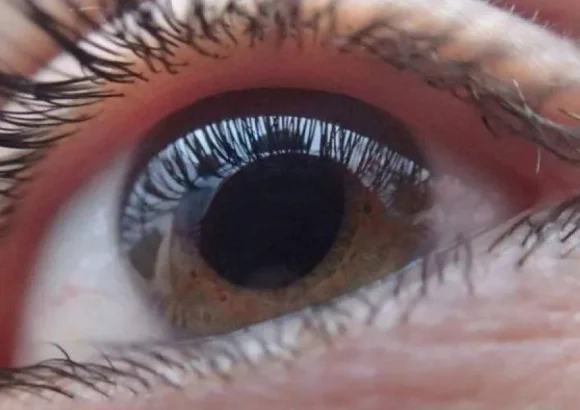
Against the backdrop of international retinal health commemoration, public health stakeholders in the Dominican Republic are amplifying a critical message about the urgent need for early recognition of retinitis pigmentosa (RP), a rare group of inherited eye conditions that gradually destroys the light-sensitive photoreceptor cells in the retina.
While RP is categorized as a low-prevalence, or rare, disease, leading Dominican ophthalmological institution the Espaillat Cabral Institute confirms that the irreversible damage it inflicts on patients’ independence and quality of life makes it an ongoing unaddressed medical and social challenge for the nation.
Unlike many common eye conditions, RP is not contagious, nor does it develop from external environmental factors. Its root cause lies in inherited genetic mutations passed through family lines. What makes the condition particularly tricky to catch early, according to data from the country’s specialized vision health centers and clinical units, is that its gradual onset of visual decline is often misattributed to everyday eye strain or more common refractive errors like myopia and astigmatism, leading to delayed diagnosis for many patients.
Symptoms of RP typically emerge during childhood or the teenage years, progressing slowly but consistently over decades. The condition has several key warning signs that patients and primary care providers should not overlook. The first and most commonly reported early symptom is nyctalopia, or night blindness: affected people struggle severely to navigate or see in low-light environments, including at dusk or in dimly lit indoor rooms.
A second core symptom is progressive peripheral vision loss, which leads to a narrowing of the lateral visual field often described as “tunnel vision.” People with advanced tunnel vision frequently trip over objects positioned at their sides or low to the ground, as these fall outside their restricted field of view.
Additional warning signs include difficulty adjusting to sudden shifts in lighting: the eye takes an abnormally long time to reset when moving from a bright space to a dark one, or the reverse. In later, more advanced stages of the condition, patients also experience impaired color discrimination, eventually losing the ability to tell different color shades apart.
Local retina specialists are urging the public not to dismiss persistent visual changes: anyone who experiences recurring difficulty seeing in low light or notices a steady reduction in their peripheral vision is advised to avoid normalizing these symptoms and schedule a comprehensive evaluation with a qualified retina specialist as soon as possible.