A high-stakes contractual conflict over two major hospital construction projects in Guyana has reached the Court of Appeal, as Austrian healthcare infrastructure specialist VAMED Engineering GmbH moves to overturn a recent Full Court ruling that cleared the way for the Guyanese Ministry of Health to seize project sites and resume construction amid ongoing international arbitration.
At the heart of the dispute is a €45.3 million payment claim VAMED has brought against the Guyanese government, which the company says represents overdue payments for completed substantial works, contract variations, price indexation, additional on-site tasks and other legally binding contractual entitlements. Of that total, at least €19.5 million is tied to certified completed work on the two facilities: the Georgetown Paediatric and Maternal Hospital (GPMH) on East Coast Demerara and the New Amsterdam Hospital Campus (NAHC). VAMED also notes that the government’s own independent engineering consultant has previously calculated Guyana’s outstanding debt to the firm at approximately €37.94 million.
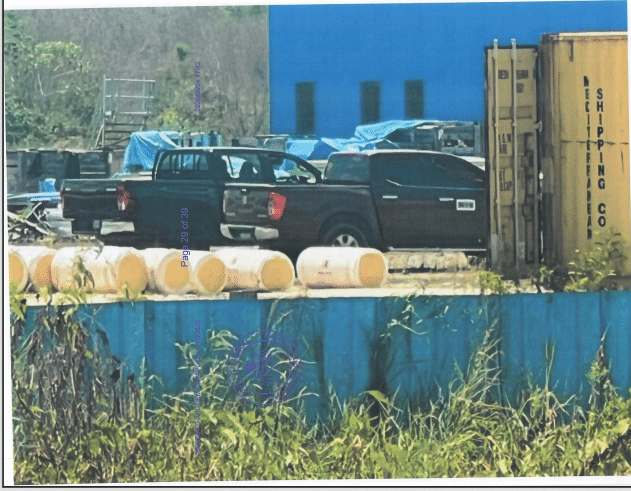
The Full Court’s September 22, 2026 ruling overturned an earlier preservation order issued by trial judge Justice Renita Singh on August 6 that barred both parties from tampering with VAMED’s assets on the project sites. Under Justice Singh’s original order, the Ministry of Health was required to leave 52 shipping containers holding high-value equipment, as well as other construction assets including heavy cranes, power generators and building materials, undisturbed at the GPMH site. Only VAMED’s own security personnel were permitted to access the site for the sole purpose of securing the containers and equipment, while both parties were ordered to preserve all project documents, design plans and intellectual property related to the build.
Since the Full Court’s decision went into effect, VAMED claims Ministry of Health officials have already entered both project sites and begun disturbing the company’s property, including opening and dispersing the 52 containers that hold an estimated €32 million worth of equipment and materials. In a sworn affidavit submitted to the Court of Appeal, VAMED employee Aaron Heward Mills argues that the ongoing incursions are causing irreversible, ongoing harm to the firm’s assets. “Once the property is removed, dispersed or damaged, it cannot be restored to its original condition or location,” Mills wrote in the affidavit.
VAMED’s legal team, led by attorney-at-law Nigel Hughes, argues that the Full Court made multiple critical errors of law in overturning the original preservation orders. Hughes emphasized that the preservation orders issued by the trial judge were legally distinct from the conservatory orders Justice Singh had previously declined to grant, noting that the preservation measures were never intended as injunctions against the state, but rather as targeted protections to safeguard assets pending the outcome of arbitration. Hughes further argued that the Full Court incorrectly failed to distinguish between prohibited injunctive relief against the state — which is barred under Guyana’s State Liability and Proceedings Act — and court-ordered preservation measures, which fall under the court’s inherent jurisdiction and are explicitly authorized by the 2024 Arbitration Act. That statute grants Guyanese courts clear authority to issue interim protective measures to support ongoing arbitral proceedings, a protection the Full Court’s ruling has eliminated entirely, leaving VAMED with no safeguards for its assets ahead of the arbitral tribunal’s formation, the firm argues.
In upholding the government’s appeal of the trial judge’s order, the Full Court justified its ruling by finding that the original preservation orders conflicted with the trial judge’s own earlier findings that there was no urgent need for relief and that monetary damages would be a sufficient remedy for any harm VAMED suffered. The Full Court also ruled the orders lacked a valid statutory basis under the 2024 Arbitration Act and agreed with the Attorney General’s Chambers that the prohibition on injunctions against the state could not be bypassed by reclassifying restrictive conduct orders as preservation measures.
On the payment dispute, the Guyanese Ministry of Health has pushed back against VAMED’s claims, citing months of documented concerns about project delays, missed construction milestones, insufficient mobilization of labor and resources, and the contractor’s failure to maintain the work pace required to complete the hospitals on schedule. These issues have been the subject of extensive contractual correspondence between the two parties for months, the ministry notes.
VAMED’s current application before the Court of Appeal seeks both to overturn the Full Court’s ruling and to secure a stay of execution on the September 22 order that allowed the government to take over the sites.