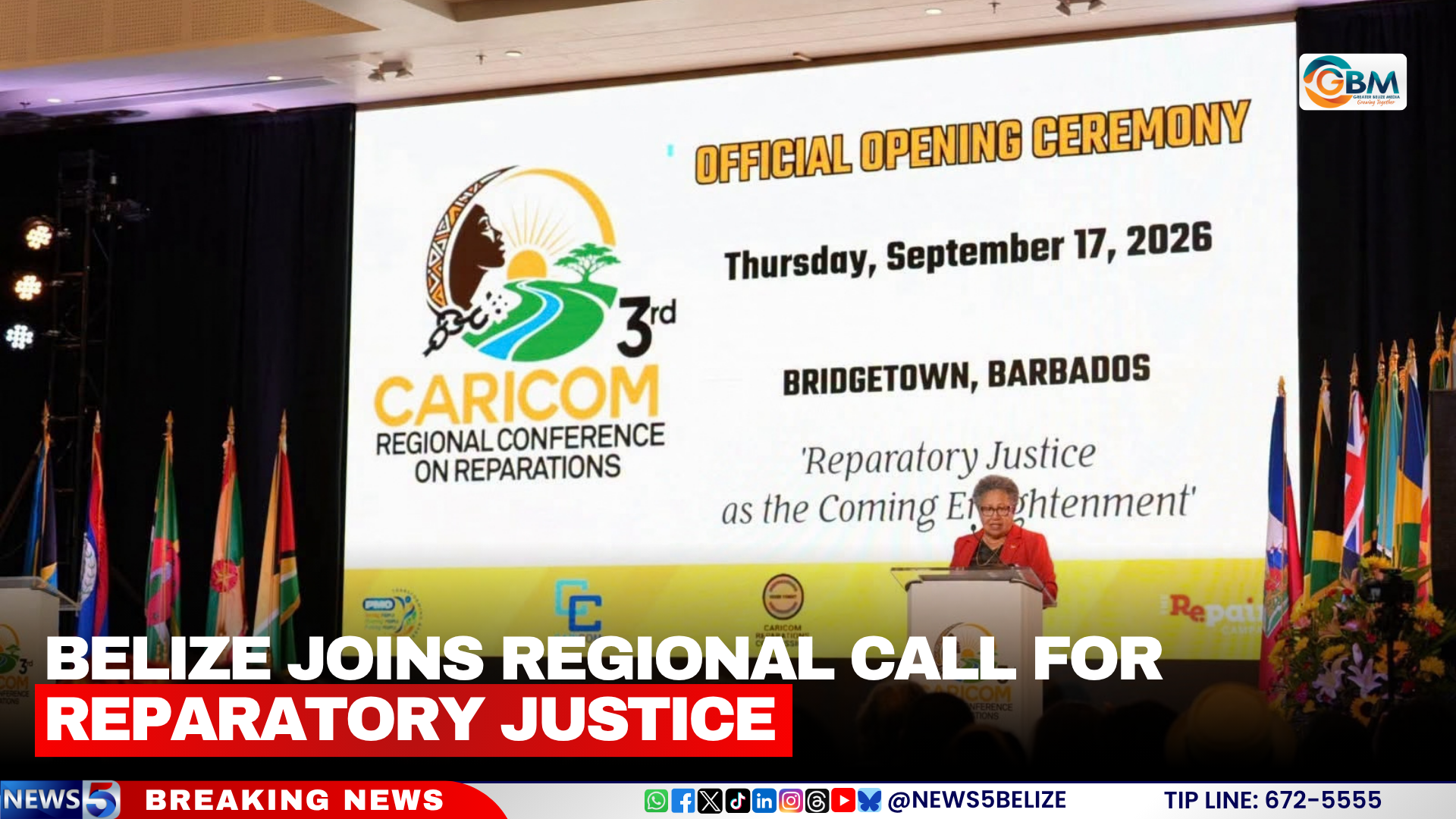
In a significant step forward for the Caribbean reparations movement, Belize has added its voice to a coordinated regional call for reparatory justice, aligning with fellow Caribbean Community (CARICOM) nations to push for tangible redress for the intergenerational harms of slavery and colonialism. The renewed advocacy emerged from the Third CARICOM Regional Conference on Reparations, held from September 17 to 19, 2026, in St Philip, Barbados, where delegates gathered under the conference theme “Reparatory Justice as the Coming Enlightenment.” Nuri Muhammad served as Belize’s official delegate, representing the country’s Pro-Tem Reparations Committee at the three-day event.
The conference brought together policy leaders, advocacy representatives, and legal experts from across the 15-member CARICOM bloc to coordinate strategy, strengthen collective advocacy, and advance the region’s shared reparations agenda. A centerpiece of the gathering was the official relaunch of CARICOM’s updated Ten-Point Plan for Reparatory Justice, a revised framework that expands on the bloc’s original demands to address the persistent, systemic harms created by centuries of transatlantic chattel slavery and colonial rule. The updated plan outlines targeted actions across key priority areas: improving public health infrastructure in marginalized communities, expanding access to quality education, securing full debt cancellation for Caribbean nations, advancing gender equity for descendants of enslaved people, negotiating formal monetary compensation, and implementing other measures to redress ongoing harm.
The regional push comes at a pivotal moment for the global reparations movement, following a landmark March 2026 United Nations General Assembly resolution that formally designated the transatlantic trafficking and racialized chattel enslavement of African people as “the gravest crime against humanity” in modern history. This global endorsement has provided new momentum for CARICOM’s efforts, which now leverage both diplomatic engagement and formal legal pathways to hold former colonial powers accountable. Most notably, Jamaica recently filed a formal petition against King Charles III that has been referred to the Judicial Committee of the Privy Council, marking a high-profile legal test of Britain’s historical responsibility for its role in the transatlantic slave trade. The conference’s delegates emphasized that coordinated regional action is critical to turning decades of demands for justice into measurable, long-term benefits that will improve the lives of current and future generations across the Caribbean.