Half a year into a landmark regional ecosystem restoration initiative, We Are Mayreau Inc. (WAM) has delivered tangible progress in building climate resilience across the Southern Grenadines, marking a critical milestone for small island developing states (SIDS) on the frontlines of climate change. The Targeted Ridge-to-Reef Ecosystem-based Adaptation Interventions (TREBAI) project, which connects conservation from mountain ridgelines down to coastal reef systems, has filled pressing gaps left by devastating extreme weather while unlocking unexpected ecological discoveries for the region.
For low-lying island nations like Saint Vincent and the Grenadines (SVG), the urgency of integrated ridge-to-reef conservation cannot be overstated. Pollution and sediment runoff from inland agricultural areas travels to coastal reefs in mere days, leaving interconnected ecosystems extremely vulnerable to cascading damage. When Hurricane Beryl swept through the region in 2024, it destroyed nearly all existing coral nursery infrastructure and local farming operations, wiping out the limited natural and manmade buffers that help communities absorb future climate shocks. Since TREBAI launched in March 2025, WAM has moved quickly to reverse this damage and build more resilient systems for the long term.
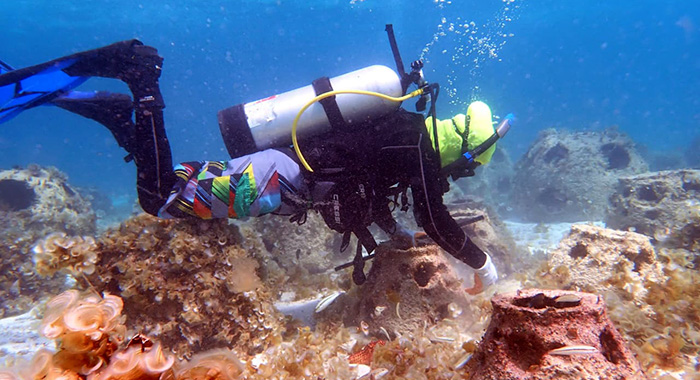
One of the project’s most groundbreaking achievements is the establishment of the first transboundary coral genetic bank nursery in the Windward Islands. WAM’s new Mayreau-based facility currently holds three coral cultivation structures hosting 60 fragments of two critically endangered coral species — Staghorn (Acropora cervicornis) and Elkhorn (Acropora palmata) — transferred directly from partner sites in St. Lucia. This marks the first assisted gene flow (AGF) effort between Windward Island nations, and WAM, alongside SVG’s Richmond Vale Academy (RVA), is the first regional beneficiary of this shared cross-border genetic banking initiative. The nursery, located within the protected Tobago Cays Marine Park, is inspected and maintained weekly by a growing team of local coral gardeners, which has expanded from 5 to 11 members. For the first time in the project’s history, the team includes a female junior coral gardener, drawn from a pool of 18 applicants across Union Island, Mayreau and surrounding communities.
On land, the initiative is equally focused on transforming agricultural practices to align with climate resilience. WAM has hired two full-time climate-smart agriculture coordinators to serve Union Island and Mayreau, and 25 local farmers have already enrolled in the organization’s capacity-building program. The project has also begun engaging three local primary schools to deliver an interdisciplinary, regionally tailored climate-smart farming curriculum, introducing sustainable stewardship practices to young community members early. To further expand workforce opportunities, WAM has partnered with SVG’s Ministry of Agriculture to develop formal work attachment programs for participants from the Southern Grenadines, with a core focus on creating stable, long-term livelihoods for local community members involved in both marine and land conservation work. For WAM, securing livelihoods and building community trust are treated as non-negotiable foundations for all successful conservation outcomes.
In a surprise breakthrough that has drawn widespread regional attention, a reconnaissance dive in August — conducted in partnership with Dive Bequia off the coast of Battowia in the Northern Grenadines — uncovered more than 15 previously unrecorded wild colonies of Staghorn coral, a species long considered functionally extinct in SVG waters. This discovery marks a major win for marine conservation in the region, offering new genetic resources for future restoration efforts.
Much of WAM’s work over the past six months has centered on expanding Reef Life Inc., a flagship blue social enterprise launched by WAM in 2022 that operates on a core principle: oceans, land, people and policy are interconnected parts of a single circular living system. Through community partnerships, immersive conservation experiences, hands-on restoration work, and public education, Reef Life centers traditional local knowledge while addressing the disproportionate climate injustice that already threatens livelihoods across the Grenadines. As the enterprise rebuilds following Hurricane Beryl, it is working to share its community-centered model and lay the groundwork for long-term sustainable livelihoods for residents of the region’s marine protected areas.
TREBAI is led by CLEAR Caribbean, a UK-registered organization with regional operations based in St. Lucia, with on-the-ground implementation delivered by RVA and WAM across SVG. The project receives funding from the Caribbean Biodiversity Fund, with support from Germany’s Federal Ministry for the Environment, Climate Action, Nature Conservation and Nuclear Safety through the International Climate Initiative and KfW. CLEAR’s three-year sub-grant to WAM totals up to US$518,700, running through April 2029. WAM has also forged new partnerships with private sector stakeholders and continues to collaborate with multiple government ministries to expand skills training and professional development opportunities for its growing team.
Six months into implementation, WAM Executive Director Marion Isaacs emphasized that the project’s greatest potential lies in its holistic, community-first approach. “We’re thinking holistically about what our islands and oceans need, and about the unique challenge and opportunity of being a small island state,” Isaacs said. “We embrace this smallness and can already feel massive potential building in what we’ve managed to bring to life so far. We focus on relationship-building, especially as we come from complex histories. For us, relationships are the new infrastructure: they strengthen our work, keep us committed, and hold us accountable in everything we organize, plan, and grow.”
With a new marine conservationist joining the team as Reef Life’s Project Coordinator in September, WAM announced it expects implementation to accelerate over the coming six months. Upcoming milestones include completing open-water diving certification for all coral gardeners, expanding coral outplanting operations, finishing onboarding for all participating farmers, and launching the first round of community engagement meetings scheduled for September 2025.