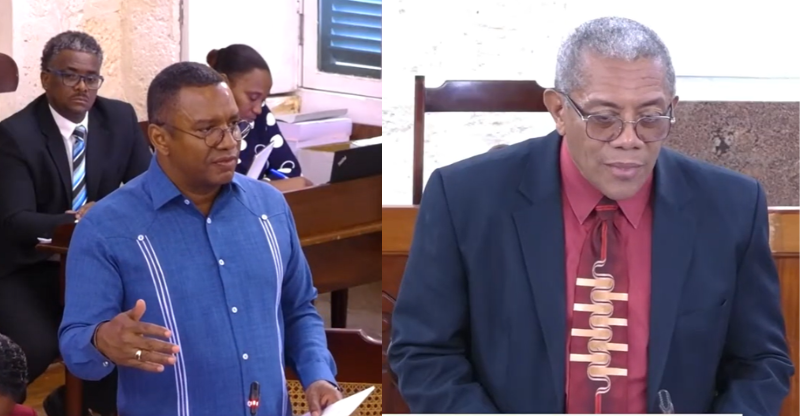
On a Wednesday sitting, the Barbados Senate advanced sweeping legislative changes designed to ramp up enforcement against transnational money laundering and terrorist financing, greenlighting two critical bills ahead of a high-stakes international evaluation scheduled for 2027. The two pieces of legislation—the Money Laundering and Financing of Terrorism Prevention and Control (Amendment) Bill and the Financial Services Commission (Amendment and Validation) Bill—were crafted to bring the Caribbean nation’s regulatory framework in line with evolving global anti-crime standards.
Addressing the upper legislative chamber, Attorney General Wilfred Abrahams emphasized that falling short of meeting international compliance obligations could push Barbados back onto contentious global grey or blacklists, outcomes that would inflict lasting damage on the country’s financial standing. Abrahams outlined a key shift in the upcoming fifth round of assessments, which will include an on-site inspection by global regulators in June 2027. Unlike the previous evaluation cycle, which focused primarily on whether countries had established the required legal and institutional structures, the upcoming review will center on whether those existing systems deliver tangible, effective results.
“The last evaluation only required us to have a formal structure in place. This time around, it is not about having the framework—it is about proving that the framework works,” Abrahams explained. “We successfully demonstrated we had the required structure last cycle. Now the global community wants to see just how effective our systems have been in practice.”
Under the terms of the reform legislation, the country’s Compliance Unit will gain expanded enforcement authority. The bill formalizes the role of Chief Compliance Officer as the permanent head of the unit, granting the position direct oversight responsibility for designated high-risk non-financial businesses and professions. This group includes legal practitioners, accountants, real estate agents, precious metal and gem dealers, and gaming operators.
Abrahams noted that current regulatory gaps leave authorities without a complete, accurate registry of all professionals operating in these high-risk sectors, a shortcoming that directly undermines enforcement effectiveness. “If you are required to register with the Chief Compliance Officer and you fail to do so, the unit will have the power to suspend your ability to practice,” he said. “Without a clear accounting of who is operating in these sectors, we cannot run an effective compliance regime. Failing to meet these obligations puts our access to international banking networks and foreign exchange markets at serious risk.”
The revised regulatory framework also shifts supervisory resources to focus on high-risk operations, rather than spreading thin oversight across lower-risk practitioners. Penalties for violations including inadequate record-keeping and failure to report suspicious transactions to the Financial Intelligence Unit will be increased significantly. For unintentional, non-malicious violations, administrative fines will replace criminal prosecutions, streamlining enforcement and reducing unnecessary judicial backlogs.
The companion Financial Services Commission (Amendment and Validation) Bill strengthens the regulatory body’s enforcement powers, eases compliance with international multilateral memoranda of understanding focused on cross-border information sharing, and retroactively validates fees collected by the commission under previous regulatory orders.
The legislation did not pass without caution from independent legislators. Independent Senator Andrew Niles warned the chamber that increasingly strict regulations could carry unintended operational consequences for local businesses. He urged the Mia Mottley-led administration to ensure that broad compliance requirements do not lead to systemic gridlock that stifles domestic commercial activity.
“When we put these strong compliance frameworks in place, they serve an important public purpose, and we understand why they are needed,” Niles said. “But the question remains: how do we translate these national-level rules into functional practice for small operators at the grassroots level? We do not want to see the entire economy paralyzed by overregulation, and we do not want legislation that blocks legitimate businesses from operating.”
In response to Niles’ concerns, Abrahams moved to reassure the chamber that the government plans to roll out extensive public education campaigns and stakeholder consultations ahead of implementation to ensure a smooth transition. “We will hold wide-ranging consultations with every affected sector to address concerns about the impact and implementation of these new rules,” Abrahams said. “We will also roll out widespread public information campaigns to make sure all parties understand their new obligations. A core part of our preparation includes full, open discussions with all stakeholders, because when international assessors arrive, they will meet directly with these groups to assess our progress.”