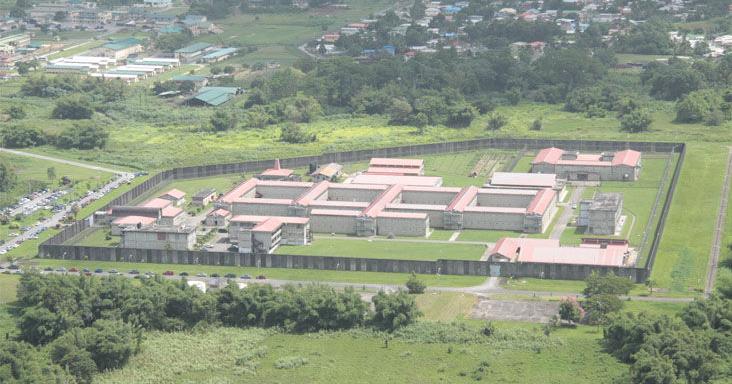
A well-entrenched, high-profit illicit underground economy has taken hold within the correctional facilities of Trinidad and Tobago, with top law enforcement sources warning that the influence and proceeds generated by this illegal trade extend far beyond prison perimeters. For years, authorities have relied on seizing prohibited goods to curb the trade, but senior police and prison investigators have concluded this approach does little to address the root of the problem. The real fight, they now assert, centers on dismantling the entire supply chain that keeps the black market running.
Current investigations are increasingly zeroing in on a sprawling network of actors accused of sourcing, funding, moving, and enabling contraband entry into the country’s prisons. What is more, the probe has expanded beyond inmates and external civilians to implicate members of the national Prison Service itself. Over the past two years, more than 150 people have been charged in cases stemming from the wide-ranging investigation, including current and former inmates, private citizens, and uniformed prison staff. To date, eight correctional officers have been formally charged, with four later placed on preventive detention orders connected to active probes. Most recently, two additional officers and one inmate were arrested and charged just last Thursday. All pending cases remain before the country’s courts, but investigators acknowledge the unsealed indictments only scratch the surface of the larger criminal network. Senior sources confirm more than 45 additional officers are currently under active investigation for suspected ties to contraband trafficking.
What investigators are uncovering is far more systemic than isolated incidents of smuggling: it is a fully functional illicit economy, driven by basic market forces of scarcity and demand. Intensive cell and facility searches can cut off supplies of high-demand contraband like cigarettes, cellphones, and narcotics temporarily, but they do nothing to eliminate inmate demand. When supplies drop, prices for remaining contraband skyrocket, creating massive profit margins for those who can keep goods flowing into facilities. A single cigarette that costs pennies on the outside can become a high-value trading commodity behind bars, with other prohibited items seeing similar exponential markups.
Intelligence suggests that many high-influence incarcerated leaders have accumulated substantial wealth through the trade, though cash rarely moves physically into the prison. Payments are processed outside facilities through relatives, criminal associates, and seemingly legitimate bank accounts, making it extremely difficult for law enforcement to trace the true purpose of transactions. A routine money transfer on paper can easily mask payments for contraband, debt settlements, protection fees, or other illicit activity coordinated by inmates. This hidden financial structure has led investigators to expand their focus beyond just finding contraband inside cells; they now prioritize tracing who funded the goods, who collected payment, and where the profits ultimately end up. A key open line of inquiry centers on whether these prison-generated profits flow into wider external criminal networks involved in drug trafficking, firearms trade, extortion, and violent street crime – though investigators have yet to obtain concrete documentary evidence to confirm the full scale of these cross-network links.
Cellphones were one of the first targets of the crackdown, for a clear reason: mobile devices allow incarcerated people to maintain unmonitored communication and continue running criminal operations from behind bars. But investigators quickly noticed a troubling pattern: phones seized during searches were often replaced within hours, sometimes the same day the original was confiscated. This revelation shifted the investigation’s focus from just recovering devices to uncovering the supply infrastructure that enables rapid replacement. Authorities see cutting off cellphone access as critical to disrupting criminal plotting that originates from within prisons and targets communities on the outside; without mobile access, the communication lines that keep external networks running are severed.
Advancements in consumer technology have only complicated enforcement efforts. Drones have emerged as a popular method to deliver contraband, with operators outside prison perimeters coordinating with inmates inside to drop packages in pre-arranged locations. The profit incentive is substantial: drone operators can earn thousands of dollars for a single successful delivery, and the method allows suppliers to avoid ever entering prison grounds, reducing their risk of arrest. Drones are not the only delivery method, however. Smugglers also throw packages over perimeter walls, and exploit visitor trips to hide contraband inside permitted personal items. Still, investigators say the highest security risk comes from the most well-placed threat: individuals who already have authorized access to the facility.
Within the prison system, investigators have identified three distinct behavioral camps when it comes to contraband: officers who actively pursue aggressive searches, seizures, and enforcement; officers who view contraband as a longstanding management issue that can only be contained through consistent supervision and intelligence gathering; and the most dangerous category – officers who agree to facilitate, tolerate, or protect the illicit trade in exchange for cash or other benefits. Sources stress that these categories are not representative of the entire Prison Service, and all allegations against individual officers must be proven in court. Even so, the insider threat presents a uniquely difficult challenge for security: while outside smugglers must bypass multiple layers of perimeter security, insiders already have legitimate access that allows them to move past security checkpoints undetected.
A key breakthrough in the investigation came during a recent operation at the country’s Maximum Security Prison (MSP). After large-scale searches, investigators interviewed multiple inmates about the persistent contraband problem, and received allegations that some prison personnel tasked with searching cells and seizing prohibited items actually have ties to networks that replace the seized contraband. If one team removes contraband while another staff member with legitimate access brings in a replacement, any seizure is only temporary, the inmates explained. This tip led investigators to ramp up scrutiny of internal facilitation.
Joint operations across the MSP, Golden Grove, and Port of Spain prison facilities have resulted in large seizures of prohibited goods, but investigators have fundamentally shifted their strategy in recent months. Finding a cache of contraband is no longer the end goal – it is just the starting point for a deeper probe into how the operation was funded, how goods were transported and distributed, who was involved in sourcing, and who helped enable the smuggling. Law enforcement sources say this is the key difference between a routine prison search and dismantling an entire criminal enterprise.
Investigators are also grappling with a major systemic obstacle: a widespread reluctance among witnesses to come forward. Some serving prison officers refuse to provide formal statements, and investigators have multiple documented cases where witnesses altered or recanted earlier testimony. Sources say multiple factors drive this reluctance: fear of retaliation against officers and their families, workplace loyalty to colleagues, and widespread uncertainty about who can be trusted within the system. When witnesses refuse to cooperate or change their accounts, it can severely weaken even the strongest cases, even when investigators are confident a crime has been committed. For the state, the challenge goes beyond detecting corruption; it requires building a framework that protects whistleblowers and encourages officers to come forward with information about wrongdoing.
Beyond contraband, investigators are also uncovering a sprawling hidden economy of extortion and protection payments among inmates. This type of illicit activity is even harder to detect, because the transactions almost always happen outside prison walls. When a family member sends money to an account at an inmate’s request, they rarely report the transfer to police – especially if the transfer is being made to pay off an extortion demand. Relatives often stay silent out of fear that speaking up will put the incarcerated family member at risk of violence. This creates an economy where the most profitable transactions never occur behind bars: the order originates inside, the money changes hands outside, contraband moves in, and profits stay in external networks controlled by criminal leaders.
The ongoing probe has raised fundamental questions about the purpose of incarceration in Trinidad and Tobago: if offenders can still maintain full control over criminal networks from behind bars, what deterrence or public safety purpose does imprisonment serve? Incarcerated leaders who can communicate with external associates, move illicit funds, and influence criminal activity remain a major threat to public safety long after they are locked away. This is why authorities now frame prison contraband as far more than an internal disciplinary issue. It requires a full investigation of the entire network that supplies, funds, and enables the trade, rather than just punishing the inmates caught with prohibited goods. What starts as a contraband probe inside a prison can quickly expand into a much larger investigation into transnational criminal networks that operate across the country. The Sunday Express attempted to reach acting Prisons Commissioner Elvin Scanterbury for comment on the investigation, but received no response prior to publication.