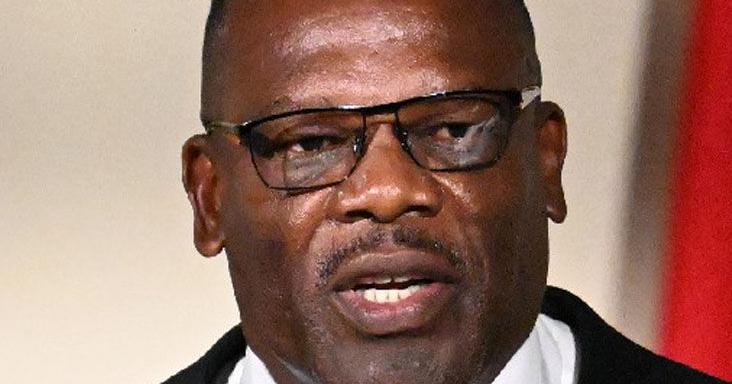
Trinidad and Tobago’s national police force is facing a crippling half-billion-dollar financial crisis that can be traced back to years of systemic mismanagement, corruption, and unregulated spending under the previous People’s National Movement (PNM) administration, the country’s Homeland Security Minister Roger Alexander has revealed. In an exclusive interview with the *Sunday Express*, Alexander laid bare the damning findings of a 2017–2022 forensic audit into the Trinidad and Tobago Police Service (TTPS), which uncovered a decades-long pattern of reckless fiscal decision-making that has left the force saddled with overwhelming debt and starved of the critical resources it needs to protect public safety.
The audit, which was commissioned to untangle years of unreported financial activity, confirmed that the TTPS carries $350 million in verified outstanding liabilities on top of a $200 million government-guaranteed loan arranged through the National Insurance Property Development Company Limited (NIPDEC) that was taken out during the PNM’s tenure. When interest is included, the total owed on the loan climbs to $263 million, bringing the force’s total accumulated debt to more than $550 million — a gap Alexander described as an unfillable “financial black hole.”
“This crisis is extremely frustrating for our current administration,” Alexander told reporters. “We are now forced to divert public funds away from fighting crime and upgrading resources for all law enforcement agencies just to cover these massive debts inherited from the previous government.” The minister said he was shocked by the widespread “squandermania” and waste that went completely unregulated for years, pointing to multiple high-profile examples of useless spending that has left taxpayers footing the bill.
One of the most striking examples of misspending is a multi-million-dollar contract awarded to private firm Amalgamated Ltd to integrate body cameras for the TTPS, despite the force having the capacity to complete the work in-house. Even after the contract was awarded, the body cameras purchased cannot be integrated into the TTPS’s existing domestic systems, rendering the entire investment useless. Alexander also noted that millions in taxpayer dollars were paid to a private external agency to manage and track GPS systems installed in police vehicles — a basic function that could have been handled internally by the force at a fraction of the cost.
The 2017–2022 audit confirms that the waste extends across almost every area of TTPS operations, painting a picture of a complete systemic collapse of procurement governance. Violations uncovered include routine contract splitting to bypass oversight, unapproved sole-source vendor awards, and unauthorized multi-year spending commitments that bind the current administration to unjustified costs. Most alarmingly, the audit found that several multimillion-dollar contracts were signed by TTPS employees who held no delegated authority to enter into such agreements.
The unauthorized DEMS/GPS/body-camera services agreement alone has cost taxpayers more than $100 million to date. A $47.52 million purchase of X-ray screening vehicles from telecommunications provider TSTT also ended in failure: every unit failed every required operational test, a problem that was first publicly raised by then-acting police commissioner McDonald Jacob back in December 2022, long before the full audit was completed. The audit also flagged $22.7 million in vehicle lease payments made between 2019 and 2020 that were processed without any formal contract in place. Even contract staffing costs were riddled with irregularities, with escalating payroll spending, improper front-loaded gratuity payments, and salaries that exceeded the pay grade of permanent government secretaries.
The audit also highlighted a so-called “Unified Hockey Field Scandal,” which saw hundreds of thousands of dollars in public funds spent on recreational facility upgrades for the police service that were marked by improper procurement and outstanding debt. Records show the TTPS spent TT$766,924.20 on artificial turf and shock pads, plus an additional $356,375 for sprinkler systems and safety nets, spread across three separate maintenance contracts for hockey, football, and cricket fields. There remains $449,000 in unpaid invoices for the project, which are now the subject of ongoing legal action against the force.
Additional concerns raised in the audit include the improper use of the Police Award Fund, widespread irregularities in sole-source vendor selection, and a wasteful investment in the official TTPS mobile application. A preliminary analysis found that the app delivered “no substantive value” relative to its massive cost: the force pays an annual software licensing fee of US$450,000, totaling US$1.35 million over the first three years of the agreement.
Alexander emphasized that the massive debt burden will weigh on the TTPS for another 10 to 11 years, with new bills continuing to arrive as the force discovers outstanding payments owed to dozens of small contractors. Despite the crippling financial albatross, the minister praised the TTPS and current Police Commissioner for still delivering progress on crime reduction, calling their achievements “amazing” under the circumstances.
The audit’s official executive summary summed up the long-term damage of the previous administration’s decisions: “The cumulative effect is a Police Service financially crippled by past decisions, forced to divert scarce resources to service inherited debts rather than strengthen national security.” The findings align with concerns Alexander raised publicly earlier this year, when he first announced a comprehensive assessment of procurement practices and accumulated debt between 2017 and 2021.
The current government, Alexander confirmed, is fully committed to resolving the fiscal crisis created by past mismanagement, though he noted that much of the ongoing impact on public safety resourcing remains unknown to the general public. The *Sunday Express* has confirmed it will publish additional reporting on the $200 million NIPDEC loan in its tomorrow edition.