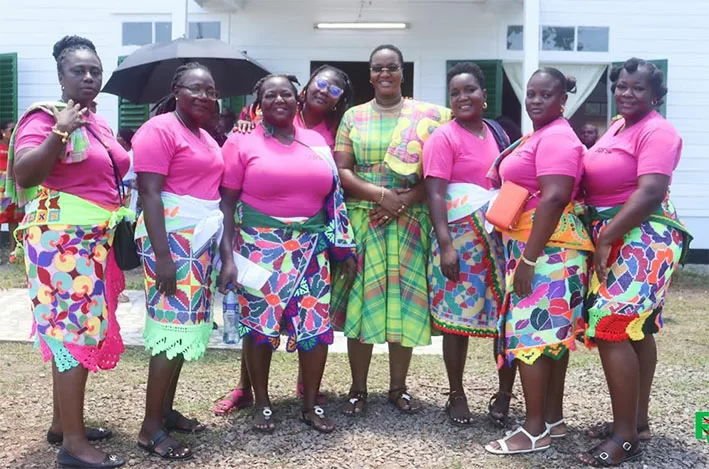
On September 19, the remote Surinamese community of Marshallkreek in the Brokopondo district gathered to mark the 264th anniversary of Saamaka Daka, a landmark historical observance honoring the 1762 peace treaty between the Saramaccan people and the former Dutch colonial administration. Under this year’s theme “Courage Builds the Future”, regional development minister Miquella Huur used the celebratory occasion to deliver a pivotal call for the formal legal enshrinement of the principle of Free, Prior and Informed Consent (FPIC), framing the move as a critical step to safeguard Indigenous and tribal community rights, cultural heritage, and long-term prosperity for coming generations.
In her address to assembled community members, Huur reflected on the decades of resistance and unwavering resilience demonstrated by the Saamaka people’s ancestors, whose determination and courage secured the historic peace agreement centuries ago. She emphasized that this legacy places a core responsibility on the current generation to proactively shape a just and sustainable future that can be passed down to children and grandchildren. A key pillar of that responsibility, Huur argued, is the active preservation and celebration of the Saamaka community’s unique cultural identity, ancestral traditions, and core values. She positioned formal legal recognition of FPIC as an essential tool to protect the collective social and political standing of tribal communities across the country.
FPIC is a globally recognized principle that requires Indigenous and tribal peoples to be consulted in advance, free from coercion, and provided with full, clear information before any policy or development decisions are made that impact their traditional territories, living environments, and collective interests. The principle is widely regarded as a cornerstone of Indigenous rights, ensuring marginalized tribal communities retain autonomy over decisions that shape their way of life.
Captain Ronny Asabina, community leader of Marshallkreek, echoed Huur’s remarks during the commemoration, noting that Saamaka Daka is far more than an annual ceremonial gathering. He stressed that the date serves as a permanent reminder of the ancestral courage and struggle that ultimately delivered peace and freedom for the Saramaccan people. Asabina called on all members of the Saamaka community to continue nurturing the traditions and intangible cultural heritage passed down from their ancestors, and to prioritize passing these treasures on to future generations.
True to centuries of custom, the 2025 commemoration opened with a traditional performance on the Apinti drum, followed by a Towe Wata cleansing ceremony, a community service of gratitude, and a Polo Waka cultural procession. In addition to formal addresses, the day’s program included honors for local athletes, musicians, and other community members who have made outstanding contributions to the social and cultural development of the Saamaka and Sakiki communities. Saamaka Daka is observed every year on September 19, marking the exact date of the historic peace agreement that remains a foundational moment in Saramaccan national and cultural identity.