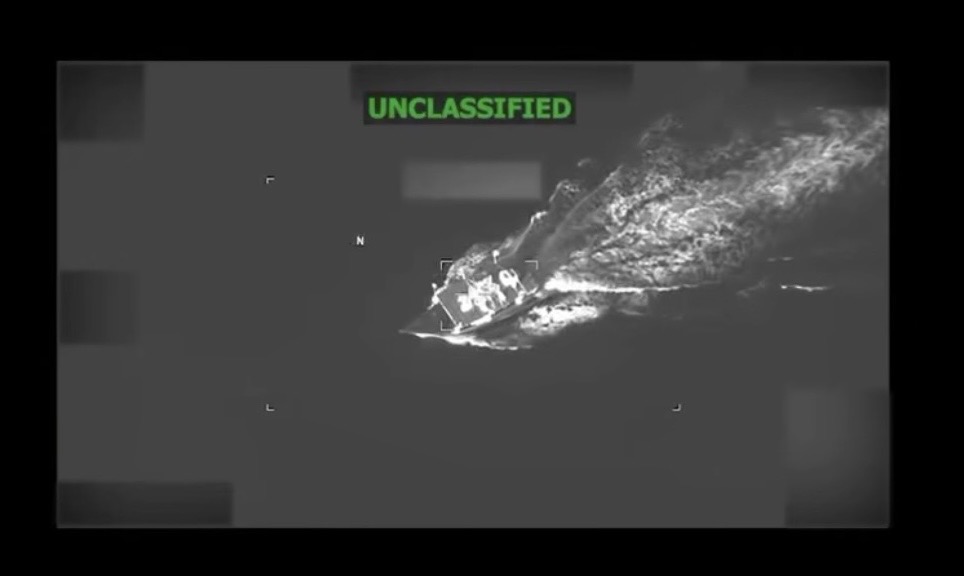
A September 19 U.S. military strike against a suspected drug-smuggling vessel in the Caribbean Sea has left four people dead, reigniting longstanding questions about the use of deadly force in Washington’s hemispheric counter-narcotics operations.
The operation was executed by Joint Task Force Western Hemisphere under the command of U.S. Southern Command (SOUTHCOM), the U.S. military body responsible for security operations across Latin America and the Caribbean. According to SOUTHCOM’s official statement, the target was a small, high-speed “go-fast” boat traveling along one of the region’s most well-traveled narcotics trafficking corridors. Intelligence confirmed the vessel was actively engaged in smuggling operations, SOUTHCOM claimed, and identified the four people killed as “narco-terrorists.”
Surveillance video published by the U.S. military shows the small craft moving at high speed across open water moments before it was engaged by U.S. forces. However, key details about the incident remain undisclosed as of initial reporting: SOUTHCOM has not released the exact location of the strike, the nationalities of the deceased, nor the type and quantity of drugs the vessel was allegedly carrying. Independent verification of the military’s claim that the boat was involved in drug trafficking is also not yet available.
This strike is the second lethal operation targeting suspected smuggling vessels in the Caribbean this month alone. On September 9, a similar strike left three people dead aboard another go-fast boat linked to narcotics trafficking, according to SOUTHCOM. The operations are part of a years-long ongoing U.S. military campaign aimed at interdicting drug shipments moving through the Caribbean and eastern Pacific Ocean en route to global markets.
Despite the military’s framing of the campaign as a critical counter-narcotics measure, the repeated use of lethal force against suspected traffickers has drawn sharp international scrutiny. Independent human rights experts appointed by the United Nations have called for formal investigations into the strikes and demanded accountability for any potential human rights violations.
In a noticeable shift in tactics for operations in the eastern Pacific in recent weeks, SOUTHCOM has sometimes removed crew members from suspect vessels before sinking the boats. For example, during a September 15 operation, command personnel removed all crew members from a targeted smuggling support vessel and transferred them to Ecuadorian law enforcement before destroying the craft. This contrast in approaches has prompted further questions about why lethal force was used in the two recent Caribbean strikes rather than the non-lethal interception tactics employed elsewhere.