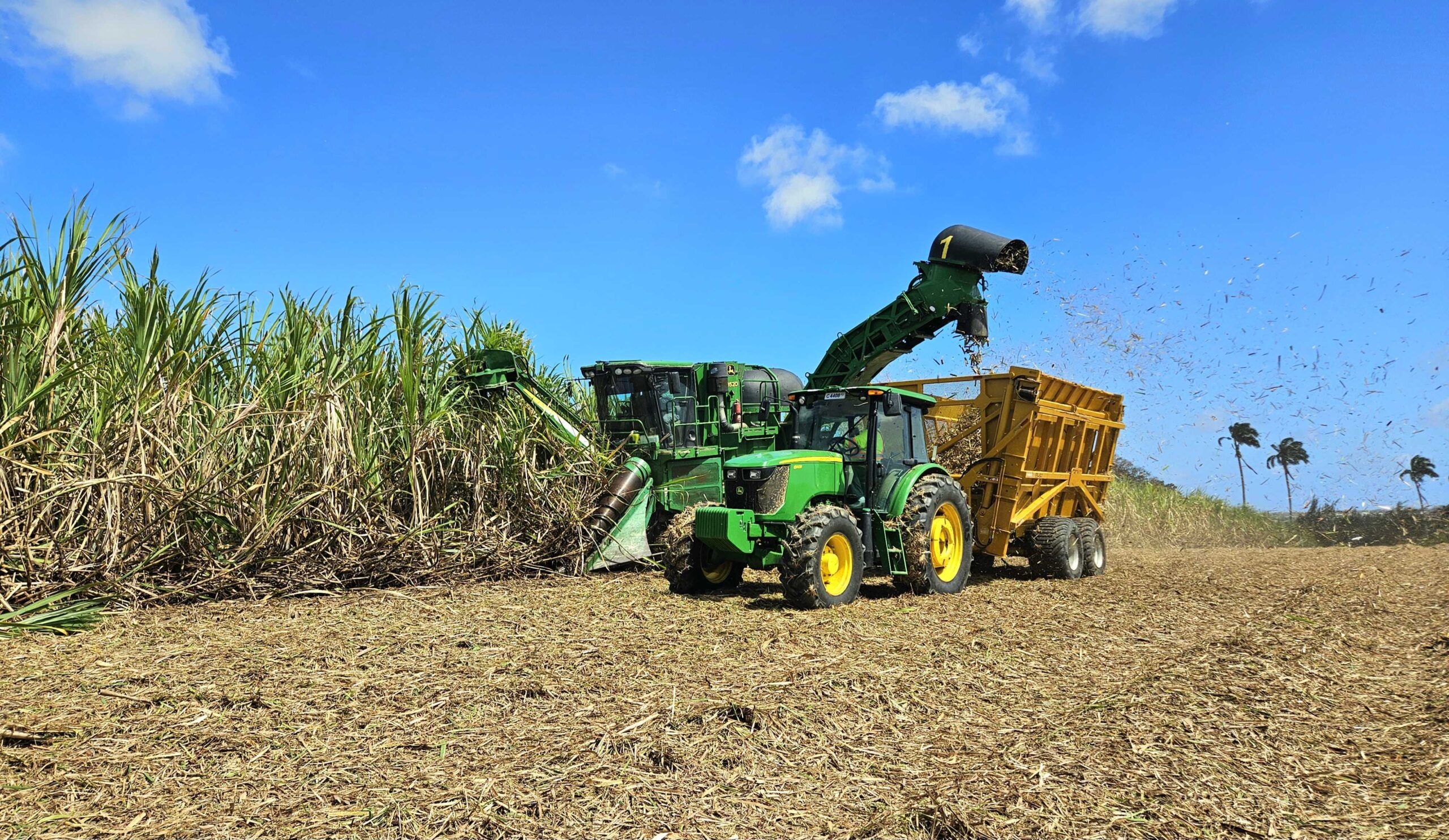
Three years after CoopEnergy signed landmark agreements with the Government of Barbados to privatize the country’s centuries-old struggling sugar industry, the cooperative has confirmed the entire project is now effectively dead, following the collapse of dispute mediation talks. The breakdown of talks has left the future of the 4,500-acre sugar operation and its workforce uncertain, with the government yet to announce its alternative plans for the loss-making sector.\n\nIn statements delivered to local media outlet Barbados TODAY over the weekend, Lt Col Trevor Browne, chairman of the Barbados Sustainable Energy Cooperative Society (CoopEnergy), revealed that the government has fully abandoned the December 2023 agreements that were meant to transfer management of the state-owned Barbados Agricultural Management Company (BAMC) to the cooperative. Under the original deal, two new private entities were established: Barbados Energy and Sugar Company (BESCO) Ltd. to run the sector’s sugar factory, and Agricultural Business Company (ABC) Ltd. to oversee the 4,500 hectares of agricultural sugar land.\n\nBrowne explained that the transformative sugar sector project, which CoopEnergy had spent years advancing and remained enthusiastic about, never even launched. “We were never provided the core administrative paperwork or operational documentation required to actually begin work,” he told reporters. “Based on the government’s current stance, this initiative will not be moving forward with our cooperative at the helm.”\n\nWhen asked whether CoopEnergy would retain any stake or role in Barbados’ sugar industry moving forward, Browne confirmed that based on current signals from the administration, the cooperative will exit the sector entirely. “The mediation process was intended as a space to renegotiate terms and resolve our disagreements, but no productive progress came out of those talks,” he said. “It is clear the government intends to proceed with its own plans for the sugar sector, and those plans do not include us.” Browne did add, however, that CoopEnergy would still be open to re-engaging on the project if the government reverses course. The cooperative chairman has long framed its community-focused management model for the sugar sector as a revolutionary approach that could turn around decades of underperformance.\n\nOn the impact of the collapse for sugar sector workers, Browne noted that the government has shared no details of its alternative plans with either CoopEnergy or the workforce. “Government abandoned the original agreement they negotiated with us, and they have stopped all communication on what comes next. We don’t know their new plans, and I don’t believe workers have been informed either,” he said.\n\nThe collapse was formally announced in a late Friday press release from CoopEnergy, which expressed profound disappointment over the government and BAMC’s unilateral withdrawal from the binding divestment contracts. The agreements were structured to transfer BAMC’s operations into a joint private ownership model held by CoopEnergy and BAMC’s sugar workers.\n\nThe original divestment push came as a requirement of Barbados’ International Monetary Fund loan program, after decades of poor performance at BAMC that has cost Barbados taxpayers roughly $20 million in annual subsidies to keep the sugar sector afloat. CoopEnergy’s release outlined that the project began with broad institutional backing: working alongside BAMC leadership, the cooperative developed a full divestment plan that won endorsement from the government, starting with an initial memorandum of understanding (MOU). CoopEnergy then spent months mobilizing support for the initiative, hosting detailed briefing sessions for local credit unions, cooperative leadership and financial regulators, and securing access to substantial international funding earmarked for sustainable cooperative development.\n\nBy December 18, 2023, all final shareholder and subscription agreements to establish BESCO and ABC had been approved by Barbados’ Cabinet and officially signed, coinciding with final approval of the IMF loan. But in the months following the signing, CoopEnergy received no substantive responses from BAMC on its repeated requests for operational information. The only official engagement was a brief meeting with then Agriculture Minister Indar Weir in September 2024, weeks after the cooperative’s board sent a formal formal inquiry to the minister.\n\nCoopEnergy’s statement alleges that BAMC and government officials began making public and private demands that CoopEnergy inject upfront capital into the project, while refusing to provide the audited financial records and cleaned asset registry that both the MOU and final agreements required the state side to share. BAMC even approached other cooperative groups to solicit alternative funding, but those entities also declined to commit without access to the required financial documentation.\n\nIt was not until August 18, 2025, that CoopEnergy received its first formal notification from BAMC: the state entity had unilaterally decided to invalidate the shareholder agreements for both new companies with immediate effect. CoopEnergy challenged the move, noting that the signed contracts did not allow for unilateral cancellation and required any disputes to go through a formal mediation process. BAMC agreed to enter mediation, which ran from March 2026 through August 2026, before concluding without any resolution or path forward for continued negotiations.\n\nWhen contacted for comment on the collapse, current Minister of Agriculture Dr Shantal Munro-Knight said she would need to receive a full briefing on the matter before making any public statement. The Barbados Workers Union (BWU), which represents sugar sector workers, also issued a statement Saturday noting that the union was not a signatory to the original contracts between the government, BAMC and CoopEnergy, and would not comment on the terms of the agreement. “The BWU will continue to stand guard over the interests of the workers, and to ensure that any transition, divestment or restructuring in the sugar industry honours the commitments made to them and keeps their welfare at the centre,” the union said.