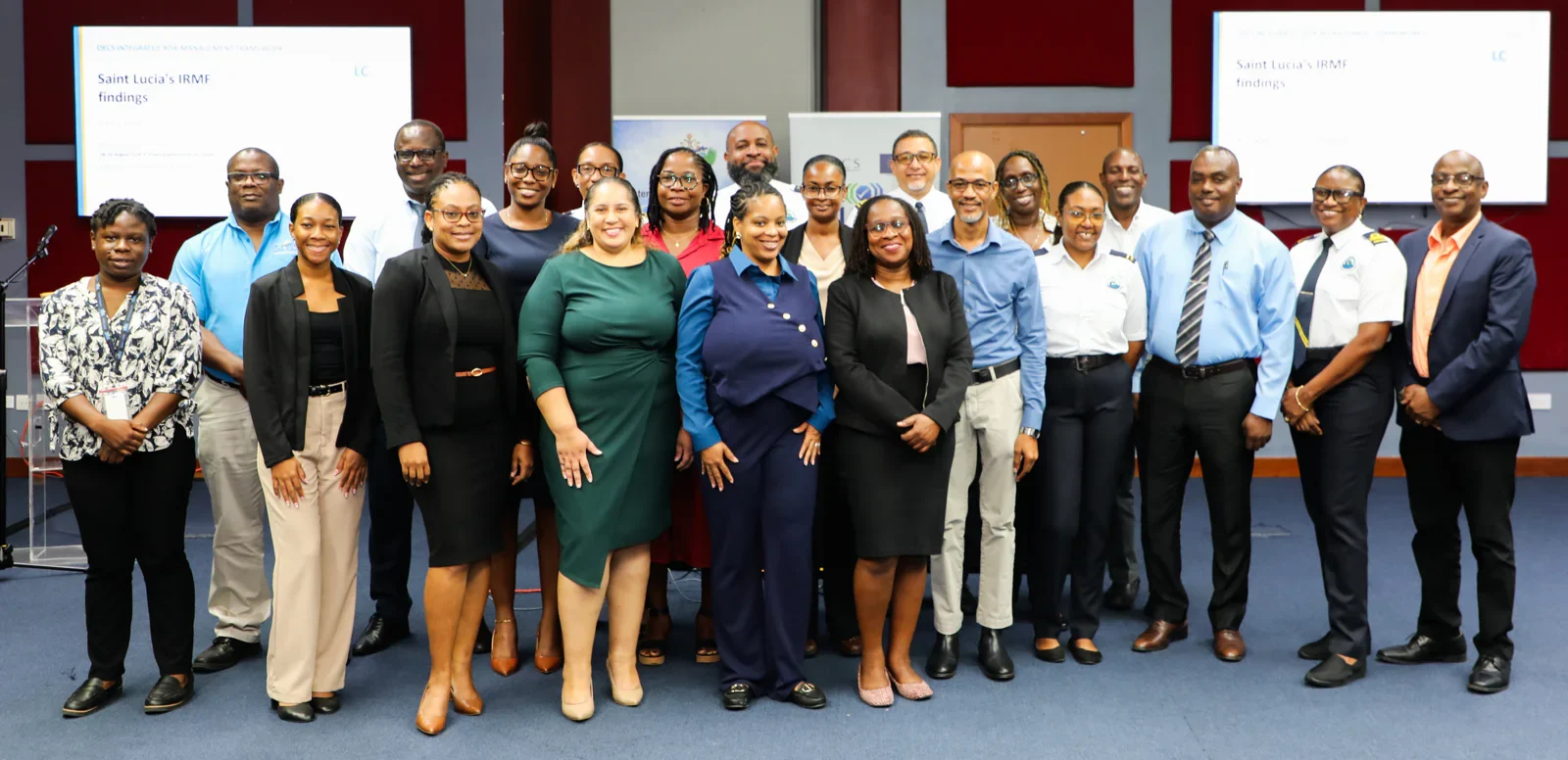
In a key step toward deepening economic integration across the Eastern Caribbean, border and regulatory officials from St. Lucia have completed a specialized three-day training program designed to streamline coordination, boost operational efficiency, and strengthen intelligence-driven practices at the island nation’s ports of entry.
Hosted from August 18 to 20, 2026, at the Finance Administrative Centre in Castries, the workshop centered on upgrading frontline personnel’s mastery of risk management frameworks and cross-border goods movement protocols. The initiative is part of a broader rollout across all seven Member States of the Organization of Eastern Caribbean States (OECS) that are party to the OECS Protocol, with the ultimate goal of establishing a unified external border to enable a fully functional regional customs union and free circulation of goods across the bloc.
Coordinated by the OECS Commission, the training brought together cross-agency personnel ranging from frontline officers to senior supervisors from St. Lucia’s Customs, Agriculture, Health, Standards Bureau, National Police, and Port Authorities. Funding for the program came from the European Union via its 11th European Development Fund Regional Integration through Growth Harmonisation and Technology (RIGHT) Programme, while instructional content was delivered by regional industry experts from AENOR Consulting.
Opening the workshop via virtual address, Ricardo James, Head of Trade Policy Development at the OECS Commission, framed the customs union project as the next defining milestone in the region’s decades-long integration journey. “Among the protocol member states, we have already built major progress in enabling the free movement of people, backed by a shared single currency and a unified regional court,” James explained. “But the customs union is our next great frontier. We are replacing seven separate, independent customs territories with one single regional customs territory. Once any shipment enters an official port of entry in any member state, it will have access to the entire economic union.”
Sherman Emmanuel, Comptroller of St. Lucia Customs and Excise, emphasized that the new training aligns both with the island’s domestic regulatory reforms and its international trade compliance obligations. “Our updated Risk Management framework will be central to improving the efficiency and effectiveness of our border operations,” Emmanuel noted. “It is key to gaining stronger control over high-risk cargo and traveler movements, while simultaneously smoothing processing for compliant traders and visitors.”
Emmanuel added that these upgraded risk management requirements are explicitly mandated under Article 7.4 of the World Trade Organization’s Trade Facilitation Agreement, underscoring the global relevance of the initiative.
Nigel Edwin, a representative from lead training provider AENOR Consulting, stressed that modern, effective border management cannot succeed as a siloed, single-agency effort. Instead, he argued, it requires all relevant government bodies to operate as an integrated, whole-of-government network.
“Trade facilitation does not mean eliminating border controls entirely,” Edwin clarified. “Rather, it demands that we apply controls more intelligently, concentrating our limited regulatory resources on high-risk persons, goods, and activities, while allowing legitimate trade and travel to flow much more efficiently across borders. This is not simply a Customs-led initiative – it is a collaborative effort that requires buy-in and coordination across every agency with a role at the border.”
Over the course of the three-day workshop, participating officials conducted joint reviews of St. Lucia’s existing border management arrangements, mapped out outstanding legal and operational gaps in current protocols, and refined a national implementation roadmap ahead of the upcoming regional pilot program for the unified border framework. The completed training lays critical groundwork for St. Lucia to fully participate in the next phase of OECS regional economic integration.