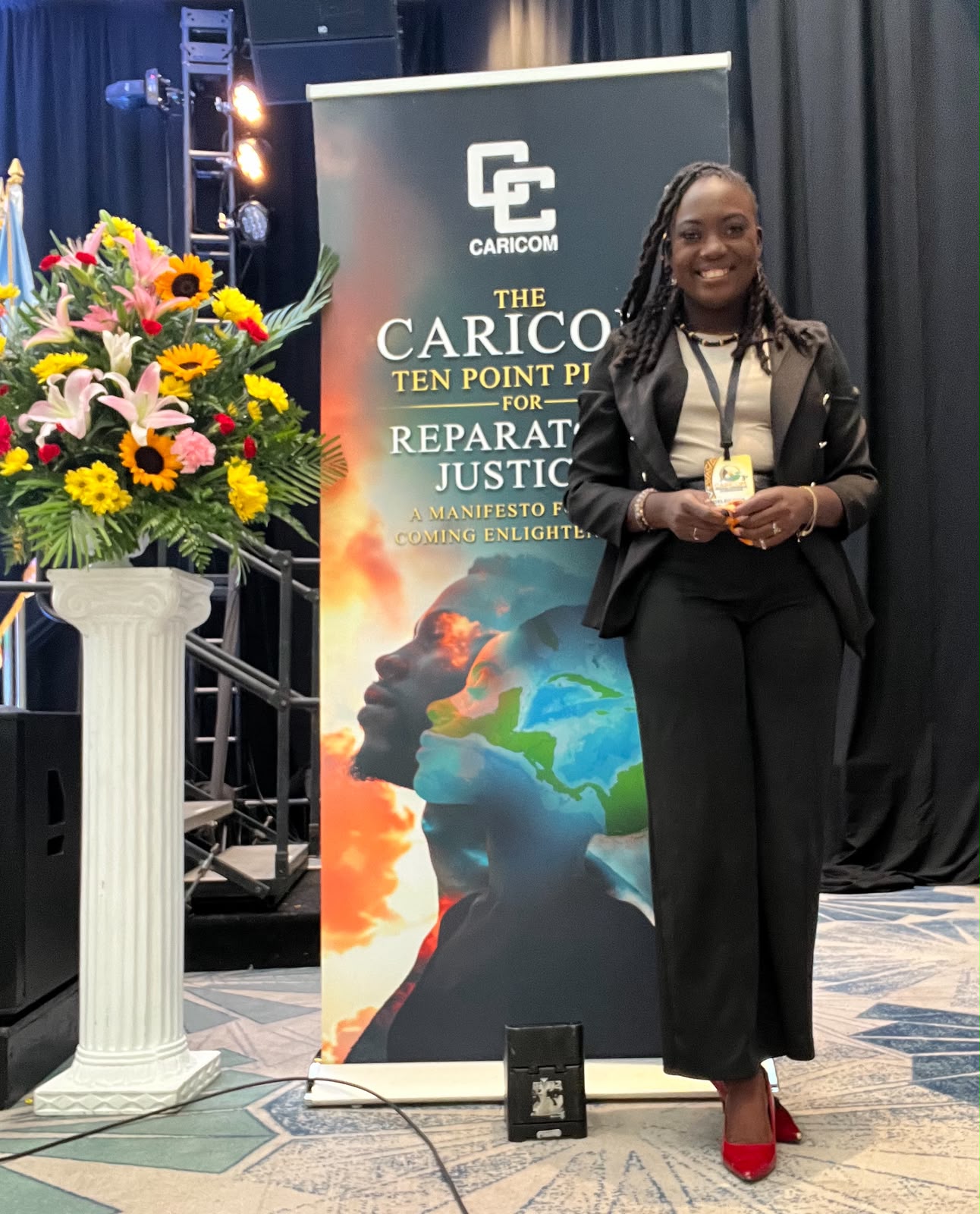
A new chapter in global advocacy for reparatory justice has opened in Barbados, where Antiguan and Barbudan advocate Chaneil C. Imhoff is carrying out her inaugural appointment as GOHETD’s Ambassador to the Caribbean at the Third CARICOM Regional Conference on Reparations. Running from September 17 to 19, 2026, at the Wyndham Grand Barbados Sam Lord’s Castle Resort, the conference gathers policymakers, activists and community leaders under the unifying theme: “Reparatory Justice as the Coming Enlightenment.”
Hosted by the Government of Barbados and the Barbados Reparations Task Force, the event is coordinated jointly by the Caribbean Community (CARICOM) Secretariat and the CARICOM Reparations Commission, marking the third regional gathering of its kind following earlier conferences in St. Vincent and the Grenadines (2013) and Antigua and Barbuda (2014). The high-profile opening dialogue on the global reparatory justice movement, held September 18, was moderated by CARICOM Secretary-General Dr. Carla Barnett, and featured a lineup of prominent contributors ranging from Barbados Prime Minister Mia Mottley and CARICOM Reparations Commission chair Professor Sir Hilary Beckles to St. Vincent and the Grenadines Prime Minister Dr. Ralph Gonsalves, Colombian Vice President Francia Márquez, and UK Member of Parliament Bell Ribeiro-Addy.
In reflections on the opening proceedings, Imhoff highlighted two core messages that anchored the conference discussions: the centrality of development that transforms the lived circumstances of marginalized communities affected by colonialism and chattel slavery, and the urgent need to turn broad moral consensus around reparations into coordinated, tangible action. Among her key takeaways from early conversations were the critical need for deeper collaboration between Caribbean nations, African governments and the global African diaspora, long-overdue recognition of the decades-long advocacy work carried out by the Rastafari community in the reparations movement, and the inherent intersection between reparatory justice for historical harm and modern demands for climate justice.
Imhoff’s session notes captured several practical, actionable proposals put forward during conference discussions. These include the establishment of national technical teams composed of historians and economists to document the specific harms inflicted by colonialism and slavery, and to develop clear, evidence-based reparation demands. Participants also discussed launching a global public petition to mobilize widespread grassroots support for the movement. Imhoff emphasized that both national governments and major global institutions, including Christian churches, carry unique responsibilities to advance meaningful repair, while noting that Caribbean communities must lead their own work toward self-reparation.
“Reparatory justice must translate into changes that people can see and experience in their daily lives,” Imhoff stated in an interview following the opening sessions. “That includes expanded access to quality education, the protection of our shared cultural heritage, and giving communities an meaningful seat at the table when decisions about regional development are made. These priorities align directly with the mission and work I advance through GOHETD.”
The conference’s opening day featured a diverse slate of thematic sessions beyond the opening plenary. A keynote plenary on Pan-African reparations jurisprudence delivered by Dr. Panashe Chigumadzi was moderated by Professor Verene Shepherd, with Ulele Burnham serving as official respondent. The first breakout roundtable centered on Indigenous rights, formal recognition, and resettlement, moderated by Dr. Damien Dublin with presentations from Chief Richard Currie, Steve Reid, Danelle James, and Nelcia Robinson. A separate session focused on the role of international institutions in advancing reparatory justice was moderated by Antigua and Barbuda’s Ambassador Dorbrene O’Marde, and included panelists Professor Verene Shepherd, Gaynel Curry, Dr. Barbara Reynolds, Ambassador Amr Aljowaily, and Dr. Hilary Brown.
For Imhoff, these diverse thematic tracks reinforce a core truth: the movement for reparatory justice must center the distinct histories, needs and priorities of Indigenous communities, and ensure that Rastafari and other grassroots groups are empowered to shape cultural heritage and development initiatives across the region. Beyond her representation role at the conference, this first assignment as GOHETD’s Caribbean Ambassador carries a broader mandate: Imhoff will assess potential collaborative partnerships and gather stakeholder input to develop actionable recommendations that will guide GOHETD’s future programming and engagement across the Caribbean.
A respected communications specialist and longtime mental health advocate based in Antigua and Barbuda, Imhoff founded the Wadadli Initiative for Self-care and Healing (WISH), and her professional portfolio spans strategic communications, media production, community organizing and mental health advocacy across the Eastern Caribbean. The Global Organization for Heritage, Environment and Tourism Development (GOHETD), the body that appointed Imhoff, works globally to advance cultural preservation, environmental sustainability, and responsible tourism through cross-border partnerships, grassroots community development and targeted youth engagement initiatives.