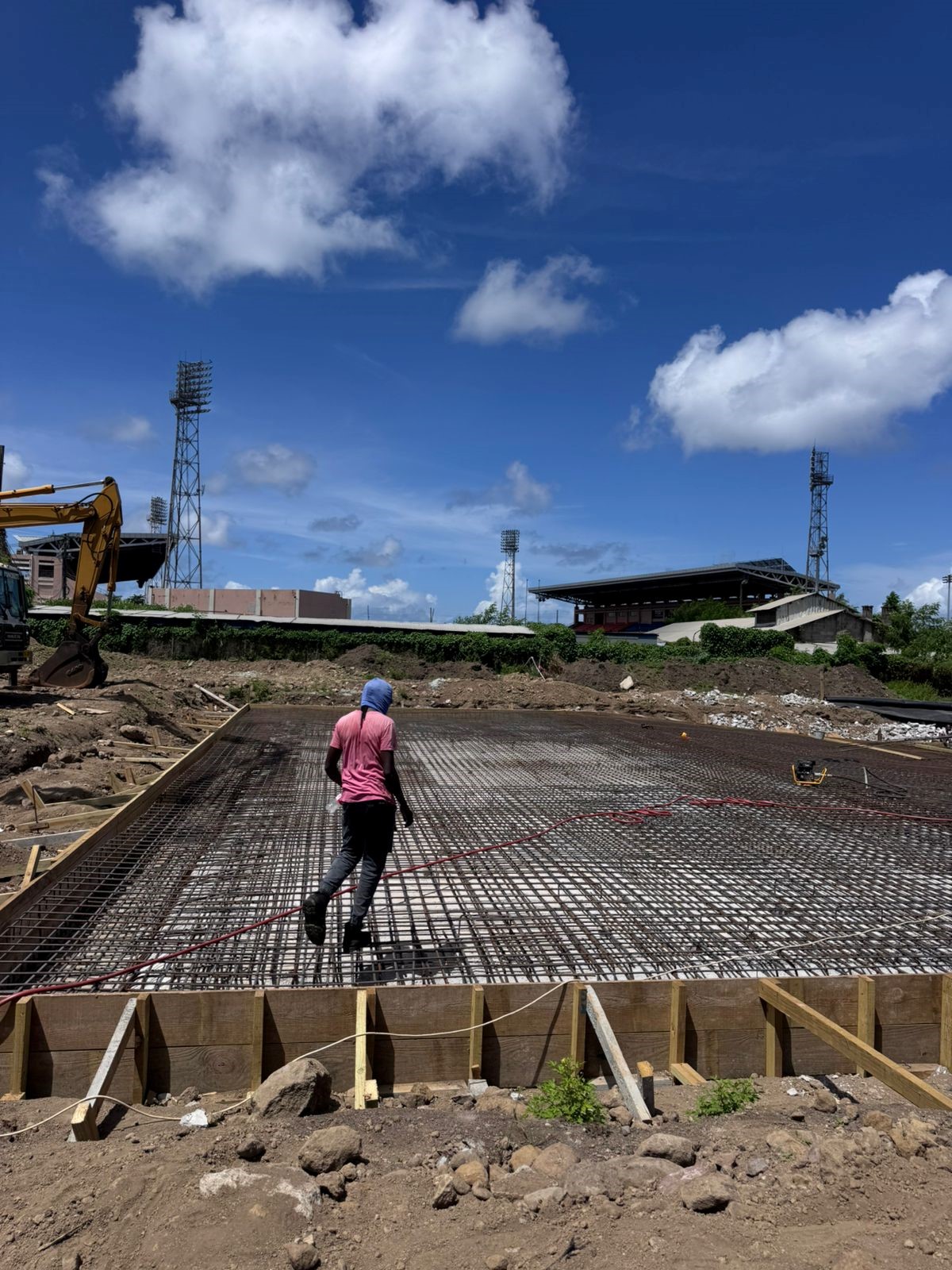
For decades, the growth of competitive and recreational aquatic sports in the Caribbean island nation of Grenada has been held back by a critical gap: the absence of a purpose-built, modern swimming facility to serve athletes, coaches, and communities across the country. Today, that long-held dream of a national aquatic hub is one significant step closer to completion, as construction of the Grenada Aquatic Centre has advanced to its critical pool installation phase, project organizers have announced.
The initiative is being delivered through a collaborative partnership between the Grenada Amateur Swimming Association (GASA) and the Government of Grenada, with support from the Ministry of Infrastructure and Ministry of Sport. Multiple key international and national stakeholders have provided financial, technical and institutional backing to bring the project to life, including global governing body World Aquatics, Panam Sports, the International Olympic Committee, and the Grenada National Lotteries Authority.
All required construction containers, specialized equipment, and raw materials for the pool have already arrived on the island, clearing the way for on-site work to begin in earnest. The project has contracted globally recognized pool infrastructure specialist Myrtha Pools to lead the design and installation of the competition pool, a choice that underscores the commitment to delivering a facility meeting international competitive standards. A specialized technical team from Myrtha has already completed on-site work to install the full pool piping system ahead of the concrete slab pouring phase, wrapping the job up on schedule.
In the final week of August to the first week of September, project teams completed one of the biggest construction milestones to date: pouring 300 cubic yards of reinforced concrete to form the pool’s foundational slab. The slab is currently undergoing a 20-day curing process, after which the Myrtha team will return to the site to begin final assembly and installation of the pool structure. Close coordination between Myrtha’s international specialists, a local project steering committee, and technical personnel deployed by the Government of Grenada ensures every step of construction aligns with global competitive specifications and international safety standards.
Oversight of the entire project is managed by an appointed pool committee chaired by Veda Bruno, with members Gail Purcell, Peron Johnson, Reyan Neckles, and Paul Antoine. The committee has overseen every stage of development from the initial concept phase, working to align priorities and maintain collaboration across all partner groups.
While progress has been substantial, GASA officials note that several critical components remain to be funded and completed to transform the facility into a fully functional, competition-ready aquatic center. Key outstanding needs include public washrooms and athlete changing facilities, a covered spectator seating pavilion, a professional electronic timing system for competitions, and a range of additional essential operational equipment. GASA emphasized that continued financial and institutional support from national, regional, and international partners will be critical to delivering these final components and unlocking the full potential of the new facility.
In a statement released this week, GASA extended its gratitude to all contributing partners, singling out the Government of Grenada for its ongoing collaboration, and international bodies World Aquatics, Panam Sports, and the IOC, as well as the Grenada National Lotteries Authority for their backing. The organization also paid tribute to the foundational work of the 1990s GASA Executive Committee led by Derick Steele, whose early commitment to growing swimming in Grenada laid the critical groundwork for the progress being seen today.
Beyond building a single competition pool, the project marks a transformative shift for aquatic sports across Grenada. For generations, local swimmers have trained in makeshift, inadequate facilities that limited their ability to develop and compete at regional and international levels. Once complete, the center will provide a safe, regulation-standard environment for training, competition, and skill development, giving local athletes the infrastructure needed to properly prepare for major global events and allowing coaches to run structured, long-term athlete development programmes.
The facility will also create a clear development pathway for young talent, giving children and aspiring competitive swimmers access to high-quality training from an early age. Beyond elite competitive swimming, the aquatic center is designed to serve broad community needs across the island, hosting a range of programs including learn-to-swim classes for children and adults, lifesaving and water safety training, youth school swimming initiatives, community recreational programs, regional and international competitive events, high-performance training camps, coach and official professional development, and multi-sport training usage.
Most critically, for an island nation surrounded by the Caribbean Sea, the facility will help build a widespread culture of water safety and universal swimming proficiency, while creating a lasting platform for Grenadian athletes to compete for excellence on the world stage.
As construction continues, all involved stakeholders remain focused on maintaining momentum to deliver the long-awaited facility. What once started as a distant vision for swimming in Grenada is now rapidly taking physical shape: the pool is progressing, the national vision for aquatic sports is becoming reality, and a new future for Grenadian swimmers is emerging alongside it.