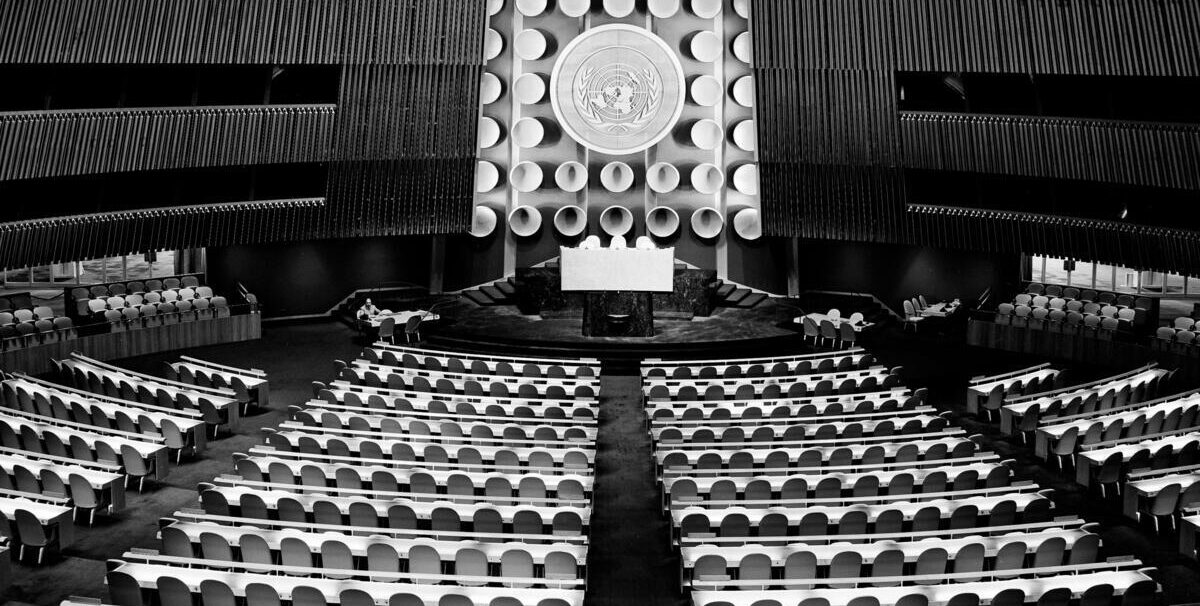
As world leaders prepare to gather in New York City next week for the General Debate of the 81st United Nations General Assembly (UNGA), leaders from the Caribbean Community (CARICOM) bloc are expected to center their remarks on the growing crisis facing global multilateral cooperation — a challenge that is already inflicting tangible damage on their small island nations. The 81st UNGA session, which opened earlier this month, carries the overarching theme ‘Restoring Trust, Managing Transformation: A United Nations That Delivers for All’, and is led by General Assembly President Khalilur Rahman of Bangladesh. High-Level Week, running from September 18 to 28, will host a packed schedule of special summits, thematic meetings, and bilateral engagements, with the flagship General Debate kicking off on September 22 in the iconic UN General Assembly Hall. The session is set to conclude in September 2027.
For CARICOM member states, all classified as Small Island Developing States (SIDS), the UN-centered multilateral system has long been a cornerstone of their foreign policy strategies, enabling them to amplify their voices and advance their strategic autonomy on the global stage. This commitment was reaffirmed by CARICOM leaders during last year’s 80th UNGA session, though recent policy disagreements within the bloc have sparked questions about unified alignment on this front.
In a public statement issued this past July, CARICOM leaders underlined their unwavering commitment to a multilateral order rooted in the UN Charter and international law, a stance echoed across the community of SIDS and low-lying coastal nations. These small states, long sidelined by major global powers, are currently punching above their weight in one key area: the selection of the next UN Secretary-General. Three of the eight candidates vying to succeed António Guterres when his term ends in 2027 hail from SIDS, drawing new global attention to their stake in ongoing multilateral reform efforts.
SIDS including CARICOM members warn that rising great-power polarization, unfolding against a historic post-Cold War shift in the global balance of power, has eroded their ability to shape their own national trajectories. This polarization directly undermines the collective cooperation that small states depend on, and CARICOM leaders are expected to spotlight this threat during their General Debate addresses. They will also draw attention to spillover effects from pressing global conflicts, most notably tensions between the United States and Iran that have disrupted shipping through the Strait of Hormuz, sending ripples through global energy markets that impact Caribbean nations far from the Middle East.
From CARICOM’s perspective, growing global fragmentation and the rise of transactional foreign policy — which favors powerful nations with greater military and economic leverage — has stretched multilateralism to breaking point, leaving small states at a systemic disadvantage. The long-term prosperity of CARICOM nations hinges on delivering tangible progress through multilateral channels, and with the UN serving as a critical force multiplier for their diplomatic goals, Caribbean small states are active participants in efforts to reform the 81-year-old global body. They have pinned their hopes on a renewed multilateral system that can deliver equitable outcomes for all nations, regardless of size.
Against a backdrop of eroding trust, waning legitimacy, and growing questions about the UN’s effectiveness, institutional reform has emerged as a top global priority. The UN80 Initiative, launched to make the world body more agile, integrated, and responsive to 21st-century challenges, has been a focal point of these efforts, and it has garnered close attention from small states including CARICOM’s 14 sovereign member states.
The selection of Guterres’ successor, who will take office in January 2027, will have major implications for the future of this reform agenda. The incoming Secretary-General will inherit the mandate to drive reform across the UN’s three core pillars: peace and security, human rights, and sustainable development. One of the most pressing challenges will be advancing the 2030 Agenda for Sustainable Development, whose 17 Sustainable Development Goals (SDGs) are already off track to meet their 2030 deadline, according to the 2026 SDG Report. The next Secretary-General will also need to advance the Pact for the Future, a framework designed to update global institutions for modern challenges that outlines 56 concrete actions across five core priority areas.
Three interconnected trends define today’s most pressing global challenges that the next UN leader will need to address: a historic power shift away from the post-Cold War unipolar order toward a contested multipolar system; the growing influence of Global South nations amid this geopolitical churn; and the rising prioritization of transactional, power-centric foreign policy over collective cooperation. CARICOM nations recognize the opportunity their collective diplomatic standing gives them to help address the multilateralism crisis, even as they acknowledge it is far from an easy fix. They are unified in their expectation that the next UN Secretary-General must prioritize addressing this systemic crisis, which has left the UN grappling with financial strains and growing questions about whether its core institutions are still fit for purpose in the modern era.
As outgoing UN Secretary-General António Guterres noted during the 18th BRICS Summit in New Delhi earlier this month, the global order looks unrecognizable from what it was in 1945, and global institutions must adapt to reflect this change. Guterres emphasized that the old order must evolve to accommodate the rising influence of emerging economies, framing BRICS as a clear example of the shift toward a multipolar world. He outlined four core priorities for inclusive global growth: financing, technology, climate justice, and peace. This shift has created growing tensions between established Western powers and the rising bloc of emerging Global South nations, creating a challenging landscape for small states like those in CARICOM.
CARICOM currently faces two key risks: that UN reform efforts will fall short of delivering meaningful change that advances small state interests, and that ongoing geopolitical dynamics will continue to undermine efforts to renew collective multilateral cooperation. These challenges are compounded by existing internal geopolitical divisions within the bloc, most recently highlighted by Trinidad and Tobago’s foreign policy approach to regional security dynamics involving Venezuela, which aligned with the revamped Monroe Doctrine advanced by the U.S. and exposed disagreements over the Caribbean’s longstanding goal of operating as a ‘Zone of Peace’.
Even with these challenges, the upcoming UNGA High-Level Week represents an unparalleled opportunity for CARICOM to make its mark on multilateral reform and shape the global agenda for cooperation. This year, the bloc has extra reason to lead from the front: CARICOM has formally endorsed Guyana’s Permanent Representative to the UN, Ambassador Carolyn Rodrigues-Birkett, as its candidate for the next UN Secretary-General, and she is currently reported to be the front-runner in the selection process. When CARICOM leaders take the stage in New York in the coming days, they will not only lay out their shared concerns about the state of multilateralism but also highlight this historic milestone for the Caribbean bloc and the Global South as a whole.