Following dangerous delays that left boats and maritime operators exposed to life-threatening risk during Hurricane Beryl, regional coastal management authorities have unveiled sweeping plans to modernize outdated emergency vessel haul-out infrastructure. The project stands as a core component of broader climate adaptation initiatives designed to protect critical maritime assets, preserve the livelihoods of local fishing communities, and reinforce the overall resilience of coastal communities facing intensifying extreme weather events.
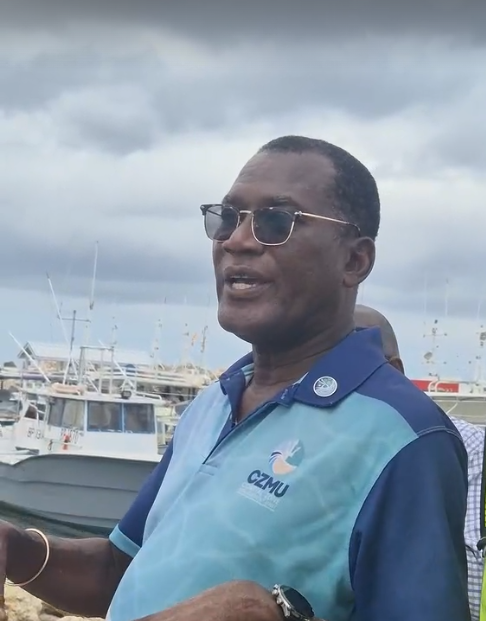
Dr. Leo Brewster, director of the Coastal Zone Management Unit (CZMU), outlined the new design requirements during an inspection of the local Fisheries Complex, emphasizing that all future coastal infrastructure must balance long-term structural durability with the critical ability to evacuate vessels from dangerous open water rapidly when a storm approaches.
At the heart of the proposed facility is a specialized travelift (also referred to as a tummy lift), which will operate from a purpose-built finger pier adjacent to a widened traditional slipway. Unlike the previous single-crane system that processed one vessel at a time, this new configuration will allow large commercial fishing vessels and smaller private craft to be hauled out of the water simultaneously ahead of an incoming storm. The old system created crippling bottlenecks before Hurricane Beryl, particularly for partially waterlogged vessels that required extended draining time before they could be safely lifted and moved, leaving hundreds of boats vulnerable to damage.
Brewster explained that the travelift streamlines the entire haul-out process: vessels sail directly onto the machine’s reinforced straps, are lifted clear of the water, and can be transported directly to onshore storage locations, either on pre-prepared trailers or purpose-built support cradles. The parallel slipway will remain in operation to accommodate smaller vessels that use their own trailer setups, creating two independent, simultaneous workflows that cut down overall evacuation time dramatically.
Authorities are also adding a dedicated onshore boat park adjacent to the haul-out facility to provide secure long-term storage for evacuated vessels, addressing ongoing gaps in current capacity that have long complicated emergency preparations. Brewster noted that the facility’s support infrastructure requires specialized engineering to withstand repeated heavy loads, accounting for both the varying weights of different sized vessels and the combined weight of the travelift and its cargo during daily operations. Current onshore storage and support infrastructure does not meet the required load capacity for the growing volume of local commercial and recreational vessels, he added.
Brewster also stressed that the success of the upgraded facility will still depend on proactive action from vessel owners, recalling guidance from the late Chief Fisheries Officer Dr. Shelly-Ann Cox, who passed away in June. Cox estimated that moving the region’s full fleet of vessels to safe onshore storage requires a minimum four-day lead time ahead of a potential storm landfall. Last-minute rushing by owners, Brewster warned, would still create delays even with the upgraded infrastructure. With the new system in place and early action from vessel owners, authorities project that the majority of the local fleet can be moved to safety within the four-day window, creating a far more coordinated and effective emergency response process.
The overhaul marks a key step in the region’s ongoing efforts to adapt to the increasing frequency and severity of Atlantic hurricanes linked to climate change, protecting both economic activity and human life along vulnerable coastlines.