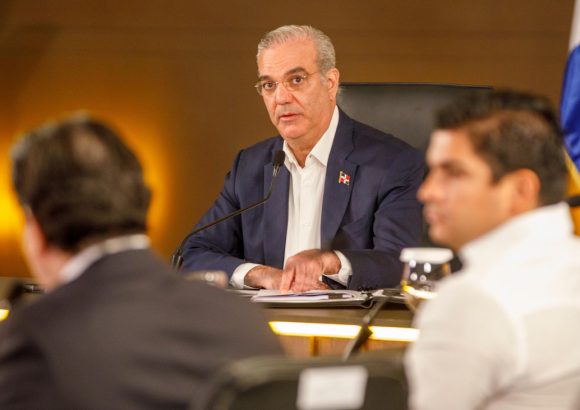
In a public presentation held in Santiago de los Caballeros on Monday, Dominican Republic President Luis Abinader showcased the milestones achieved for the Santiago Integrated Transportation System — an initiative that local authorities have hailed as the most ambitious infrastructure and mobility project in the province’s modern history.
This transformative transit development is a core pillar of the national government’s broader regional development framework, crafted to reverse decades of uneven public investment across the country, boost Santiago’s long-term economic competitiveness, and spread viable economic opportunity beyond the capital city of Santo Domingo.
During the weekly government briefing “La Agenda Semanal”, hosted in Santiago, Jhael Isa, director of the Office of Urban and Interurban Mobility Project Development, detailed the project’s timeline. He noted that formal planning for the initiative kicked off in September 2021 alongside the formal Santiago Commitment, and construction and development have proceeded at a far faster pace than initially projected.
At the heart of the new system is a 13-kilometer monorail line that includes 14 stations across the city. The monorail trains will reach top operating speeds between 60 and 80 kilometers per hour, with trains arriving at stations at an average interval of just 90 seconds, cutting wait times dramatically for daily commuters.
The massive construction scope of the project includes 4,252 foundation piles, 662 structural footings, 716 support columns, 658 capitals and 1,132 support beams. Additional infrastructure includes a dedicated maintenance and storage workshop yard, two new bridges crossing the Gurabo and Nibaje ravines, and a 500-meter excavated tunnel built to preserve the historic integrity of Santiago’s protected Monumental Zone.
The monorail will not operate as an isolated service; it will be integrated into a comprehensive multi-modal public transit network that connects directly to the existing Santiago cable car, seven expanded bus corridors, and a city-wide public bicycle sharing system. According to official project updates, system-wide testing is scheduled to launch in October, with public preview tours following shortly after, and full commercial passenger service on track to launch before the end of the current calendar year.
To make the system accessible to all residents, authorities have set a unified integrated fare of just 35 Dominican pesos, which allows riders to transfer seamlessly between OMSA public buses, the cable car, and the new monorail under a single payment structure.
Officials project that this unified fare model will cut average transportation costs significantly for working residents and students, while also improving connectivity between previously disconnected neighborhoods across Santiago.
The full transit line will connect key population and economic hubs stretching from the Cienfuegos district to the Pekín neighborhood, linking dense residential areas to major universities, industrial free trade zones, and the central business district. Beyond Santiago itself, the improved regional connectivity will also benefit daily commuters from neighboring provinces including Puerto Plata, Espaillat, La Vega, Duarte and Hermanas Mirabal, cementing Santiago’s long-standing role as the primary economic center of the Cibao region.
Beyond its core goal of improving urban mobility, the project is designed to advance the national government’s push for economic decentralization. By expanding infrastructure and opportunity in Santiago and the broader Cibao region, officials aim to reduce the economic pressure that pushes many local residents to relocate to the overcrowded capital of Santo Domingo in search of work and services.