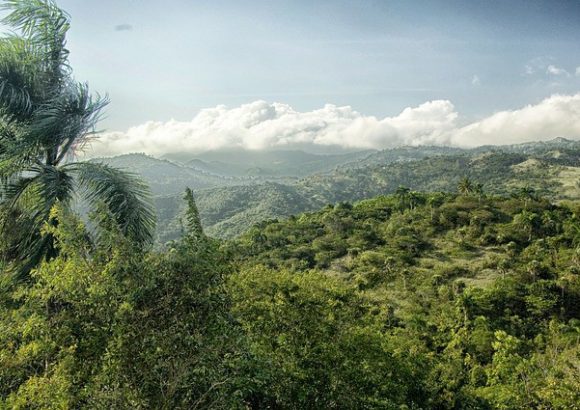
At the launch of his new publication *Natural Resources and Ecology*, prominent Dominican agronomist Gabriel Valdez Sierra has issued a pressing call to both national authorities and the general public of the Dominican Republic to ramp up coordinated efforts to safeguard natural resources, preserve vulnerable biodiversity, and reverse the ongoing decline of native plant and animal species across the country and beyond.
In his presentation, Valdez Sierra drew attention to the accelerating rate of global ecosystem degradation, citing peer-reviewed research that estimates approximately 61,000 square kilometers of new desert are formed annually as once-productive agricultural and wild land degrades to unproductive arid terrain. He outlined three interconnected, critical environmental challenges facing the planet and the Caribbean region specifically: widespread fertile topsoil loss, accelerating deforestation, and the steady increase of global greenhouse gas emissions.
The agronomist emphasized that human activity is driving soil erosion at a rate far faster than natural soil formation processes can regenerate this critical non-renewable resource. He added that the ongoing clearance of tropical forests, one of the planet’s most biodiverse ecosystems, does not only destroy habitat for countless species but also creates cascading risks to global food security and freshwater access for vulnerable communities.
Valdez Sierra further explained that rising atmospheric concentrations of carbon dioxide and other heat-trapping greenhouse gases are driving global temperature increases, which in turn put unprecedented pressure on freshwater reserves, agricultural production systems, and low-lying coastal communities that face growing flood and erosion risks.
A core focus of Valdez Sierra’s new book is a comprehensive historical analysis of the Dominican Republic’s national protected area network. The work traces the system’s evolution from its origins in the 1950s, when iconic protected spaces including the José Armando Bermúdez and José del Carmen Ramírez national parks were first established, through to the system’s expansion and development up to 2020. It also includes a detailed case study of the binational Carebios initiative, a cross-border conservation project designed to boost the adaptive capacity of shared transboundary biosphere reserves along the Haiti-Dominican Republic border.
Wrapping up his presentation, Valdez Sierra underlined that reversing environmental damage will require widespread public education to build greater awareness of accelerating ecosystem degradation, and he renewed his call for cross-sector collective action to halt the unsustainable depletion of the Dominican Republic’s irreplaceable natural resources.