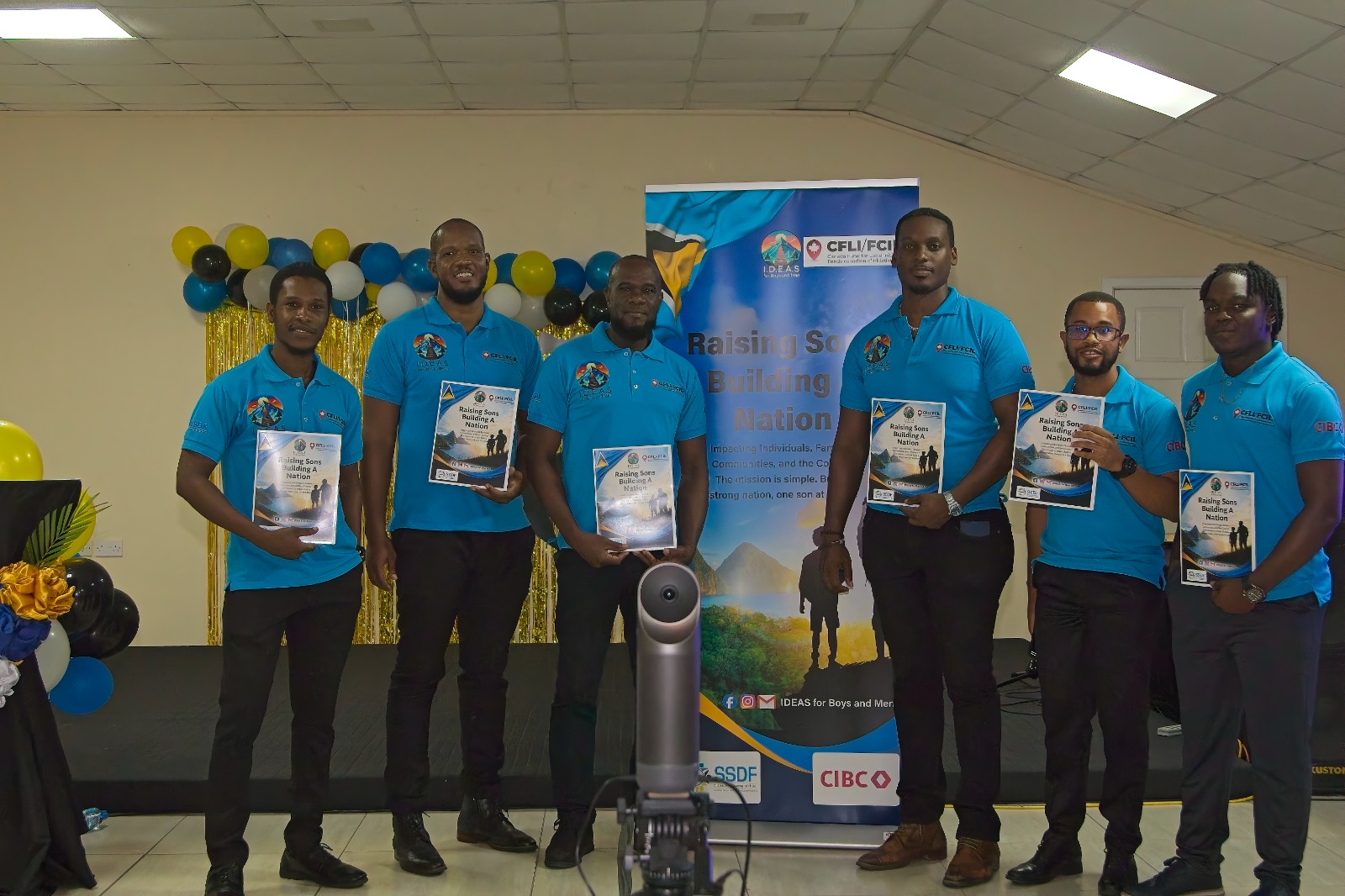
Against a backdrop of growing regional concerns over healthy youth development for young males, a Saint Lucian organization focused on supporting boys and men has launched an ambitious new community project designed to guide vulnerable adolescents toward positive self-conception and productive civic participation.
I.D.E.A.S. for Boys and Men, which has operated locally for 18 months, formally kicked off its flagship Raising Sons Building A Nation Project this month. The initiative centers its outreach on underserved boys between the ages of 11 and 16, a critical developmental window that often carries heightened risks of identity confusion and harmful life choices for marginalized youth. For participants, the project will deliver structured mentorship, targeted psychosocial support, and structured opportunities for healthy personal growth.
Project coordinator Kevin Mathurin explained that the organization was founded in direct response to mounting worries about outcomes for young men across Saint Lucia and the broader Caribbean region. Created by a cohort of local young men who felt a collective duty to lift their communities, the organization works to close gaps in support by building intentional connections between schools, family homes, and community support systems.
Currently, I.D.E.A.S. runs three core support interventions, one of which is the Father Resource Centre. This program partners directly with fathers to strengthen their active engagement in their children’s lives, and also provides guidance to help men navigate legal processes when they take on formal caregiving responsibilities. Mathurin emphasized that the organization centers fatherhood in its work because of the unique, formative influence fathers have on children—especially boys—and seeks to remove barriers that keep men from showing up consistently in their kids’ upbringings.
The new Raising Sons Building A Nation Project is the organization’s top priority right now, and its mission extends far beyond individual youth development: it aims to drive long-term, positive national change. Mathurin noted that adolescence, the life stage of the project’s target group, is a period when many young males grapple with identity formation, and without targeted support, some drift toward harmful, self-destructive identities.
“If we can provide them with a more constructive identity, this would be a plus for us,” Mathurin said.
To deliver consistent, holistic support, the organization has designed a coordinated care model that aligns input and guidance from families, schools, and community stakeholders. Before starting support, the project conducts personalized assessments to identify which boys need intervention most, then works closely with parents, teachers, coaches, school counselors and other trusted adults in each young person’s life to align messaging and support.
Mathurin pointed out that while cross-stakeholder alignment for youth development has been talked about for decades, little progress has been made to build standardized, individualized support systems that put this idea into practice. “We have been saying that for decades, but not much has been done to put that standardised care around the individual,” he noted.
The initiative will launch first as a one-year pilot program to measure its outcomes and refine its approach. After the initial assessment and intervention phase, each participant will be matched with a long-term mentor to help them set and work toward personal goals, including crafting a clear personal vision and mission for their lives. The project will also host a specialized camp to help participants build healthy, respectful relationships with authority figures—an area where many fatherless, underserved boys face unique struggles, according to Mathurin.
By addressing these underlying challenges early, the project team hopes to steer young people away from decisions that could lead to harmful, self-sabotaging behavior later in life. Beyond direct youth support, the initiative also prioritizes restoring traditional community values of mutual responsibility through active civic engagement, particularly among men and fathers.
For the project, success will be measured in part by a visible increase in men taking intentional responsibility for child rearing and stepping up as positive role models for the next generation of young males. To date, the initiative has secured backing from the Government of Saint Lucia and local corporate social responsibility programs, and Mathurin said early public response has been overwhelmingly encouraging, with large numbers of local men stepping forward to express interest in contributing to youth development efforts.
Even so, Mathurin acknowledged that thoughtful, consistent on-the-ground execution will be the single most important factor in determining whether the project delivers meaningful long-term impact. “Execution is very important at this point, and that is where our attention is focused at the moment,” he said. Moving forward, the organization hopes that with sustained community support and participation, the project will strengthen local families, nurture a new generation of healthy young men, and help build a stronger, more cohesive Saint Lucia.