Nearly four years after Bahamian lawmakers passed a sweeping bill to modernize the nation’s outdated approach to mental health care, the national government has only just announced plans to acquire two dedicated safe houses for unhoused people living with severe mental illness — and still has not released a clear timeline for when the facilities will open to the public.
Speaking at the 2026 World Suicide Prevention Day Symposium and Orange Alert Day on Monday, Minister of State for Health and Wellness Owen Wells confirmed that provisions of the 2022 Mental Health Act mandating the development of these safe housing facilities have yet to be enacted into active policy. The 2022 legislation was introduced to replace a decades-old framework dating back to 1969, billed as a transformative overhaul that would expand patient protections, increase access to evidence-based treatment, and set national quality standards for all mental health services across the country.
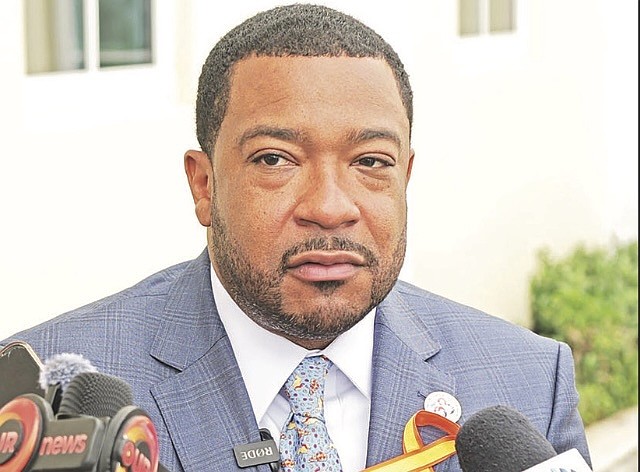
Wells told attendees that while key portions of the new law are already in effect, the safe house mandate remains unimplemented. “There are portions that are currently in force now, and portions that we have to bring into force. Specifically, from my address today, what we have to bring into force is the one on safe houses,” he explained. The minister added that his team is in the early planning phase, and will submit a formal proposal to the national Cabinet “very shortly” to secure approval for purchasing two separate facilities, one for male residents and one for female residents.
“We are currently in the process now. Very shortly, my ministry will be bringing a paper to the cabinet so we can purchase these safe houses where people who suffer from these mental difficulties they will have a safe space, as I would have mentioned in my speech,” Wells said. Despite this commitment, the minister declined to provide concrete dates for when the Cabinet proposal will be submitted, when the property purchases will be completed, or when the facilities will begin accepting residents. The safe houses are specifically intended to house unhoused people living with severe mental health conditions, a visible population across The Bahamas that has drawn consistent public concern.
“You would see around the country, people who we all deem to have some mental challenges just on the street,” Wells said. “So what we are looking to do is get these safe spaces for them and move them in there, and they’ll be secure, the public will feel secure, so that’s something that we’re looking to do very shortly.”
Wells’ announcement comes amid years of growing scrutiny over the government’s slow pace of implementing the landmark 2022 legislation. As far back as September 2024, then Health and Wellness Minister Dr. Michael Darville admitted the bill had not been fully rolled out, despite the government having previously positioned the reform as a central pillar of its national mental health strategy.
Two months after Darville’s admission, opposition Senator Michaela Barnett-Ellis of the Free National Movement publicly slammed the delay, arguing that timely full implementation of the law could have prevented two high-profile violent crimes linked to unaddressed mental illness. She accused the governing administration of “sitting on” the legislation for more than a year, letting a critical reform languish without action.
When the Mental Health Act was debated in Parliament in 2022, Prime Minister Philip “Brave” Davis framed the bill as a long-overdue step to expand community-centered mental health resources and ensure all people living with mental illness could access appropriate, local care. At the time, Darville, who led the health ministry then, tied the reform to rising rates of unhoused people living with untreated mental health conditions, noting the bill would shift The Bahamas away from outdated institutional care models toward community-based treatment and stronger legal protections for patients. Earlier this week, Wells characterized the 2022 law as one of the most comprehensive mental health frameworks in the Caribbean region, even as he acknowledged its key provisions remain unimplemented.
The push for safe housing also comes amid a decades-long shortage of specialized supported accommodation for unhoused people, including those with mental illness. Earlier this year, The Tribune reported that Great Commission Ministries, a leading faith-based charity serving the unhoused community, has spent decades struggling to secure government land for a dedicated homeless shelter. Founder Bishop Walter Hanchell has repeatedly noted that a large share of the unhoused population on Bahamian streets lives with unaddressed severe mental health challenges. The organization’s planned 100-bed Hope City shelter has been stalled for years amid a public dispute over access to government-owned Crown land.