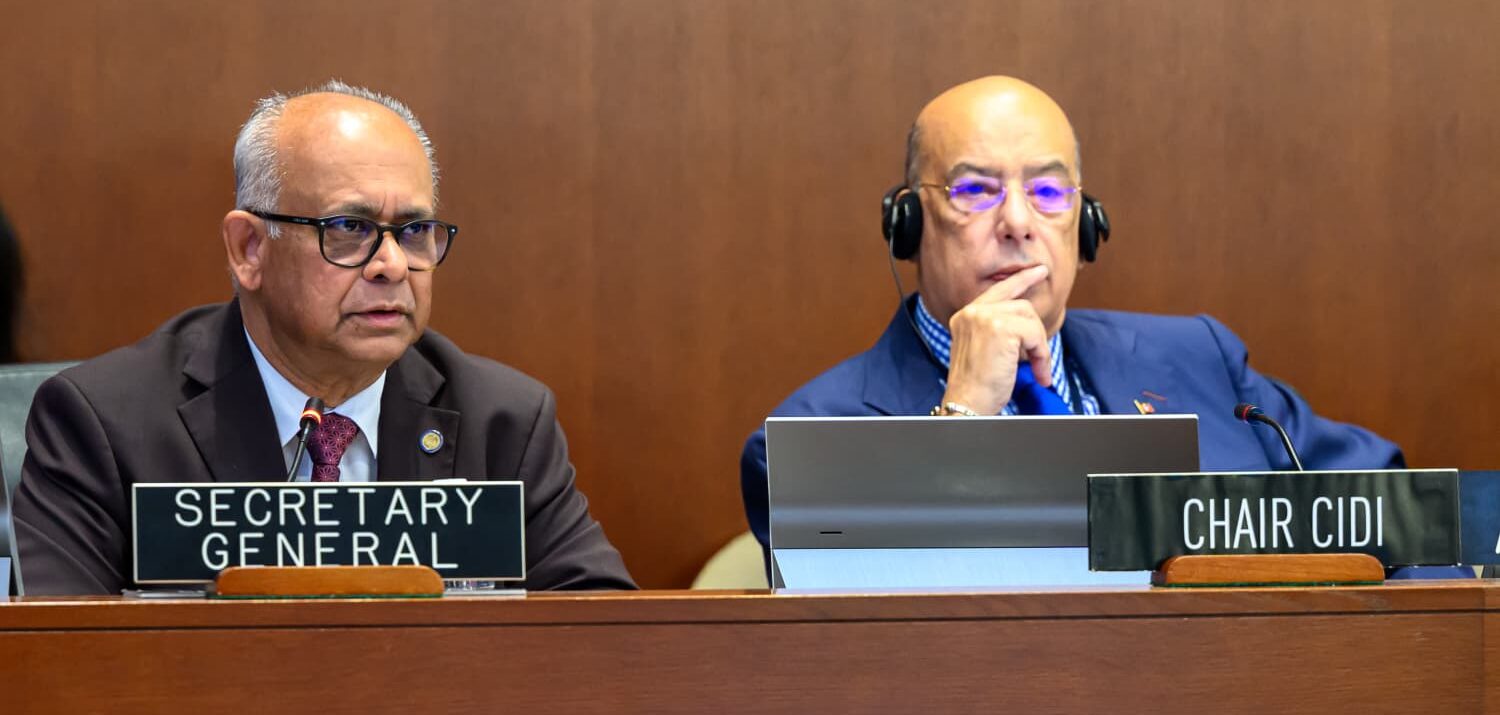
On September 9, a landmark special meeting convened by Sir Ronald Sanders, Antigua and Barbuda’s Ambassador to the Organization of American States (OAS) and Chair of the Inter American Council for Integral Development (CIDI), brought together key stakeholders from across the inter-American system to reorient the body’s priorities around inclusive, sustainable development. The gathering, which included OAS Secretary General Albert Ramdin, representatives from 32 active OAS member states, and delegations from Permanent Observers including the European Union, China, Spain, Italy, France, Morocco and Japan, served as a platform to challenge existing hierarchies of priority within inter-American governance. At the core of Sanders’ address was a bold re framing of development’s role in the inter-American system: rejecting the common framing of development as a secondary, “fourth pillar” of the organization’s work, he argued that it is the foundational bedrock upon which the system’s other core priorities rest. Sanders elaborated on the interconnected nature of development and the OAS’ other core missions, noting that fundamental human rights cannot be fully realized when communities lack access to food, affordable healthcare, and quality education. He further explained that democratic institutions lose public legitimacy when citizens are blocked from accessing dignified work or pathways to upward mobility, while public security frameworks grow increasingly fragile when young people see no viable future in the formal, legal economy. Beyond eroding the system’s core pillars, Sanders linked chronic underdevelopment to the growing migration pressures that dominate policy debates across the Americas, noting that mass migration almost always originates in regions where economic hope and opportunity have collapsed. “When development fails, the other pillars do not stand untouched. They begin to fracture,” he emphasized. While Sanders acknowledged the critical, valuable support that Permanent Observers from Europe and Asia have extended to the OAS’ work in democracy, human rights and security, he pointed out that development cooperation has not received the same level of focus in the organization’s external partnerships. A key additional priority highlighted in his address is scaled-up support for climate-resilient development, a pressing need for small island developing states like Antigua and Barbuda, which are repeatedly forced to take on crippling public debt to rebuild critical infrastructure destroyed by intensifying severe weather events. Sanders pushed back against framing development cooperation as a peripheral charitable act disconnected from core foreign policy goals, arguing instead that it is a high-impact investment at the center of shared regional stability and collective prosperity. To turn this call into action, he proposed that this September 9 meeting be the first in an ongoing series of practical working sessions between CIDI and OAS Permanent Observers, designed to build tangible collaborative partnerships and deliver measurable, on-the-ground development outcomes for communities across the hemisphere.
Chair of OAS Development Council Calls for Development to Be Placed at the Centre of Hemispheric Stability