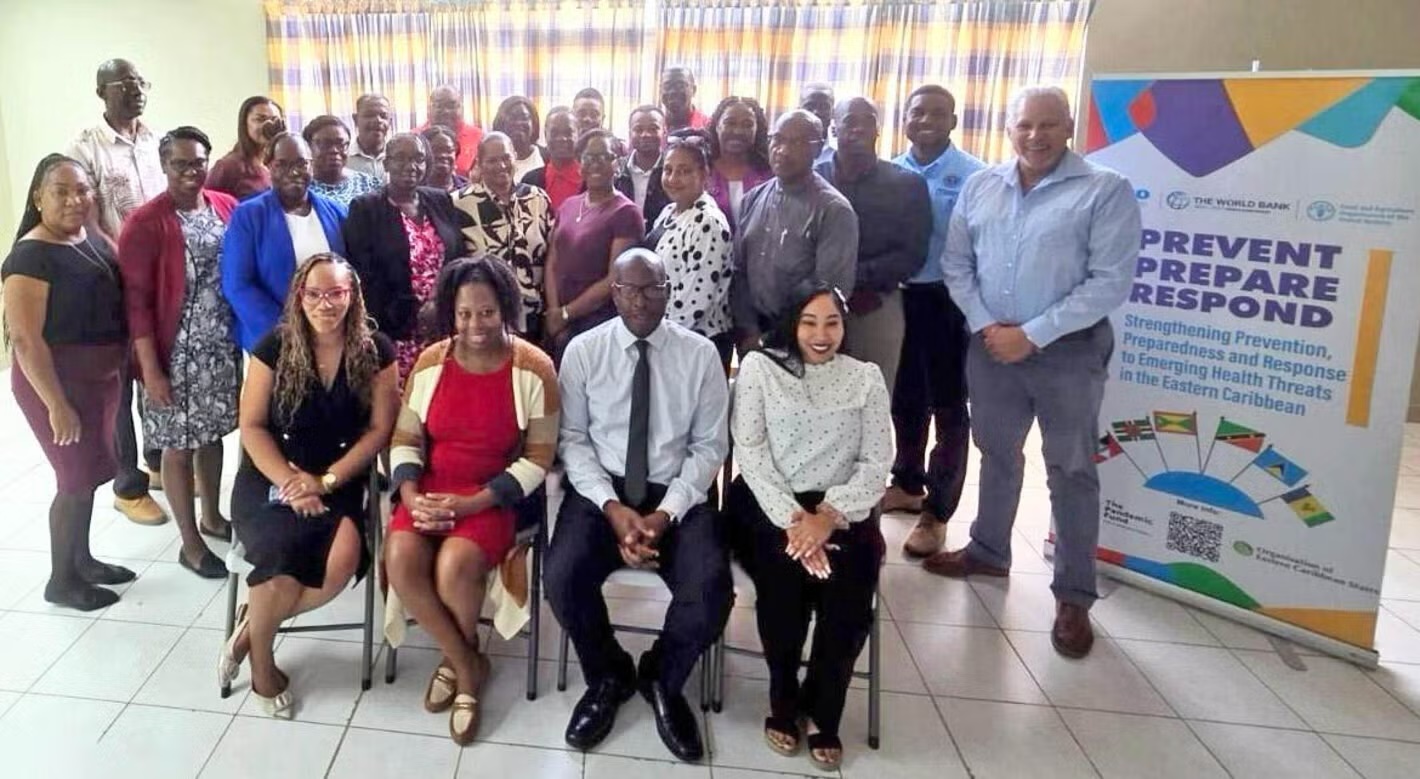
Against a global backdrop of ongoing lessons from recent global health crises, the Caribbean nation of Grenada has made meaningful progress in shoring up its defenses against future respiratory pathogen pandemics, following a 2.5-day national stakeholder workshop focused on validating and upgrading the country’s official pandemic preparedness and response framework.
Organized jointly by Grenada’s Ministry of Health, Wellness and Religious Affairs and the Pan American Health Organization/World Health Organization (PAHO/WHO), the interactive workshop delivered a prioritized roadmap of targeted updates to ensure the national plan aligns with modern local legislative structures, current staffing rosters, formal institutional responsibilities, and on-the-ground operational realities. The entire initiative is backed by the Pandemic Fund Project for Eastern Caribbean Countries, a regional effort designed to boost pandemic readiness across smaller island nations.
Grenada’s National Respiratory Pathogen Pandemic Preparedness and Response Plan outlines a whole-of-society approach to preventing, detecting, and managing outbreaks of contagious respiratory diseases that could rise to pandemic levels. Its scope spans core functional areas: governance and legal authority for emergency responses, phased pandemic alert level systems, disease surveillance frameworks, community protection protocols and public risk communication, standardized clinical management of patients, infection prevention and control protocols, access to and distribution of medical countermeasures, sustained emergency financing, and cross-agency national coordination. Critically, the plan is built to bring Grenada’s national practices in line with the 2005 International Health Regulations and embed a cross-sector One Health approach that integrates human, animal, and environmental health systems.
The workshop drew 27 cross-sector participants representing a broad range of agencies that would play critical roles in any pandemic response. Attendees included stakeholders from multiple divisions of the Ministry of Health – the Epidemiology Unit, Grenada General Hospital, Central Medical Stores, and national mental health services – alongside representatives from the Ministry of Agriculture and Office of the Chief Veterinary Officer, Ministry of Legal Affairs, Ministry of Social Development, Government Information Service, National Disaster Management Agency, St. George’s University, and the Windward Research and Education Foundation (WINDREF).
Working in small collaborative working groups, participants ran a tabletop simulation to test core provisions of the existing plan against a hypothetical respiratory pathogen outbreak scenario. Each provision was coded with a color rating: green for policies that are up-to-date and functional, amber for provisions that required targeted amendments, and red for gaps where the capacity or mechanism outlined in the plan does not yet exist in practice.
The comprehensive review confirmed that the overall structure of Grenada’s existing national plan remains robust and fit for purpose. At the same time, the process identified a clear set of gaps and areas that require updating to reflect the country’s current domestic context, from revised national legislation to shifting staffing arrangements.
On the final day of the workshop, participants ranked all proposed amendments by urgency and importance, creating a formal prioritized action register that assigns clear responsible parties and target completion timeframes for every required update. This document provides the Ministry of Health with a clear, sequenced, time-bound roadmap to guide the revision and eventual implementation of the updated plan.
Top priority actions include revisions to the national legal and policy framework governing pandemic responses; clarification of formal activation authority and cross-agency decision-making responsibilities; formal documentation of laboratory and clinical care surge capacity arrangements; strengthening national infection prevention and control protocols; establishing realistic, actionable schedules for early-warning reporting and regular preparedness simulation exercises; and maintaining up-to-date emergency contact information that accounts for regular staffing turnover.
A flagship One Health priority identified through the review is the creation of a formal written standard operating procedure (SOP) for information sharing between the Office of the Chief Veterinary Officer and the national Epidemiology Unit. While informal collaboration between animal and human health sectors already occurs when needed during ongoing events, no formal written protocol currently exists to govern how potential pandemic signals detected in animal populations are communicated to human health authorities, nor does it outline required response timeframes for these alerts. The new SOP will be co-developed by the Ministry of Agriculture, St. George’s University, and WINDREF to fill this critical gap.
Grenada’s Chief Medical Officer, Dr. Shawn Charles, emphasized that sustained pandemic preparedness remains a critical public health priority even when no immediate threat is on the horizon. “Pandemic preparedness is not something a country can assemble once a threat has arrived. It has to be built, tested and maintained in the quiet periods,” Dr. Charles explained during the workshop. “What this workshop has done is put every section of our plan in front of the people who would have to act on it and ask them plainly whether it would work. A plan that sits on a shelf protects no one. A plan that our officers have interrogated, corrected and can act on is what protects Grenadians.”
Moving forward, the prioritized action register will guide the full revision of the National Respiratory Pathogen Pandemic Preparedness and Response Plan, with the Ministry of Health leading coordination and collecting input from all responsible agencies identified during the workshop. The Grenada workshop is one component of the broader Pandemic Fund Project for Eastern Caribbean Countries, which supports participating regional nations in building long-term capacity for pandemic prevention, preparedness, and response, per PAHO/WHO.
This content is sourced from PAHO/WHO reporting, with NOW Grenada not taking responsibility for contributor-provided content,