A decades-long victory over a devastating parasitic pest in Central America has been thrown into jeopardy, after conservation groups confirmed suspicious signs of New World screwworm infestation in two iconic wild species in Belize’s western Maya Mountains.
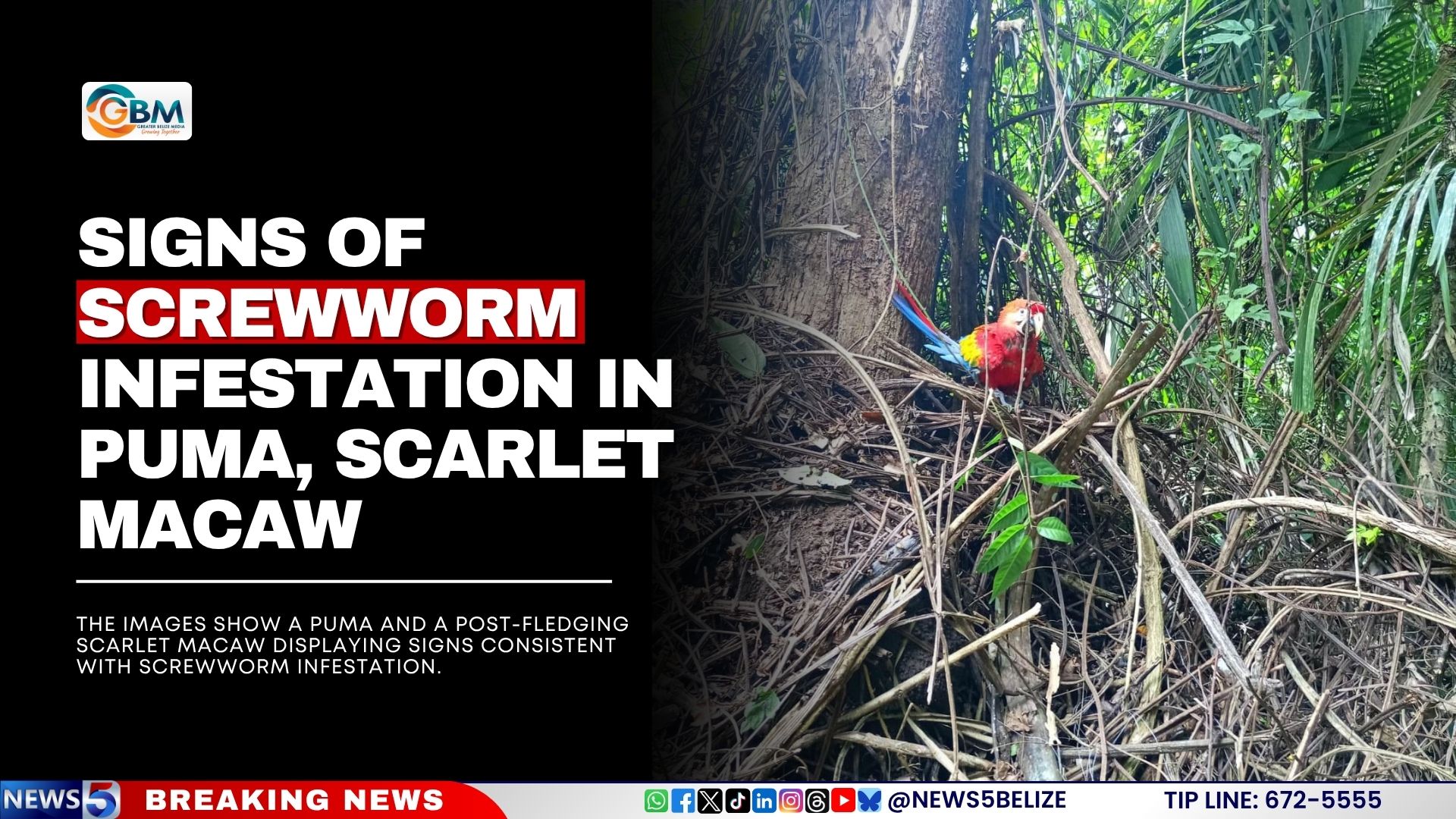
Camera-trap imagery collected by Friends for Conservation and Development (FCD), in partnership with the Belize Wildlife and Referral Clinic, captured a wild puma and a recently fledged Scarlet Macaw exhibiting visible symptoms that match New World screwworm infection. The discovery marks one of the first confirmed detections of potential infestation in native wildlife in Belize, after the parasite reclaimed territory across the region over the past three years.
Scientifically named *Cochliomyia hominivorax*, New World screwworm is a parasitic fly whose larvae feed on the living flesh of warm-blooded animals. Once the eggs hatch, larvae burrow deep into host tissue, causing extreme pain, widespread tissue damage, life-threatening secondary infections, and almost certain death if left untreated. For more than 50 years, the parasite had been completely eradicated from North and Central America through the widespread use of the sterile insect technique: conservation and agricultural authorities released massive volumes of sterilized male flies that mated with wild females, producing no offspring and collapsing local populations. That success unraveled in 2023, when the pest reemerged in Panama. It has since spread northward at an alarming rate, moving through Costa Rica, Nicaragua, Honduras, and Guatemala before reaching Belize, El Salvador, and ultimately Mexico.
Long before this recent wildlife detection, public health officials had warned that Belize faced disproportionate risk from the parasite’s spread. Earlier this year, Belize’s Ministry of Health and Wellness partnered with the Pan American Health Organization and the U.S. Centers for Disease Control and Prevention to host a national training seminar focused on boosting surveillance systems and clinical response capacity. Authorities have highlighted multiple factors that make the country uniquely vulnerable: unregulated cross-border movement of wild and domestic animals, existing livestock production infrastructure that facilitates parasite spread, warm, humid environmental conditions ideal for fly reproduction, and high occupational exposure for rural workers who regularly interact with livestock and wildlife.
While the infestation has primarily been monitored for its impact on domestic livestock to date, the new detection in a large predator and a threatened bird species has underscored critical gaps in understanding of the pest’s effect on Belize’s native biodiversity. FCD notes that the full population-level impact of screwworm infestation on Belize’s wild animal communities remains unstudied, but the camera-trap findings make clear that expanded monitoring, systematic documentation, and targeted research are urgently needed to assess how the parasite is disrupting ecosystems beyond agricultural production.
FCD has committed to integrating ongoing screwworm surveillance into its existing long-term wildlife monitoring programs across the country. The organization will share the data it collects with national and international conservation and public health bodies to support coordinated regional response efforts and protect both Belize’s wildlife and human communities.