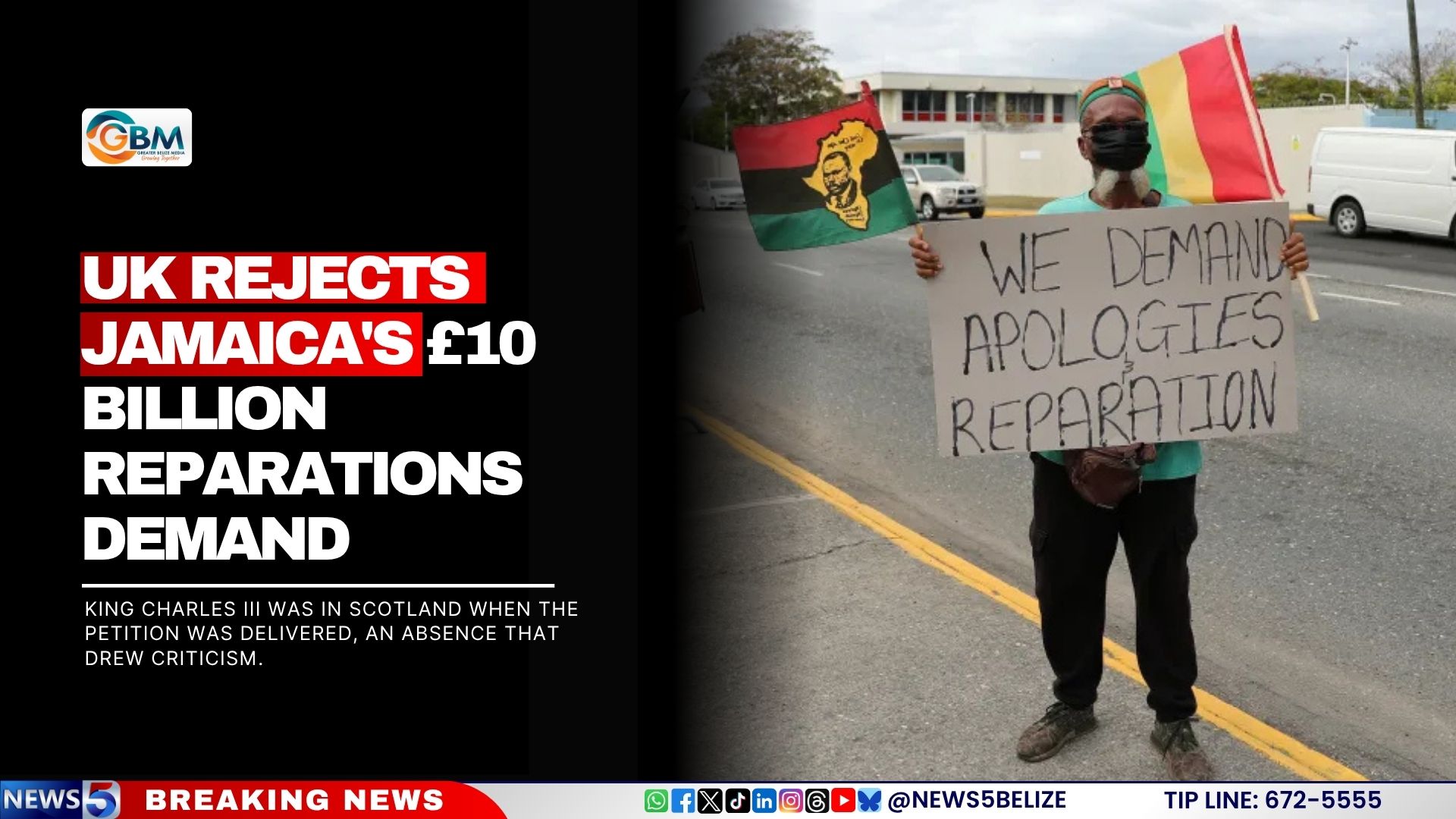
On September 7, 2026, a high-level Jamaican delegation led by Culture Minister Olivia Grange delivered an unprecedented formal petition to Buckingham Palace, calling on the UK government to pay £10 billion in reparations for Britain’s centuries-long role in the transatlantic slave trade. Two days later, the UK government issued a firm rejection, reaffirming a long-held policy that has remained consistent across successive administrations.
A spokesperson for UK Prime Minister Andy Burnham restated the government’s stance clearly: “The UK does not pay and will not pay reparations.” While the spokesperson acknowledged the universally recognized abhorrence of colonial-era slavery and the immense wealth Britain extracted from the trade, he confirmed that no UK government has ever agreed to a formal apology or entered into economic negotiations over reparations for descendants of enslaved people.
What sets Jamaica’s 2026 demand apart from previous reparations campaigns is its novel legal framework. Unlike earlier efforts that sought direct political or royal action, this petition asks King Charles III to refer the case to the Judicial Committee of the Privy Council – the London-based body that remains the final court of appeal for Jamaica and many other Commonwealth nations. This marks the first time any Commonwealth country has pursued this specific legal avenue, meaning the case could set a landmark precedent for future reparations claims across the Global South if it proceeds.
The petition outlines three core legal questions for the court to consider: first, whether the enslavement of African people in Jamaica was actually unlawful under English law as it existed at the time of the trade; second, whether the practice violated established international norms regardless of its domestic legality; and third, whether the UK retains a binding legal obligation to compensate for the intergenerational harm caused by centuries of slavery. Alongside financial reparations, Grange also tied the demand to a broader global movement for cultural restitution, calling for the return of hundreds of Caribbean artifacts currently held in major British museums.
Despite the UK’s immediate rejection, Grange struck an optimistic tone in comments to international media, framing the delivery of the petition itself as a meaningful step forward. “This moment is progress regardless of the immediate response from London,” she said, noting that the campaign has already drawn global attention to the ongoing impacts of colonial slavery. King Charles III was traveling in Scotland when the delegation arrived at Buckingham Palace, a coincidence that drew sharp criticism from anti-monarchy activists. Graham Smith, chief executive of the UK-based campaign group Republic, argued that the monarch has a pattern of avoiding scrutiny over the crown’s historical ties to the slave trade, saying “he once again seeks refuge whenever the issue of slavery and empire is raised.”
Jamaica’s petition comes amid growing global pressure on former colonial powers to address historical harm. A United Nations committee has already formally concluded that sovereign states carry a legal obligation to consider reparations for the transatlantic slave trade, warning that meaningful global progress on eliminating systemic racial discrimination will remain impossible without redress for the ongoing intergenerational damage of slavery.
To contextualize the claim: Jamaica became a British colony in 1655, and over more than 300 years of colonial rule, hundreds of thousands of enslaved African people were trafficked to the island and subjected to brutal forced labor. The country gained full independence from the UK in 1962 and remained a Commonwealth realm with the British monarch as its formal head of state until a 2024 constitutional amendment removed that role, moving Jamaica closer to becoming a full republic.
Britain rose to become the world’s largest slave-trading power by the 1730s, after entering the trade in 1562. Over the course of its involvement in the transatlantic trade, British ships transported more than three million enslaved African people, mostly to colonies in the Caribbean and North America. Notably, the UK has paid reparations for slavery once before – but not to the victims or their descendants. When Britain abolished slavery across its empire in 1833, the government paid hundreds of millions of pounds in compensation exclusively to white slave owners for the “loss of property,” a debt that British taxpayers only finished paying off in 2015.
In more recent years, UK state and non-state institutions have begun to acknowledge historical complicity: in March 2024, the Church of England pledged to create a £1 billion fund to address its own historical ties to the slave trade. But successive UK political leaders have repeatedly rejected calls for state-funded reparations to descendant communities. As recently as October 2024, then-Prime Minister Keir Starmer’s office confirmed the UK would not issue a formal apology or pay any financial compensation, and the British monarchy has also never issued a formal apology for its role in enabling and profiting from the transatlantic slave trade.
To date, the Netherlands remains the only European country to have issued a formal, state-level apology for its role in the transatlantic slave trade. When the UN General Assembly voted in early 2026 to recognize the transatlantic slave trade as “the gravest crime against humanity” in history, the UK was among a small group of European nations that abstained from the vote.