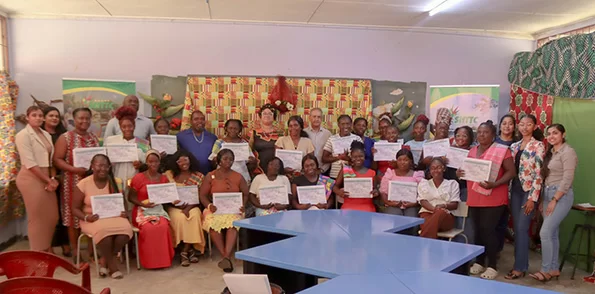
Suriname’s inland tourism sector in Sipaliwini has taken a major step forward in workforce development, with 26 local residents graduating from a fully subsidized Level 1 Kitchen Assistant training program. The new graduates received their official certification during a ceremony held on September 4 at the LBO practical training center in Atjoni, marking the completion of a skills-building initiative designed to strengthen local human capital and raise professional standards for tourism-focused hospitality services across the country’s interior.
The multi-week training curriculum covered core competencies critical to commercial kitchen work, including foundational food preparation techniques, professional food handling protocols, rigorous kitchen hygiene standards, comprehensive food safety practices, and occupational safety protocols for kitchen work environments. Upon certification, the new kitchen assistants are now qualified to fill open roles at local hospitality and tourism operations, including wilderness lodges, coastal and inland resorts, catering companies, and other tourist-focused service providers. Beyond formal employment, the skills gained through the program also open pathways for entrepreneurship: graduates can launch their own small catering businesses, local casual dining spots, or home meal delivery services to serve both local communities and visiting tourists.
The entire training program was funded through a grant from the Inter-American Development Bank (IDB) Labour Alignment with New Industries project, implemented by the Directorate of Welfare and Labour under Suriname’s Ministry of Public Health, Welfare and Labour (VWA). The Suriname Hospitality and Tourism Training Centre Foundation (SHTTC) led on-the-ground delivery of the program, which fell under the “Leri Fu Feni Wroko” sub-project aligned with the Training for Employment (TFE) framework developed by VWA’s Deputy Directorate of the Labour Market. As part of the project’s public workforce development goals, no tuition or training fees were charged to participating students, removing financial barriers to skills access for local residents.
Speaking at the certification ceremony, VWA Deputy Minister Raj Jadnanansing emphasized that culinary experiences are a core driver of growth for inland tourism. He encouraged the new graduates to prioritize the professional, hygienic preparation and presentation of local dishes and native ingredients alongside standard international menu items.
Jadnanansing noted that tourists who travel to Suriname’s interior seek authentic, one-of-a-kind experiences they cannot find anywhere else in the world. Local cuisine, he explained, acts as a unique introduction to the culture and traditions of inland communities. When prepared and presented to professional standards, these culinary offerings do more than just create new jobs for local workers: they also help raise global appreciation for and preserve the unique cultural identity of Suriname’s inland populations.
Beyond cultural benefits, increased consumer demand for local Surinamese dishes creates new economic opportunities for small-scale local agricultural and food producers, according to the deputy minister. This ripple effect allows tourism growth to support the development of a broader, more interconnected local economic ecosystem across the country’s interior.
Other key stakeholders echoed the deputy minister’s remarks, including Oyeleye Adeniyi, Program Manager of the IDB Project Implementation Unit (PIU), Nazara Kranenburg, acting director of SHTTC, and Don Elliot, chair of the SHTTC Board of Directors. All three reaffirmed the critical role that targeted vocational training plays in advancing the tourism sector, noting that sustained investment in local human capital is essential to meeting the fast-growing demand for qualified skilled workers across Suriname’s expanding hospitality and tourism industries.