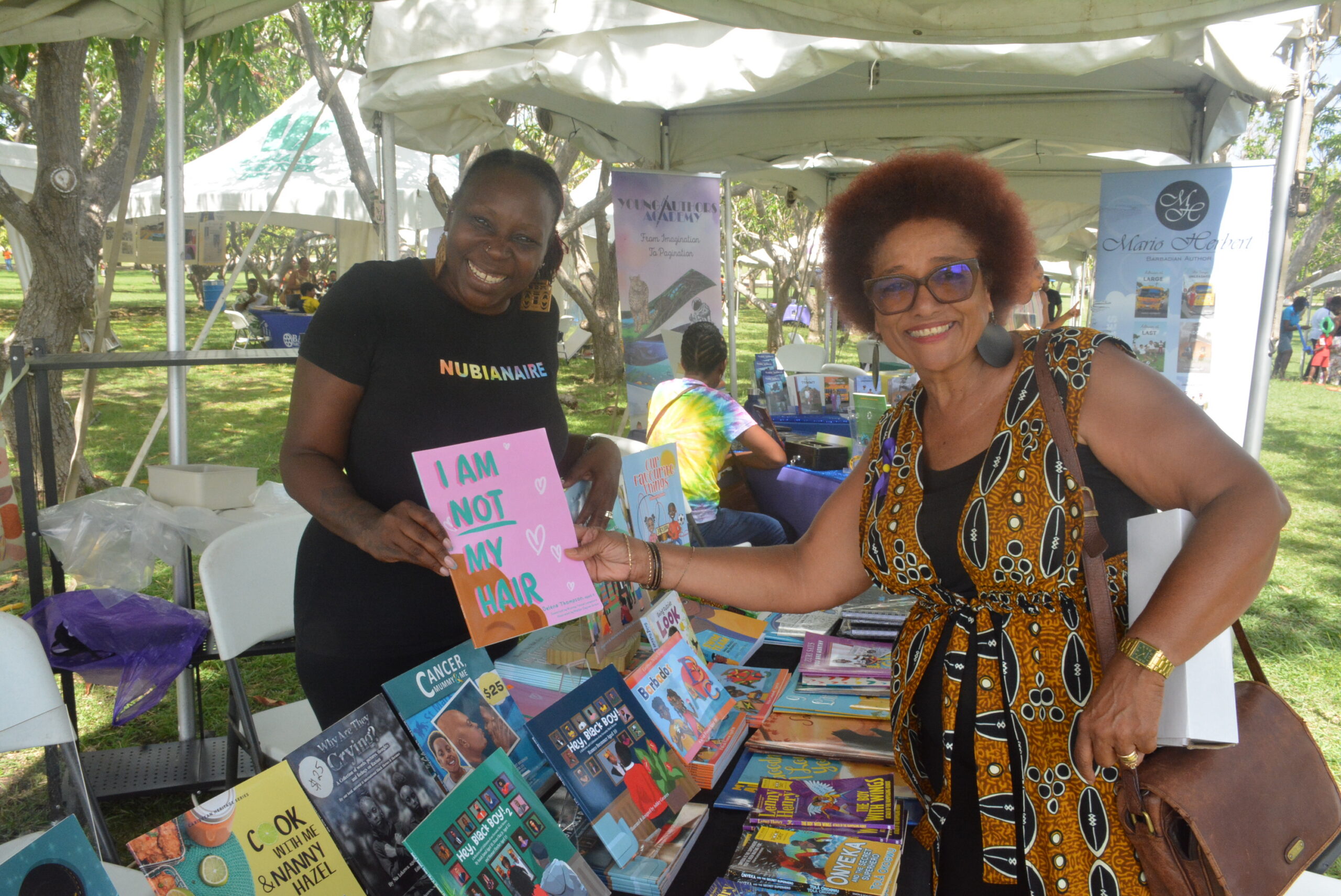
As falling literacy and reading proficiency rates emerge as a growing shared concern across the globe, Barbados’ National Library Service (NLS) is rallying a whole-of-society push to embed regular reading into everyday family life, calling for coordinated action from parents, educators, community groups, and government institutions to reverse the downward trend. NLS Director Jennifer Yarde made the urgent public appeal at Saturday’s Picnic and Pages Family Literacy Festival, hosted at the National Botanical Gardens in Waterford. The event also kicks off a year of public engagement leading up to 2025, which marks the 180th anniversary of the founding of the Barbados Public Library, the predecessor to today’s NLS.
Opening the festival, Yarde emphasized that the work of building strong literacy starts in the home, telling parents and guardians that they hold the role of a child’s first teacher. In comments that push back against common household habits, Yarde warned against over-reliance on digital devices as a default childcare tool, urging caregivers to prioritize reading time over passive screen use. Attendees at the family-focused festival received actionable guidance for building sustainable reading routines at home: the NLS recommends that caregivers read aloud to young children regularly, hold open discussions about storylines and themes, make regular trips to local libraries, and allow young readers to select books that align with their personal interests to foster sustained engagement. Yarde also stressed that adult modeling matters, noting that children often shape their own attitudes toward reading by watching the habits of the grown-ups around them.
Far from being just a recreational community outing, Yarde framed the festival as a critical first step in a broader national campaign to return reading to its central cultural role across Barbados. She pointed out that dropping reading levels are not a challenge unique to the island – the trend has been documented in nations around the world – but that Barbados cannot afford to ignore the crisis. Literacy, Yarde explained, serves as the foundational pillar for nearly every marker of long-term success for young people: it supports strong educational outcomes, expands future employment options, builds self-confidence, nurtures critical thinking skills, and lays the groundwork for stable adult life. “When children leave school without being able to read confidently and effectively, we have a national problem,” she said, adding that inaction on the issue would carry steep long-term costs for the entire country.
Yarde acknowledged that digital technology has a valid role to play in modern education, but pushed for more intentional, limited use of devices in and out of the classroom. She noted that children today read far less printed material than previous generations, and pointed to a growing global shift back toward physical books in education systems across Norway, Sweden, and Australia. Those nations have moved to reverse over-reliance on digital resources including e-textbooks, after researchers documented drops in student reading engagement and comprehension skills following widespread digital rollouts. “We have to understand that technology has its place, but it cannot replace the fundamental skills that children develop through reading,” Yarde said.
The NLS director also raised new alarms about the rising use of generative artificial intelligence in K-12 and higher education settings, pointing to a common harmful pattern where students submit AI-generated work that they themselves cannot explain or defend. “The concern is not that children are using technology. The concern is when technology is doing the thinking and the child is simply presenting the product,” she explained.
Looking ahead to the 180th anniversary celebrations next year, Yarde said the entire series of events will be centered on reigniting widespread public interest in reading and literacy across all age groups. She closed by noting that the Barbadian government continues to invest hundreds of thousands of dollars into educational reading resources each year – an investment that will go to waste if the broader cultural norm of regular reading continues to erode. “We need to rebuild the culture of reading in Barbados,” Yarde said.