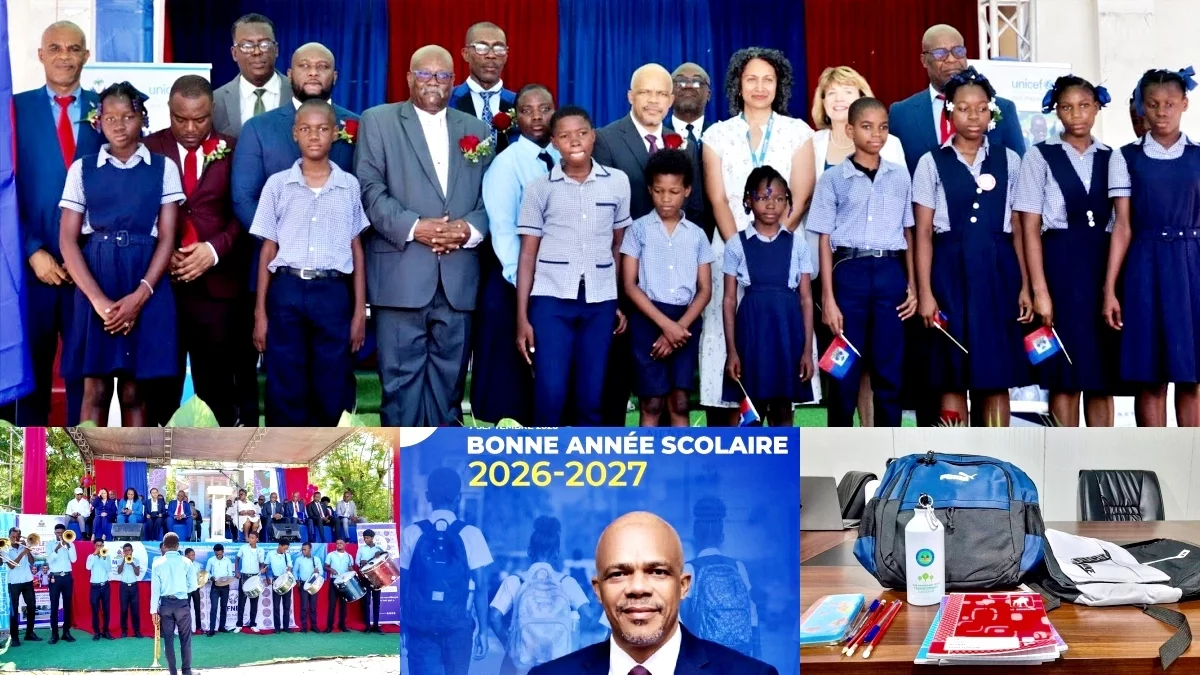
On September 7, 2026, Haiti kicked off its 2026-2027 academic year with an official launch ceremony hosted at Horatius Laventure High School, located in the Delmas 75 district. Standing at the forefront of the event was National Education Minister Vijonet Déméro, who unveiled the year’s core guiding theme: *Yon lekòl pou tout moun*, translated as “One School for Everyone”. This thematic framework anchors the new school year in the foundational values of inclusive access, non-discrimination, and equal educational opportunity, with a central policy goal of guaranteeing quality education access for every child across the country.
In his opening address, Minister Déméro extended warm wishes for success and peace to all members of Haiti’s national education community, from students and educators to families and institutional partners. Directing his remarks to students, he encouraged the next generation to embrace new discoveries, prioritize consistent learning, and pursue personal growth throughout the year, noting that young Haitians are the backbone of the nation’s future. For teachers and school principals, he extended sincere gratitude for their unwavering dedication to knowledge transmission and youth mentorship, recognizing their irreplaceable role in shaping the country’s upcoming generations. He also commended parents for their persistent courage, daily sacrifices, and critical partnership in supporting children’s educational journeys, and thanked national and international partners—including multilateral organizations, education unions, and civil society groups—for their ongoing collaboration to turn the year’s inclusive vision into tangible change.
Minister Déméro emphasized a core policy priority for the 2026-2027 year: reframing national education systems to center students and their learning needs above all else. He reaffirmed the Haitian government’s full commitment to strengthening the national education sector through a suite of targeted interventions. These key actions include filling vacant teaching positions through new appointments, distributing free textbooks and school uniforms to students in need, expanding the national Education Cash Transfer program to deliver direct financial support to low-income families, upgrading infrastructure to improve overall learning conditions, expanding access to digital educational technology, and scaling up academic and career guidance services to help students plan for their futures.
International development partners joined the government in reaffirming their long-term commitment to advancing education in Haiti. Geetanjali Narayan, the UNICEF Representative in Haiti, outlined a series of planned support measures focused on maintaining uninterrupted education access across crisis-affected regions, supporting children displaced by ongoing instability, strengthening child protection frameworks in schools, and guaranteeing the physical and mental well-being of all students. Lauren Landis, Representative of the World Food Programme (WFP), echoed this commitment, highlighting the transformative role of school meal programs as a catalyst for social protection, improved academic outcomes, and local economic development. WFP’s key ongoing initiative focuses on increasing the share of local agricultural products sourced for school canteens, creating a dual benefit that supports smallholder farmers while improving the nutritional quality of meals for students.
Beyond the central launch event in Delmas 75, coordinated back-to-school opening ceremonies were held at all 10 of Haiti’s Departmental Directorates of Education, marking a unified national kickoff to the 2026-2027 academic year.