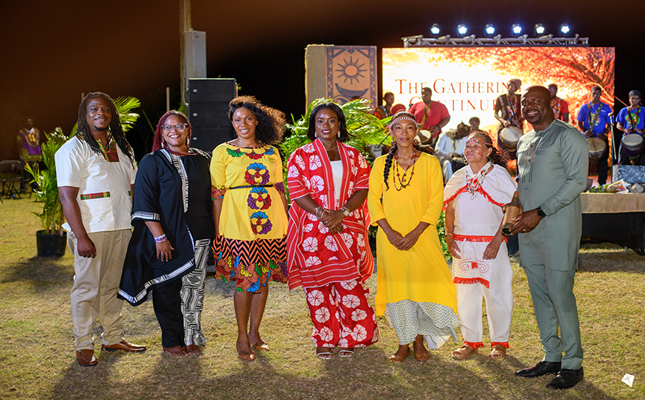
In late August 2026, centuries of interwoven trauma and survival came to life at a landmark cross-national commemoration on the Caribbean island of Saint Kitts, also known by its indigenous name Liamigua. The event, titled “Ancestral Echoes: Remembering the Blood, Honouring the Resilience,” gathered global and regional stakeholders to observe the 400th anniversary of two interconnected tragedies: the 1626 Kalinago Massacre that killed thousands of indigenous people at the hands of English and French colonizers, and the nearly simultaneous arrival of the first enslaved Africans on the island’s shores.
Hosted at Challengers Football Field, just steps from the iconic Bloody River, the ceremony rooted attendees in the raw geography of history. Oral accounts and historical records have long held that the river ran red with blood for days after the 1626 slaughter of indigenous Kalinago communities, making its banks the ideal setting for a day of solemn reflection, collective mourning, and intentional healing.
Organized by Saint Kitts and Nevis’ Department of Cultural Heritage, the gathering brought together a diverse cross-section of participants: residents of Challengers and neighboring communities, Cultural Heritage Minister Samal Duggins, senior national government officials, foreign diplomatic envoys, and indigenous delegations from across the Caribbean region. For attendees and organizers alike, the ceremony represented more than a remembrance event; it stands as a defining milestone for truth-telling, collective memory-keeping, and historical reconciliation across the Caribbean.
The evening’s programming blended traditional spiritual practice, artistic performance, and political reflection, centering the shared legacies of the Kalinago people and displaced African communities whose labor and blood shaped the island. Libations to honor the dead, traditional Kalinago smoke ceremonies, indigenous drumming and song, spoken word performances, and West African drumming ensembles filled the valley, creating a symbolic reunion of the two lineages that have fundamentally shaped Saint Kitts and Nevis’ national identity.
Representatives from the Kalinago Nation of Dominica joined local indigenous heritage stewards to lead discussions of survival across four centuries. Indigenous community leaders emphasized that the 1626 massacre was not merely a story of destruction: instead, it was the crucible that forged the resilient, unbroken indigenous identity that persists across the Caribbean archipelago today.
Minister Duggins framed the commemoration as a step toward collective progress, rather than a retreat into grief. “We stand today on ground stained by the blood of ancestors whose sacrifice echoes across four centuries,” he said in remarks at the event. “To honour them is not to remain trapped in historical grief, but to claim our sacred duty to preserve their legacy, teach our youth the unvarnished truth of our genesis, and forge a shared future rooted in dignity, sovereignty, and mutual honour.”
UNESCO Secretary General Nerys Dockery also emphasized the event’s global significance, noting that confronting the unedited, often violent reality of colonial history is a necessary foundation for educational transformation and meaningful international heritage preservation. The event comes as Saint Kitts and Nevis advances efforts to nominate the Bloody River site for formal international cultural landmark protection, with officials framing collective memory as the most effective defense against historical amnesia.
Following the ceremony, the Department of Cultural Heritage reaffirmed its commitment to extending the event’s impact far beyond the single gathering, pledging ongoing collaboration with local communities, indigenous leaders, and regional partners to embed the lessons of the commemoration into national education and heritage policy. The department also extended gratitude to the dozens of stakeholders that made the event possible, including the Challengers community, the Kalinago Council, local businesses, health and security services, volunteers, and attendees from across the region and the globe.
In closing, organizers noted that the successful, cross-community gathering demonstrates a core truth: while colonial history left a legacy of unspeakable tragedy, a united, intentional people can shape a legacy of resilience, healing, and shared peace for future generations.