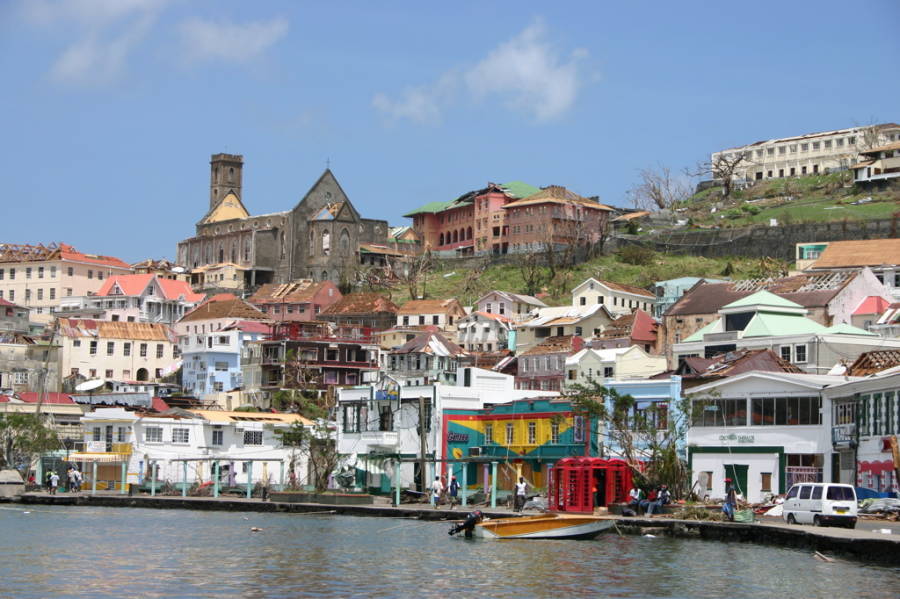
Nearly two decades ago, on September 7, 2004, the small Caribbean island nation of Grenada was struck by one of the most destructive hurricanes in its modern history – a Category 3 storm that would leave an indelible mark on the country’s landscape, economy, and collective memory.
Before Ivan, the 1955 Hurricane Janet held the grim title of the deadliest and most destructive storm to hit Grenada in recent memory, claiming 147 lives. When Ivan made its direct hit, even those who had lived through Janet were stunned by the scale of destruction the new storm unleashed. While the final death toll for Ivan stood at 39, far lower than Janet’s, experts attribute this reduction in fatalities to decades of improvements in housing construction standards and emergency communication systems that allowed more residents to reach safety ahead of the storm’s arrival.
Despite these advances, Grenada was largely caught off guard as Ivan barreled toward its coast. For eight consecutive hours, sustained winds of 120 miles per hour (193 kilometers per hour) pummeled the islands. Trees were stripped of their leaves, snapped in half, or uprooted entirely, while countless structures were leveled to the ground. Between 80% and 90% of all existing buildings in Grenada suffered severe roof damage or were completely destroyed. When the eye of the storm passed directly over the capital city of St. George’s, it left the capital in ruins, displacing an estimated 60,000 residents who suddenly found themselves homeless and without access to food or clean water in the storm’s aftermath.
The damage extended far beyond residential and commercial buildings. Nearly the entirety of Grenada’s critical infrastructure was compromised or destroyed: telecommunications networks were knocked offline, power grids were leveled, roads were washed out, water supply systems were fractured, and public facilities including schools, churches, and the national stadium were heavily damaged. The country’s already fragile economy was brought to a standstill, as key export sectors including nutmeg and cocoa tree crops were entirely destroyed, while damage to hotels and tourism infrastructure crippled the other core pillar of Grenada’s economy.
Hurricane Ivan did not limit its destruction to Grenada. The storm moved on to batter other Caribbean nations including the Grenadines, Barbados, St. Lucia, and St. Vincent, before making landfall in Jamaica, the Cayman Islands, and eventually the southeastern coast of the United States. Across the entire path of the storm, Ivan claimed more than 70 lives, stretching from Alabama in the U.S. all the way to Venezuela.
Locally in Grenada, the storm earned two grim nicknames: “Ivan the Terrible” for its widespread destruction, and “Roofus” for the thousands of roofs it ripped off buildings across the islands. Total estimated damage in Grenada alone topped just under $1 billion USD, and reconstruction of all damaged infrastructure took more than a decade to complete. While international governments and humanitarian organizations quickly dispatched emergency relief supplies and personnel to the island, the United Nations later highlighted the Grenada recovery effort as one of the 10 most underreported major humanitarian stories of 2005. To add insult to injury, just nine months after Ivan, Hurricane Emily made landfall in Grenada, causing further extensive damage to the northern half of the island and claiming one additional life.
Today, on the anniversary of Ivan’s devastating passage, visible scars of the storm still remain across Grenada. Iconic structures including the Anglican Church, Presbyterian Kirk, the Parliament building, and the Governor General’s official residence still stand in the same damaged state they were left in on the morning after the storm, permanent reminders of the day that changed Grenada forever.