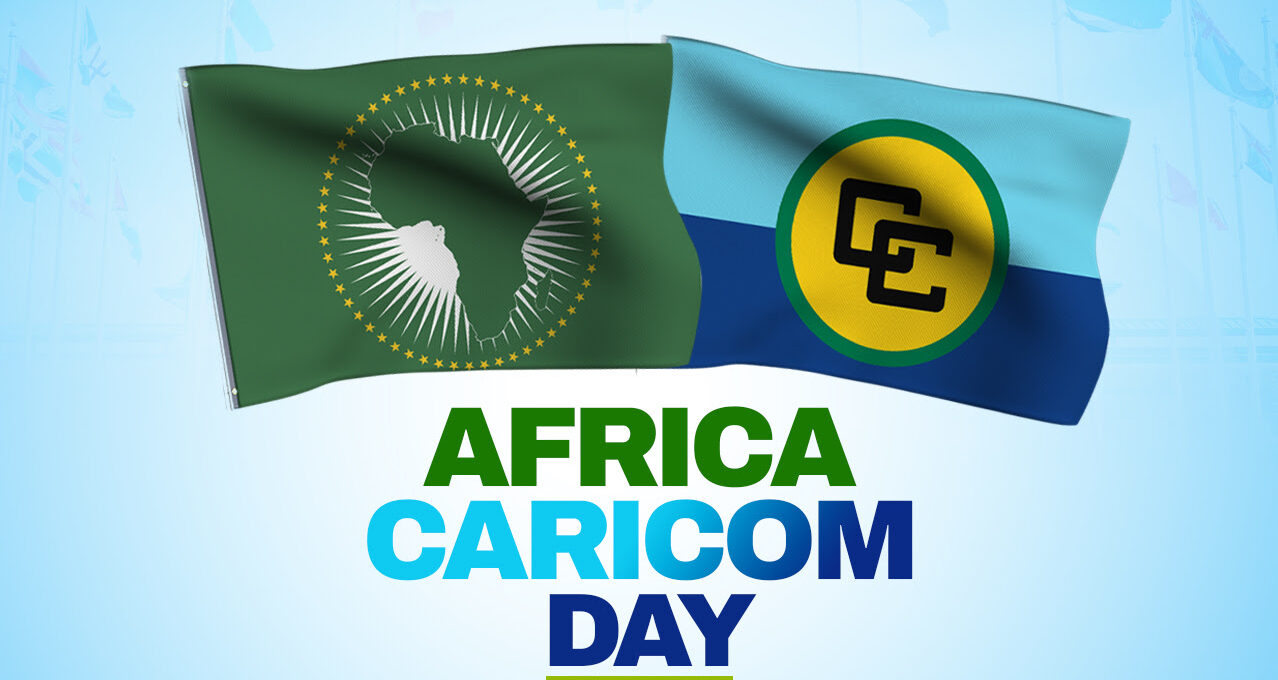
Five years after the historic creation of an annual day of unity between the Caribbean and African regions, CARICOM is celebrating the anniversary of CARICOM-Africa Day with fresh momentum to expand collaboration across trade, public health, climate action and the global movement for reparatory justice.
The annual observance was first established during the groundbreaking 2021 First CARICOM-Africa Summit, when leaders from both regions committed to building a structured, mutually beneficial long-term partnership. On this fifth anniversary, CARICOM Chairman and Saint Lucia Prime Minister Philip J. Pierre emphasized how far the relationship has grown in the five years since that initial agreement.
Pierre spotlighted key milestones that have anchored the deepening partnership, including the 2024 Memorandum of Understanding signed between the CARICOM and African Union Secretariats. He also highlighted expanding joint initiatives with the African Export-Import Bank (Afreximbank) focused on infrastructure development, support for small and medium-sized enterprises, and expanded cross-regional trade. Beyond economic cooperation, Pierre noted meaningful progress in public health collaboration and improved air connectivity that links communities across both regions.
Moving forward, Pierre stressed that the two regions must leverage their combined global influence to tackle shared pressing challenges: building climate resilience, advancing inclusive sustainable development, and advancing the priorities of small vulnerable developing states. A core ongoing priority, he added, is progressing the global reparatory justice movement for historical harms of chattel slavery. Pierre also framed Caribbean communities as a formal, integral part of the African Union’s Sixth Region, emphasizing that all partnership efforts must deliver tangible, measurable improvements for young people, local businesses and grassroots communities on both sides.
Meanwhile, Barbados Prime Minister Mia Amor Mottley reflected on the progress made since the first in-person CARICOM-Africa Summit held in Addis Ababa in 2025. In a public statement shared to her official Facebook page, Mottley outlined a series of recent collaborative wins that demonstrate the partnership’s impact, from the completion and opening of the Grand Ethiopian Renaissance Dam to Nigerian carrier Air Peace’s work expanding cross-regional air access. She also noted the ongoing development of the Afreximbank African Trade Centre based in Barbados, and the critical contributions of Ethiopian medical professionals serving at Barbados’ Queen Elizabeth Hospital.
Mottley also highlighted major institutional progress on reparatory justice across the African continent: the United Nations’ formal recognition by Ghana of the transatlantic trafficking and racialized enslavement of Africans as the worst crime against humanity in history, Togo’s successful resolution of longstanding regional border map disputes, and the launch of the Global Advisory Panel on Reparatory Justice in Accra, on which Mottley personally serves.
Despite these gains, Mottley acknowledged that significant work remains to remove barriers to free movement of people, trade, educational opportunities and economic collaboration between the two regions. “Too many voices tell us what divides us,” Mottley said in her statement, urging a greater focus on the shared historical and cultural ties that unite African and Caribbean communities. She called on both regions to build what she described as “a new passage of possibility” that allows the descendants of enslaved people — who were stripped of the right to choose their own futures and destinations — to finally shape their own collective destiny in the 21st century.