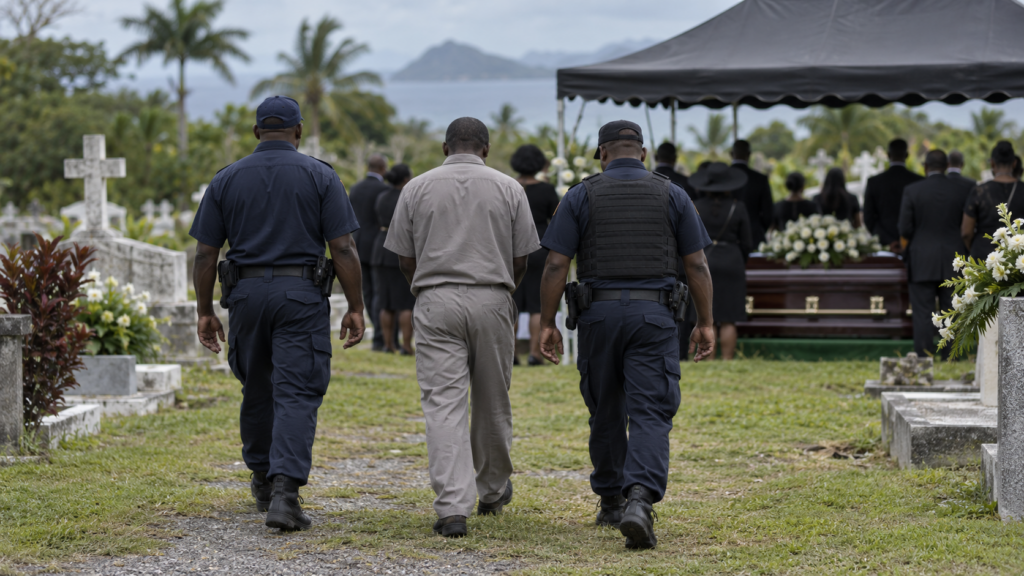
The top leader of Antigua and Barbuda, Prime Minister Gaston Browne, has publicly raised sharp questions over a controversial administrative decision that permitted a prisoner serving time for firearm and ammunition violations to leave custody temporarily, under police guard, to attend the funeral of a friend.
In pointed criticism directed at the public officials who signed off on the temporary furlough, Browne argued that this special consideration was entirely unjustified given the serious nature of the inmate’s conviction and the loose nature of his connection to the deceased person.
Browne explained that he would not push back against approval for temporary release in the case of an immediate family member’s funeral—cases where the emotional stakes are far higher, such as the passing of a parent, child, or other close blood relative. What confounds him, he said, is the choice to extend that same privilege to a funeral for a casual friend.
In remarks delivered during a public appearance, Browne pressed: “You’re going to let the man go to his friend’s funeral? What kind of common sense are you all using in this country?”
Beyond questioning the specific call, the prime minister warned that these kinds of unguided, permissive decisions risk eroding the core deterrent purpose of incarceration. He added that over time, such moves could even normalize criminal activity by creating space for what he terms the public celebration of people convicted of serious offenses.
The controversy has also sparked a broader push from Browne for systemic change in the country’s correctional system. He called for a renewed focus on meaningful offender rehabilitation, centered on structured work programs and targeted skills training. As potential models, he suggested that inmates learn skilled trades such as landscaping, and take part in supervised community improvement projects that let them give back to the public while building employable skills for their reentry.
Notably, Browne did not release any identifying details about the inmate in question, the individual officials who authorized the temporary release, or the specific funeral that prompted this rebuke. No further information about the specific circumstances of the furlough or the existing institutional rules governing temporary prisoner release was shared during Browne’s public comments, leaving many key details of the incident unconfirmed at this time.