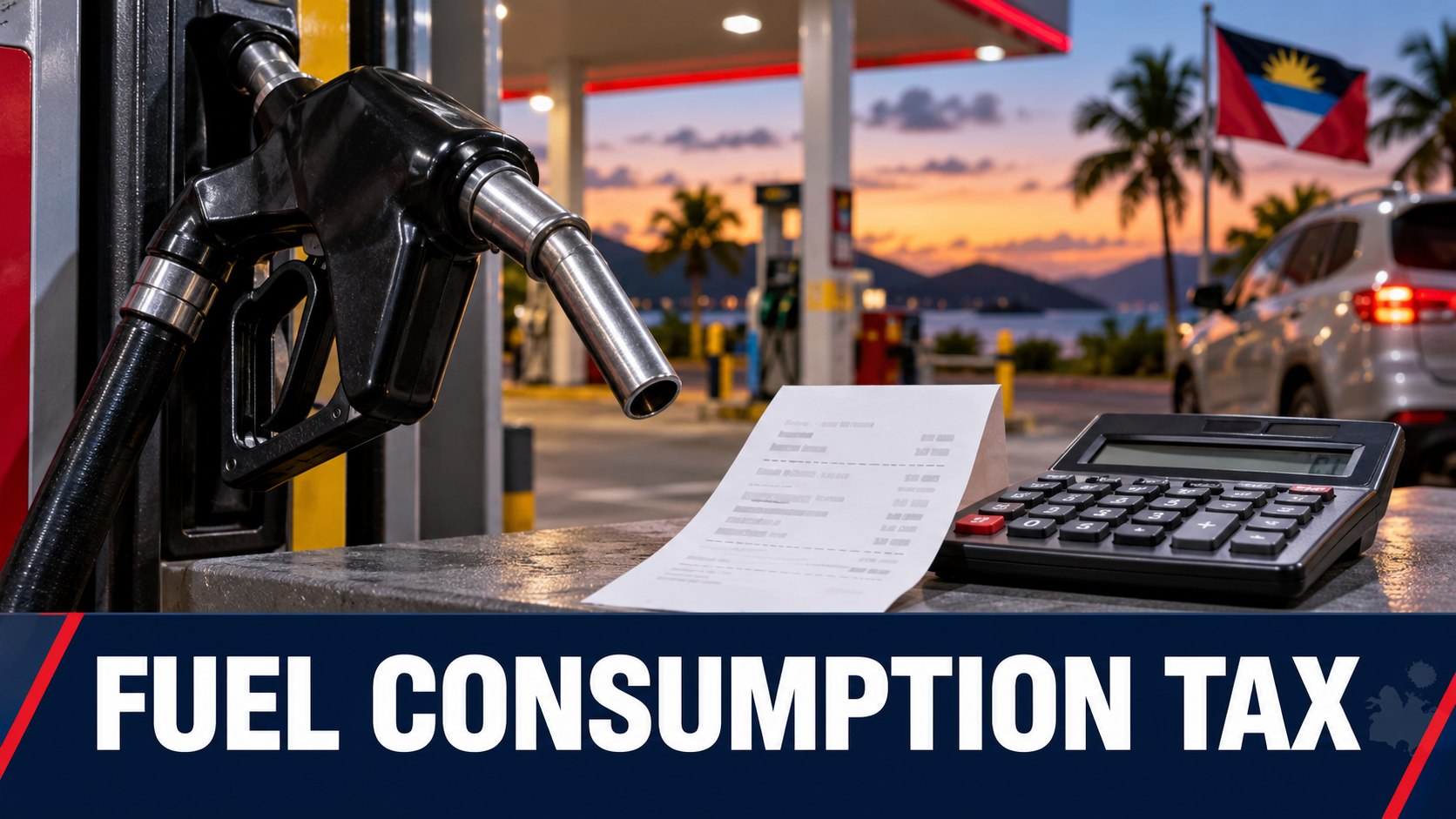
Antigua and Barbuda’s Prime Minister Gaston Browne has disclosed that the national government is forfeiting roughly EC$4 million in monthly revenue after scrapping the 15% consumption tax on petroleum products, a policy implemented to buffer local consumers from volatile spikes in global oil prices.
Speaking during an appearance Saturday on the popular *Browne and Browne Show* broadcast on Pointe FM, Browne explained that eliminating the consumption tax forms just one component of a wider national fuel subsidy program designed to hold retail gasoline and diesel prices far below their true market cost.
Prior to the EC$2 per gallon price adjustment implemented last week, retail gasoline was capped at EC$14.50 per gallon, while diesel retailed for EC$14.25 per gallon. According to Browne, on top of the forgone monthly tax revenue, the government has also transferred up to EC$15 million to the West Indies Oil Company to keep these artificially low price points stable. He characterized these direct payments as a “negative tax”, noting that the national Treasury is not only losing recurring tax income but also dipping into additional public funds to cover the gap between global and local fuel costs.
The prime minister shared these fiscal details while addressing ongoing calls from local service station operators, who have pushed for an increase in their allowed profit margins. Browne recognized that fuel dealers have been squeezed by rising operational costs, including growing employee wage bills and higher credit card processing fees. However, he stressed that the government cannot continue to absorb the entire cost of the fuel subsidy while also approving an immediate jump in dealer margins. Instead, he argued that any additional costs must be shared across all stakeholders: “It has to be a joint burden,” Browne stated.
He clarified that the recent EC$2 per gallon price increase was not structured to pad government revenue, but rather to slow the growth of the subsidy’s growing fiscal strain on public finances. Looking ahead, Browne issued a clear warning to consumers: if international petroleum prices continue their upward trend, additional local price increases will be unavoidable. The prime minister emphasized that the government has already hit the maximum limit of what it can fiscally absorb to keep consumer prices low.