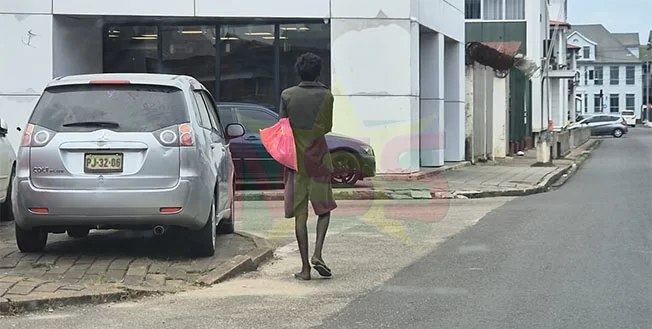
On September 5, Suriname’s Ministry of Justice and Security announced new progress on a targeted initiative to address public safety concerns linked to people living on the streets of Greater Paramaribo, revealing that 503 people classified as vagrants under national law have been registered in the area, with 60 already moved off public streets and placed in supportive settings including with family members, at non-governmental organization (NGO) facilities, and other sites offering housing and care.
Minister of Justice and Security Harish Monorath, who leads the effort, explained that the legal term “vagrants” was intentionally selected to classify this group because the term is explicitly recognized in Suriname’s existing legislation, where vagrancy is formally prohibited. He emphasized that not all people experiencing homelessness should be lumped into a single homogeneous category, pushing back against common stereotypes that conflate homelessness with substance addiction or dangerous behavior.
“People sleeping on the streets are not all the same,” Monorath noted. “Unhoused people are not inherently addicts or vagrants by default. Some struggle with untreated mental health conditions, while others ended up on the street after experiencing systemic neglect. Support for unhoused and mentally ill people is not primarily a police responsibility, it falls under the purview of other government ministries.”
Despite this, the minister framed public street dwelling as a legitimate public safety issue that requires the Justice Ministry’s intervention through the newly established Vagrancy Brigade, which is already active across Greater Paramaribo. The brigade has completed the initial registration count, and is continuing its work to place the remaining 443 registered people in appropriate care settings.
Monorath acknowledged that the initiative falls outside the core mandate of law enforcement, but argued that removing unhoused people from public streets will deliver tangible improvements to overall community safety. “I know this is not our primary job, but make no mistake: moving these people into safe, supportive settings will meaningfully boost public safety,” he said. “Too often, people living on the street turn to petty theft to survive, rummage through public trash bins for food, and end up threatening or unprovokedly attacking passersby. That is not the standard of public order we aim to maintain as an institution.”