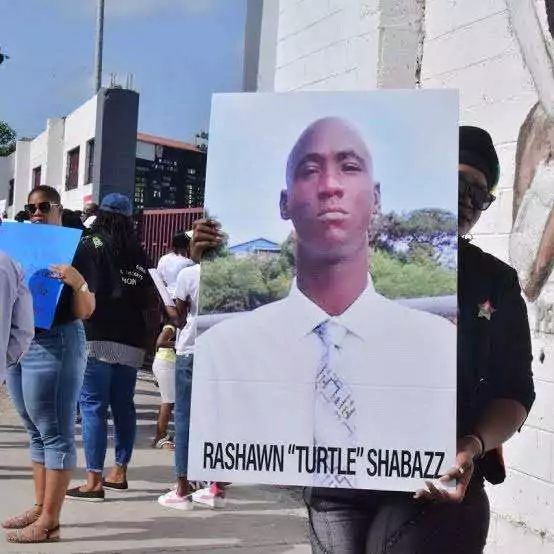
For three grieving Antiguan and Barbudan parents, the pain of losing a child has been compounded not just by grief, but by repeated institutional breakdowns that have left them chasing answers for months and even years. Now, Joycelyn O’Garro-Piper, Vangetta Hector-Francis and Khalid Shabazz are amplifying their calls for sweeping changes to the nation’s criminal justice system, arguing that deep-rooted failures in communication and inter-agency coordination have only deepened their trauma.
The trio laid out their experiences in a public appearance on *Observer AM*, detailing the systemic barriers they faced while seeking information about their children’s cases. For O’Garro-Piper, the wait for answers stretched more than two years after her 33-year-old son Rodney Piper was beaten to death in September 2023. It took 30 months of persistent follow-up before she learned that law enforcement had made an arrest in the case — a delay she called unacceptable for families already reeling from loss. To address this gap, O’Garro-Piper is pushing for the creation of a dedicated customer service unit within the Royal Police Force of Antigua and Barbuda, tasked with proactively updating victims’ next of kin on case progress, rather than forcing families to initiate repeated contact for basic updates.
Hector-Francis shared a similar ordeal following the 2023 killing of her son Vonde Bowers in an incident involving multiple teenagers. She told listeners that critical developments in her son’s case were often relayed to her informally via WhatsApp messaging, rather than through official communication from investigating authorities, leaving her uncertain about the status of the investigation and feeling disrespected by the lack of formal process.
For Shabazz, the failure extended beyond poor communication to blatant disregard for court-ordered care. His son Rashawn died while in state custody, after court orders requiring the young man to receive psychiatric treatment at Clearview Psychiatric Hospital were never enforced. Shabazz said the failure to follow the court’s direction directly contributed to his son’s death, leaving the family without justice.
The three parents have outlined a clear slate of proposed reforms to address these gaps. Beyond the new police customer service unit, they are calling for stronger mandatory coordination between courts, prisons, and mental health facilities to ensure court orders for care are enforced. They are also pushing for updates to the country’s juvenile justice legislation, and a reinstatement of full-time school truancy officers to address youth-related violence and harm before it escalates.
Ultimately, the parents say their proposed changes aim to guarantee that future bereaved families receive timely, transparent information, that court directives are uniformly respected by state institutions, and that all families seeking answers after a loved one’s death are treated with the accountability and compassion they deserve.
Current and legal stakeholders have acknowledged the core of the parents’ complaints, offering guidance for families facing similar barriers. Retired Assistant Commissioner of Police Nuffield Burnett confirmed that law enforcement holds a legal obligation to keep complaining parties updated throughout the course of criminal investigations. Burnett advised that any family experiencing unreasonable delays or inadequate communication should file a formal complaint with the police force’s Office of Professional Standards. Independent legal expert Warren Cassell further urged affected families to pursue independent legal counsel, noting that court orders are legally enforceable when state bodies fail to comply with their terms.