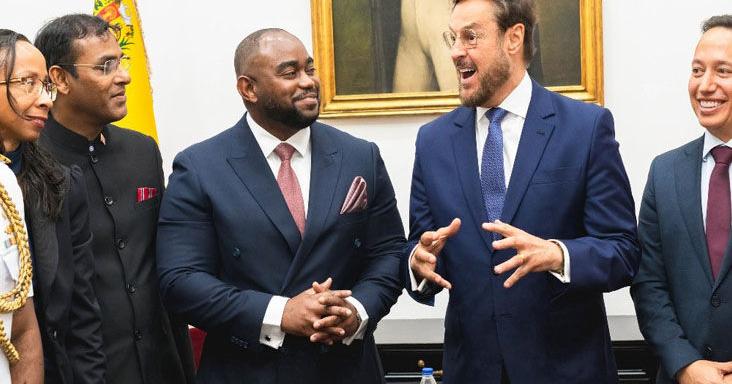
After years of unspoken tensions and strained cross-border relations, neighboring nations Trinidad and Tobago and Venezuela have formally inaugurated a new chapter of diplomatic and economic collaboration, signing a structured, multi-priority working agenda that aims to reset ties driven by mutual benefit and good neighborliness.
The breakthrough agreement emerged from high-level diplomatic talks held in Caracas on Wednesday, where Trinidad and Tobago’s Foreign and Caricom Affairs Minister Sean Sobers met face-to-face with his Venezuelan counterpart, Felix Plasencia, Minister of People’s Power for Foreign Affairs and Foreign Trade. Per the joint official statement released at the conclusion of the meeting, the visit marks the formal start of a “new era” in bilateral relations, overseen directly by the top leaders of both governments: interim Venezuelan President Delcy Rodríguez and Trinidad and Tobago Prime Minister Kamla Persad-Bissessar.
The newly agreed roadmap is built on a foundation of mutual respect, sovereign equality, and good neighborliness, and covers six core priority areas critical to both nations’ long-term development. Energy cooperation tops the agenda, with both governments committing to joint work to unlock and develop the shared natural resources located across their territories, a move expected to create new economic opportunities for energy-dependent economies in the Caribbean. Trade expansion is framed as a central pillar of the new relationship, with officials outlining plans to deepen commercial links that will drive inclusive growth for both nations.
Additional key priorities include agricultural collaboration to strengthen regional food security, collective action to advance sustainable development and environmental protection across the Caribbean basin, cultural exchange initiatives to deepen people-to-people integration between the two countries, and coordinated work on cross-border collective security. The inclusion of security cooperation carries particular significance: given the two nations’ shared border and close geographic proximity, both have long grappled with transnational threats including organized crime, human and drug trafficking, and irregular illegal migration, challenges that can only be effectively addressed through coordinated bilateral action.
The talks also carried a moment of solidarity: Sobers traveled to Caracas carrying a shipment of humanitarian assistance collected for Venezuelan communities affected by the devastating 24 June double earthquakes that struck the country. The Venezuelan government formally expressed its public gratitude for the support and solidarity extended by the government and people of Trinidad and Tobago in the wake of the natural disaster.
Notably, the joint statement made no mention of past diplomatic disagreements between the two nations, reflecting a deliberate shared focus on moving forward rather than revisiting historical tensions. Officials also emphasized that Wednesday’s talks will not be an isolated engagement: both governments have committed to maintaining a permanent, open communication channel to advance the agreed working agenda, in full compliance with core principles of international law. This ongoing dialogue is intended to deliver tangible progress that advances economic prosperity and social well-being for the people of both nations.