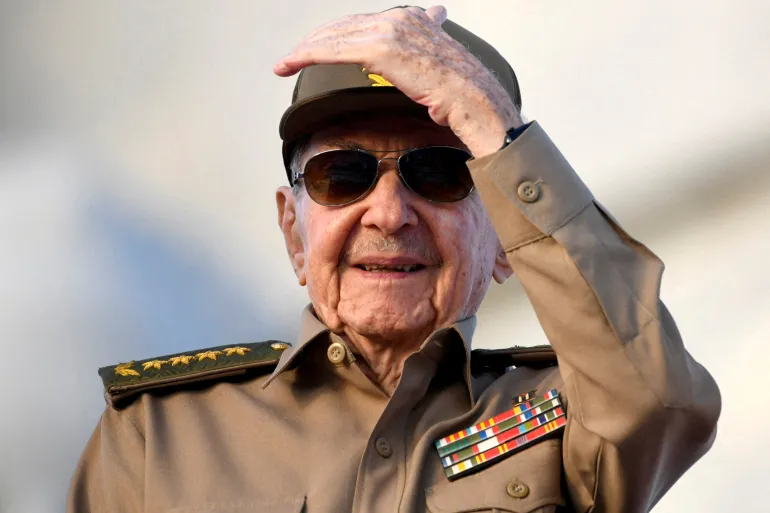
On Thursday, the United States government unveiled a fresh round of economic sanctions against Cuba, a move that experts warn will intensify the island nation’s already overlapping political, economic and energy crises. The new designations target two high-profile entities: Fidel Ernesto Castro, grandson of former Cuban President Raúl Castro, and Abapet, Cuba’s state-run Oil Industry Supply Import Company, which holds the critical role of importing specialized equipment and replacement parts needed to maintain the island’s aging, failing power infrastructure.
Brett Erickson, a leading sanctions expert and managing principal at global risk consulting firm Obsidian Risk Advisors, explained that the targeted sanctions are intentionally crafted to take critical energy infrastructure out of operation and worsen Cuba’s ongoing energy emergency. “The U.S. is trying to really tighten the screws as much as possible,” Erickson noted. He added that the Trump administration has no interest in negotiating with or accepting incremental change from Cuba, and is only focused on forcing regime change, referencing U.S. Secretary of State Marco Rubio’s hardline stance toward the island.
Erickson projected that the Cuban government will inevitably seek workarounds for the new restrictions, as it has done for decades of U.S. trade blocks. “They’ll get creative in how they try to procure these maintenance parts,” he said, but warned that alternative supply chains will come at a far higher cost. Those increased expenses will filter through the Cuban economy, driving up already soaring inflation and inflicting additional damage on household finances and national growth.
Cuba’s energy crisis has deteriorated sharply since late January, when former President Donald Trump threatened to impose tariffs on any nation that sells or supplies crude oil to the island. Aging power infrastructure and plummeting fuel reserves have led to widespread, extended outages across the country: daily blackouts now routinely exceed 24 hours, leaving much of the population without consistent power.
Erickson spelled out the explicit strategic goal behind the escalating sanctions pressure: “The goal in theory is to create so much civilian hardship and suffering that they have no option but to essentially rise up and topple their government. It is an attempt to cause a humanitarian crisis.”
Bilateral talks between the U.S. and Cuba that opened earlier this year have been suspended, and sanctions have steadily ramped up over the past several months. Erickson predicts the U.S. will continue targeting progressively smaller Cuban state-owned enterprises in an effort to push the country’s state-led economic model into a “death spiral.” This marks the latest in a long line of U.S. sanctions targeting Cuban energy entities, including the country’s main state-owned oil and gas corporation, which was designated in previous rounds.
Notably, the State Department announcement came just hours after Cuban officials held a public press conference to outline details of landmark economic reforms approved by the government in June. Ahead of the new sanctions being revealed, Cuban Deputy Prime Minister and Minister of Foreign Investment Oscar Pérez-Oliva Fraga placed full blame for the country’s struggles squarely on the long-running U.S. trade embargo. “This past year has been very complex, and we know why,” he said. “The blockade is a genocide.”
For ordinary Cuban citizens, the extended blackouts have already upended daily life. Yaqueline Bernal, a 49-year-old Havana resident exhausted by weeks of inconsistent power, told reporters Thursday that her neighborhood had been without electricity since Sunday. She said her greatest worry is the impact of the outage on her eight young grandchildren. “If we don’t have power, we don’t have water,” Bernal said. “You really don’t know what’s going to happen to you.”
Cuban Foreign Affairs Minister Bruno Rodríguez publicly condemned the latest sanctions in a post on X, calling the measure a violation of international humanitarian law. “Collective punishment is a crime. So, too, is inflicting suffering on an entire population through measures coldly calculated to trigger a humanitarian crisis,” he wrote. “Enough with the abuse. Put an end to the blockade once and for all and allow Cuba to live in peace.” Eugenio Martínez Enríquez, Cuba’s ambassador to Mexico, went further, labeling Rubio “a liar without scruples” and writing that “We will not forget his crimes.”
For his part, Rubio defended the new sanctions in his own X post, arguing that the sanctioned individuals and entities “are part of the corrupt Castro financial and intelligence network.” He claimed that “Cuba’s Communist regime elites preside over a failed state where ordinary Cubans go hungry while the Castro family and other insiders enrich themselves through sanctions evasion and other illicit schemes — and seek to export subversive Marxist ideology to the United States and other states in the Western Hemisphere.” Rubio closed by reaffirming the Trump administration’s commitment: “Trump and I are unwavering in our commitment that Cuba will be free.”