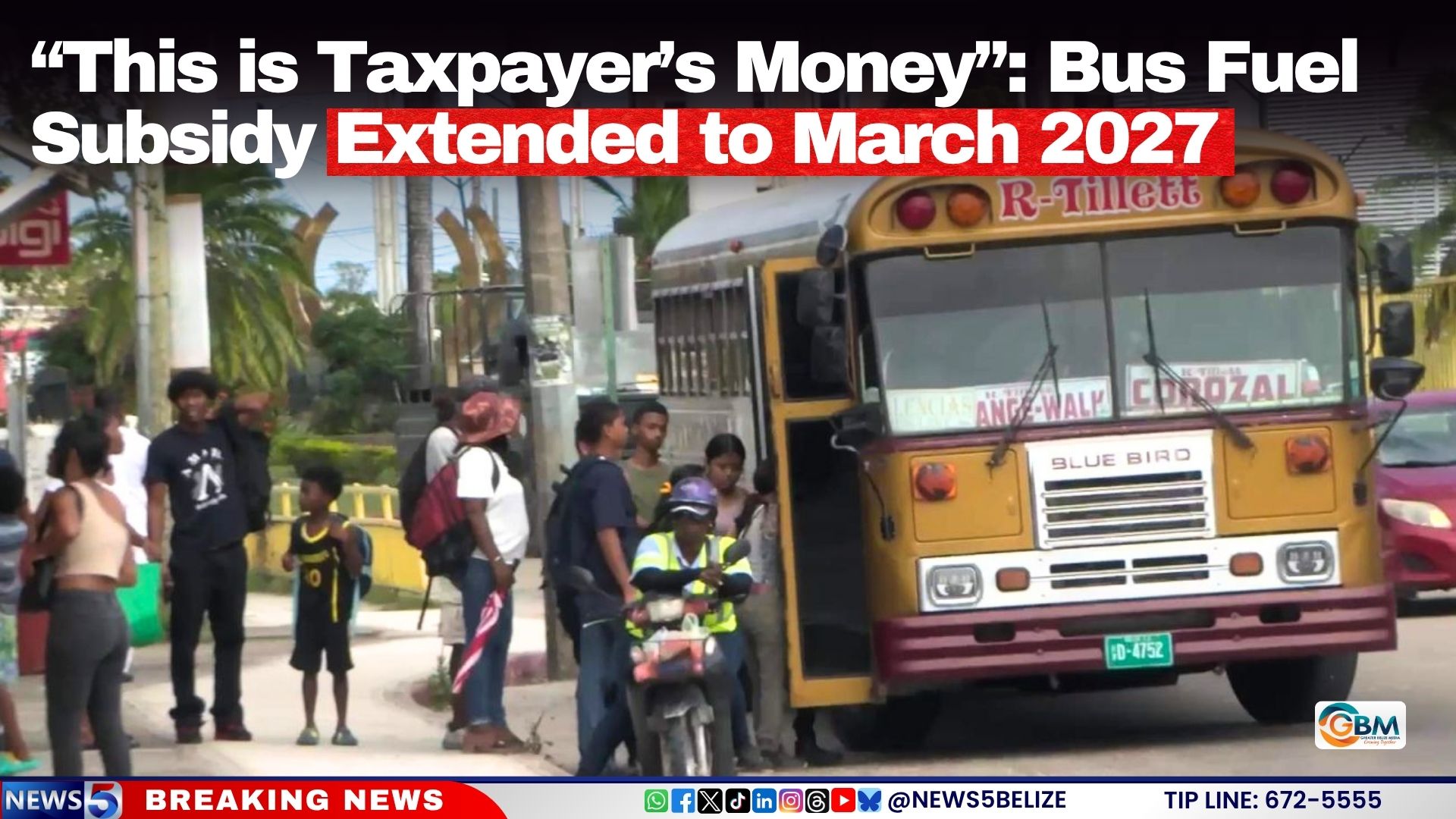
In a move that exceeds the initial ask from Belize’s bus industry, the national Cabinet has given formal approval to extend a $2-per-gallon fuel subsidy for private bus operators through March 31, 2027, government officials confirmed this week. The approval, announced Wednesday, comes amid ongoing elevated global and domestic fuel prices that have continued to squeeze operating margins for local transportation providers, even after a small recent decline in diesel costs.
Transport Minister Dr. Louis Zabaneh explained that no new renegotiation of the subsidy terms was required, as most core conditions were finalized during the rollout of the original assistance program launched months earlier. The original subsidy program offered bus operators $3 per gallon in support during its first three-month window, but the rate was adjusted down to $2 per gallon after retail diesel prices fell by roughly one dollar per gallon from their recent peak.
The extended subsidy will only remain in effect as long as retail fuel prices stay above the $12 per gallon threshold, a trigger set by policymakers to ensure support is only provided when costs remain unmanageable for operators. While diesel prices have dipped slightly from near $16 per gallon to close to $15 in recent weeks, they still remain far higher than pre-pressure levels, a reality that pushed Cabinet to approve a longer extension than the three-month period initially requested by the Belize Bus Association (BBA).
Zabaneh emphasized that the program will remain under close government oversight throughout the extended period. Ministry teams will track both retail fuel price fluctuations and operator compliance with program rules, with a formal progress report submitted to Cabinet every two months to reevaluate whether the subsidy remains a necessary public expenditure. During the first three-month phase of the program, the subsidy cost the national government roughly $1.5 million in total across all participating operators.
The minister stressed that the subsidy is funded entirely by Belizean taxpayers, and as such, public funds cannot be allocated or managed casually. He noted that these public resources could have been directed to other pressing public priorities, including expanding pharmaceutical access at public hospitals or increasing funding for student scholarship programs, making accountability and close monitoring non-negotiable. To ensure compliance, each operator’s weekly fuel consumption is tracked through a formal verification system that combines fuel purchase receipts with a centralized database managed by the Ministry of Transportation. This tracking system is designed to prevent misuse of public funds and ensure support reaches only eligible operating businesses.