Against a global backdrop of growing drought risk and rising demand for food production, the Dominican Republic and Israel have launched a new collaborative effort focused on upgrading water management and agricultural irrigation practices, centered on cutting-edge technology, efficiency gains, and long-term sustainable stewardship of critical water resources.
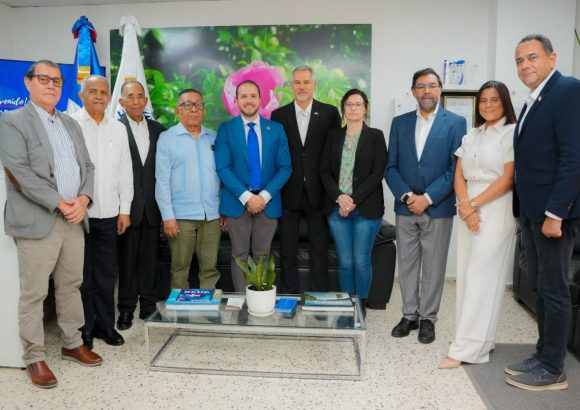
Last week, the meeting was held at the headquarters of the Dominican Republic’s National Irrigation Technology Executive Directorate (TNR), which hosted Israel’s newly inaugurated ambassador to the nation, Oren Bar-El, and his accompanying delegation. During the discussion, Dominican officials laid out the country’s ongoing work to modernize outdated irrigation networks and boost overall agricultural output across the nation.
TNR Director Claudio Caamaño Vélez led the presentation of his institution’s current transformation projects, highlighting key initiatives designed to cut unnecessary water waste and bring aging irrigation infrastructure up to modern standards. The cross-institutional gathering drew representatives from multiple Dominican agencies and industry groups, including the National Institute of Hydraulic Resources (INDRHI), the Ministry of Environment, the Ministry of Agriculture, the national Water Cabinet, the Dominican Agribusiness Board (JAD), and the National Dairy Council (Conaleche).
Emilia Kuschnir, a seasoned water resources specialist on the Israeli delegation, shared decades of Israeli expertise and innovative technologies focused on more ecologically sustainable agricultural water management during the event. In a dedicated training session for TNR technical staff, Kuschnir underlined that boosting water efficiency is the foundational step to making Dominican agriculture both more environmentally sustainable and globally competitive.
She pushed back against the common assumption that expanding water access requires only building large new infrastructure projects, explaining that significant gains can be unlocked by cutting waste in existing irrigation systems. Citing latest data, Kuschnir noted that the agricultural sector accounts for roughly 82 percent of total water consumption across the Dominican Republic. More efficient management, she explained, would not only reserve additional water supplies for other high-priority national needs but also build the country’s resilience to frequent drought periods that have disrupted agricultural production in recent years.
Kuschnir pinpointed three leading causes of preventable water waste: unaddressed leaks in irrigation canals, inefficient water application methods, and poorly scheduled irrigation planning that does not align with crop needs. She emphasized that all irrigation planning decisions must integrate on-the-ground factors including current weather conditions, local soil texture and drainage, and the specific growth stage of cultivated crops to minimize unnecessary use.
Among the modern solutions highlighted, Kuschnir pointed to the proven success of drip irrigation systems, which can achieve efficiency rates above 90 percent by delivering water directly to the root zone of plants, rather than wasting supplies through evaporation or runoff over open ground. She also clarified that full modernization does not require a complete replacement of existing irrigation infrastructure. Relatively low-cost adjustments including improved long-term planning, precision land leveling, upgraded system maintenance protocols, and targeted training for smallholder producers can deliver major efficiency gains without massive capital investment.
The bilateral meeting wrapped up with a joint commitment from both parties to continue cross-border knowledge exchange and scale up adoption of advanced technological solutions that strengthen national water conservation efforts, while supporting the growth of a more productive and environmentally sustainable agricultural sector for the Dominican Republic.