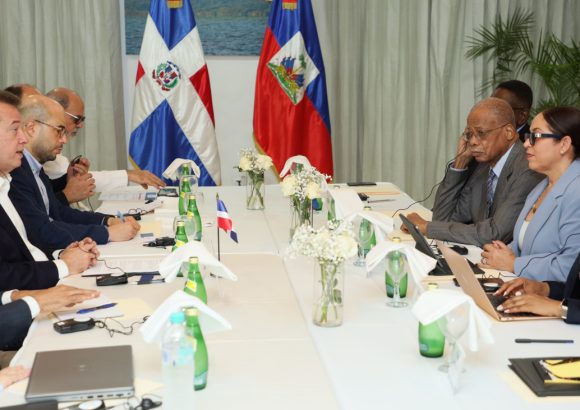
In a landmark working gathering hosted this Thursday in the border city of Dajabón, top diplomatic leaders from the Dominican Republic and Haiti convened to reset and advance cooperation on a sweeping slate of issues that shape their bilateral relationship. Leading their respective national delegations were Dominican Foreign Minister Víctor “Ito” Bisonó and his Haitian counterpart Raina Forbin, who centered the day’s discussions on priorities that touch every dimension of the neighboring countries’ shared border and ties.
Migration policy and cross-border legal coordination sat at the top of the agenda, alongside discussions of expanded bilateral trade, improved air connectivity, deepened economic partnership, and more synchronized border management. From the opening of the meeting, both sides reaffirmed their shared commitment to sustaining open, direct, and constructive dialogue that upholds the sovereign authority of each nation.
Deliberations dug into granular, pressing priorities: tightening collective border security to counter unauthorized activity, ramping up joint efforts to dismantle cross-border illicit trade networks, refining collaborative migration management frameworks, advancing the formalization of official trade and cross-border investment, and unlocking new air routes to boost people-to-people and commercial links between the two countries.
A key point of consensus emerged around the urgent need for sustained international backing for Haiti’s Gang Suppression Force (GSF), with both delegations stressing that this support must be coordinated through the United Nations Security Council. The two sides reached a formal agreement to continue coordinated diplomatic advocacy to secure the full operational deployment of the GSF and renew its international mandate, a step both describe as indispensable to enabling Haitian state authorities to reestablish nationwide security and rebuild core governing institutions.
On consular affairs, the Dominican government confirmed its long-term intention to restart full consular operations within Haitian territory, noting that the resumption will move forward as soon as local security conditions stabilize enough to allow normal, safe function of diplomatic facilities.
Following the conclusion of the official intergovernmental meeting, Bisonó and Forbin held a separate closed-door session with private sector business leaders from both nations. The gathering centered on strategies to expand cross-border productive activity, generate new shared employment opportunities, and strengthen foundational economic ties across the border. Attendees uniformly emphasized the outsized role that the private sector plays in driving closer bilateral relations and delivering inclusive, mutual economic benefits for both populations.