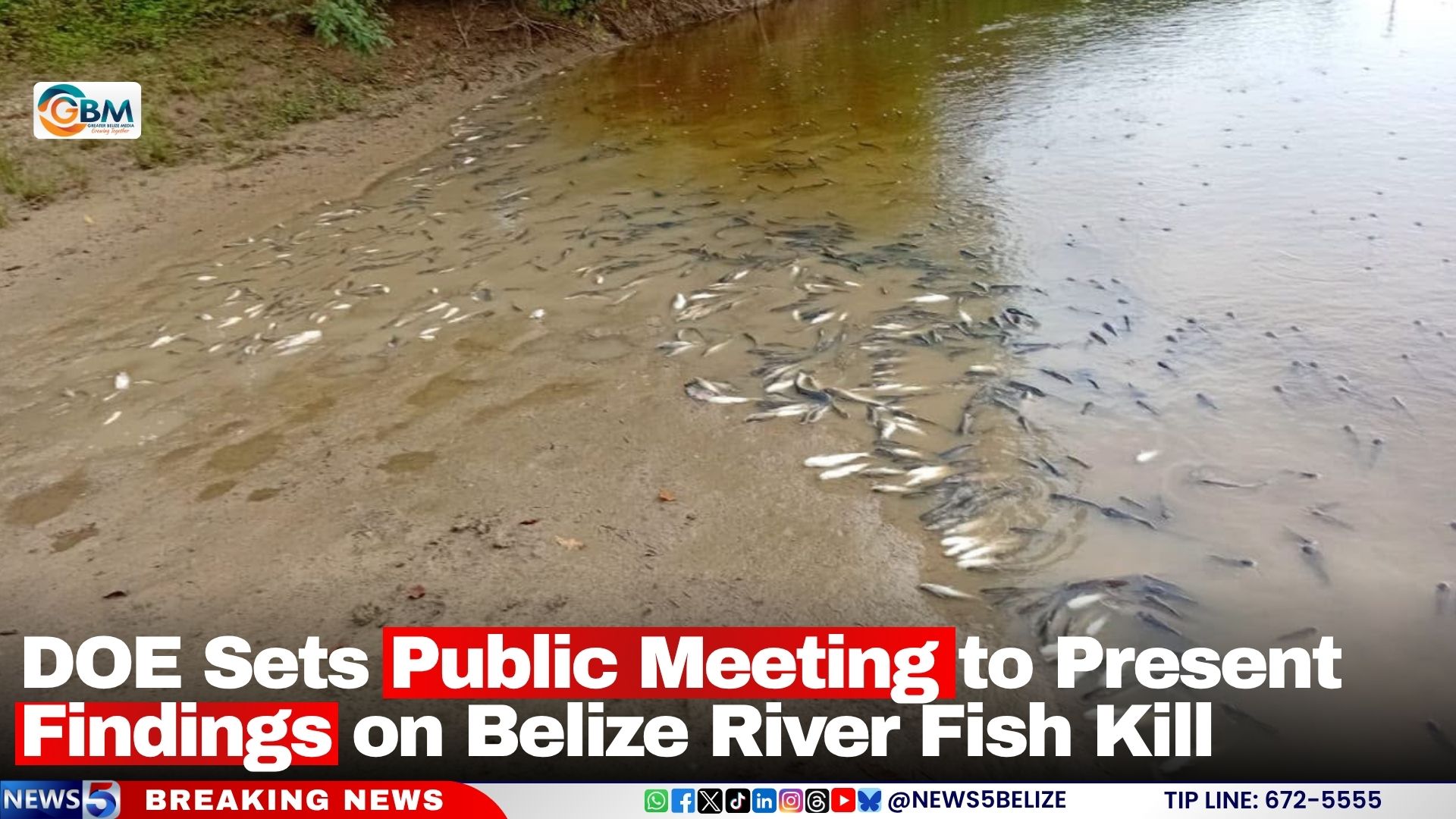
A months-long investigation into a devastating mass fish death event along the Belize River Valley is set to wrap up with a public disclosure next month, as the Belize Department of the Environment (DOE) prepares to share its full final conclusions with affected communities. The incident, which unfolded in August, killed untold numbers of aquatic species across a 17.5-mile stretch of the river, prompting widespread public concern and a formal probe by environmental regulators.
The public information session has been scheduled for Friday, September 11 at 7 p.m. at the Double Head Cabbage Village Community Center, a location easily accessible to residents living along the impacted waterway. During the meeting, DOE investigators will present detailed data drawn from analysis of soil, water, and fish tissue samples collected across the affected zone, lay out the agency’s full conclusions, and share evidence-based recommendations for remediation and future prevention.
Preliminary findings released by the DOE have already linked the fish kill to three key contributing factors: nutrient-heavy agricultural runoff, widespread seasonal flooding, and a subsequent severe algae bloom that drained dissolved oxygen from the river water, creating lethal conditions for aquatic life. To date, however, regulators have not pinpointed a single, exclusive source of the contamination or assigned formal responsibility to any individual or entity.
Public attention has largely centered on large-scale agricultural operations in the region, particularly Santander Sugar, after extensive flooding was documented across the company’s farmlands and its associated drainage canals leading to the river. Satellite imagery captured in the days immediately before the fish kill confirmed widespread inundation on Santander’s property, with large volumes of runoff water flowing directly from the farm into the Belize River. The company has repeatedly denied that its operations caused the mass mortality event, and has stated that it granted DOE investigators full, unrestricted access to all of its facilities for the probe.
Anthony Mai, Chief Environmental Officer at the DOE, clarified earlier this week that Santander Sugar is far from the only agricultural operation with drainage canals connected to the impacted section of the river. Mai also emphasized that the company has cooperated fully and transparently with the investigation team throughout the process.
For local residents and community stakeholders, the upcoming September 11 meeting represents a rare opportunity to engage directly with DOE officials, ask questions about the investigation’s findings, and gain clarity on next steps for ecological recovery of the Belize River, a critical natural and economic resource for communities across the valley. The DOE has issued a public call urging all interested residents and stakeholders to attend the session to participate in the conversation.