Against a backdrop of accelerating climate impacts that disproportionately harm small island developing states in the Caribbean, six local civil society organizations are set to advance community-centered climate justice work thanks to new small grants from a regional climate initiative.
The funding is delivered through the 2026–2027 Climate Action Facility of the Caribbean Sea Innovation Fund, a collaborative effort between the Caribbean Natural Resources Institute (CANARI) and the Caribbean Climate Justice Alliance. Backed by core support from the Open Society Foundations, the initiative allocates awards ranging from $1,500 to $8,000 to frontline groups working to lift marginalized community voices in environmental decision-making.
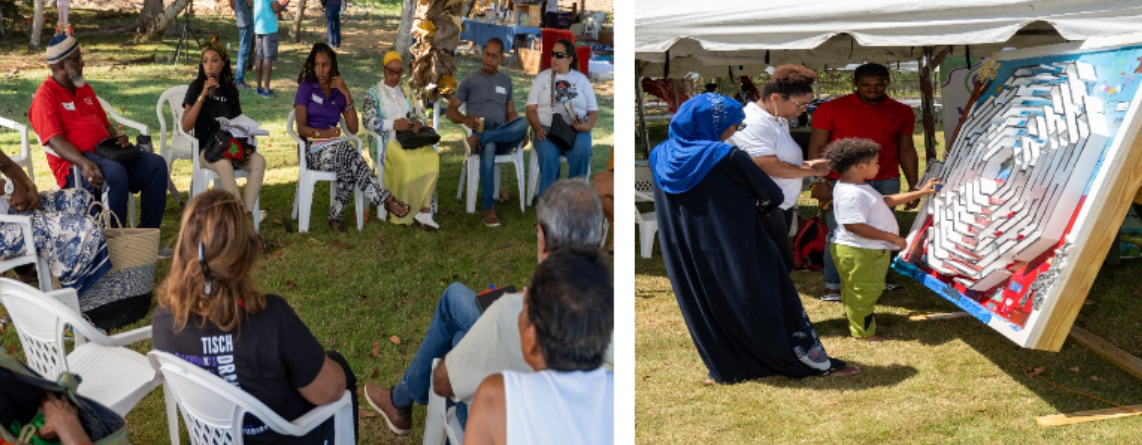
The six grant recipients span multiple Caribbean nations and represent a diverse cross-section of local climate action. They include the Alliance for Rural Communities (ARC) of Trinidad and Tobago, Equals Inc., Island City Lab, Jamaica Environment Trust (JET), The Crystal Clear Initiative for Trinidad and Tobago, and a partnership between the University of the West Indies Centre for Resource Management and Environmental Studies (UWI-CERMES) and its Voices from the Shore Theatre Collective. ARC, one of the awardees, recently hosted the Festival of Collectives in Trinidad to build cross-community collaboration on local climate and environmental justice, featuring interactive activities like a Climate Maze alongside panel discussions and skill-sharing sessions.
Each funded project targets a unique gap in regional climate justice action. Some initiatives will advance climate litigation to hold major emitters accountable, while another centers on elevating the critical, often underrecognized contributions of women working in Caribbean agriculture and fisheries. One project will document the long-lasting social and environmental damage left by Hurricanes Beryl and Melissa, and others will push for more equitable, community-informed approaches to building local climate resilience.
A key focus of several grants is improving accessibility for marginalized groups in climate response. One initiative will develop practical, user-centered tools to adapt emergency climate shelters to better serve people with disabilities and LGBTQ+ community members, groups that are often overlooked in disaster planning. Across all projects, organizers also aim to build public understanding of climate-related human rights and expand opportunities for ordinary Caribbean citizens to shape environmental policies and governance that directly impact their lives.
The funded work will feed into the broader mission of the Caribbean Climate Justice Alliance, a regional network that now unites more than 80 non-state actors, including civil society organizations, grassroots activists, academic researchers, creative practitioners, and media professionals across the Caribbean. Co-chaired and convened by CANARI, the alliance centers its work on amplifying the perspectives of frontline communities that face the worst effects of the climate crisis, while working to increase their influence over regional and national climate policy and practice. All of the alliance’s activities are aligned with the *Caribbean Climate Justice and Resilience Agenda 2023–2030*, a community-led framework that outlines clear priority actions to advance equitable climate justice and strengthen local resilience across the region.
Moving forward, CANARI will share regular progress updates on all funded projects and their regional impact via its social media channels, keeping the public and broader climate community informed of ongoing work and outcomes.