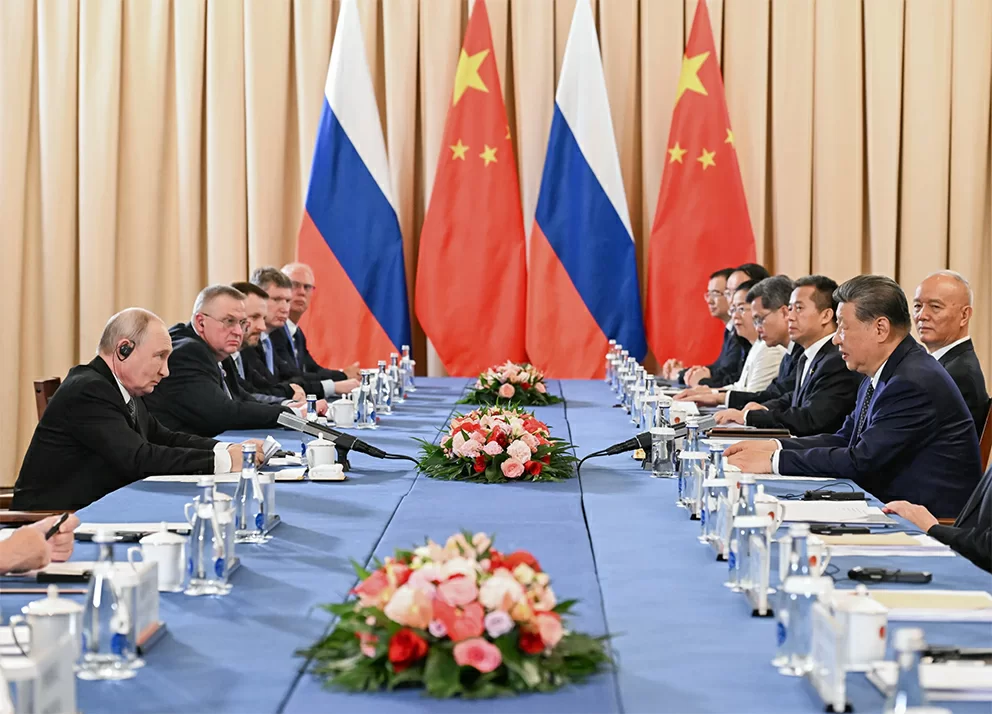
In a two-day summit hosted in Bishkek, the capital of Kyrgyzstan, leaders of the Shanghai Cooperation Organisation (SCO) have united to sign a landmark joint declaration that takes a firm stance on escalating geopolitical tensions in the Middle East and challenges to the global multilateral order. Held on September 2026, the gathering brought together heads of state and government from all SCO member states, including Chinese President Xi Jinping, Russian President Vladimir Putin, Indian Prime Minister Narendra Modi, and Pakistani Prime Minister Shehbaz Sharif, marking a key display of coordination among the bloc that represents nearly half of the global population.
Founded in 1996, the SCO has expanded to 10 full members: Russia, China, India, Pakistan, Iran, Belarus, Uzbekistan, Kazakhstan, Tajikistan, and Kyrgyzstan. Collectively, the bloc accounts for 43% of the world’s total population and 23% of global economic output, giving its joint positions significant weight in global affairs.
The centerpiece of the 2026 Bishkek Declaration is an explicit condemnation of military attacks carried out by the United States and Israel on Iranian territory. The declaration stresses that these strikes have caused mass civilian casualties and widespread economic damage, directly violating core principles of international law and the United Nations Charter, while creating severe, immediate risks to global peace, security, and regional stability. Member states also extended sincere condolences to the government and people of Iran following the passing of Supreme Leader Seyyed Ali Khamenei, and expressed sympathy to the families of all attack victims. The bloc reaffirmed its unwavering support for Iran’s sovereignty and territorial integrity, and called for all disputes to be resolved exclusively through peaceful political and diplomatic channels.
On the long-running Israeli-Palestinian conflict, the declaration underlined that ongoing Israeli attacks on Palestinian territory are eroding stability across West Asia. It emphasized that a comprehensive, just two-state solution to the Palestinian question remains the only viable path to lasting peace and stability across the entire Middle East region.
A second core focus of the declaration is opposition to unilateral coercive measures imposed by Western powers, widely understood to refer to sweeping sanctions targeting Iran and Russia. While the text does not name specific sanctioning countries, it makes clear that such measures contravene rules set by the UN and World Trade Organization, and generate broad negative spillover effects that destabilize the entire global economy.
On Iran’s nuclear program, the SCO reaffirmed its full support for Iran’s legitimate rights as a signatory to the Treaty on the Non-Proliferation of Nuclear Weapons (NPT), including the right to develop a peaceful nuclear program for civilian energy and research purposes. Despite long-standing unsubstantiated accusations from the United States claiming Iran pursues covert nuclear weapons development, Iran has consistently maintained its program is entirely for peaceful ends. The declaration stresses that any restrictions on these legally recognized rights of NPT members constitute a violation of international law.
Against a backdrop of escalating conflict disrupting key global trade chokepoints, particularly the Strait of Hormuz, which has thrown global supply chains, energy markets, and financial systems into chaos, the SCO placed heavy emphasis on deepening intra-bloc economic and energy cooperation. The declaration commits members to building an open, transparent, fair, inclusive, and non-discriminatory multilateral trading system that prioritizes special accommodations for developing economies. The bloc also formally announced it will implement the SCO Economic Development Strategy through 2030, a framework designed to deepen cross-border economic integration and strengthen institutional financial dialogue between members. For energy cooperation, leaders agreed to expand mutually beneficial, inclusive collaboration and adopt the SCO Energy Cooperation Strategy through 2030 to coordinate shared energy security and development goals.
As is common in multilateral SCO gatherings, the summit exposed long-standing tensions between two key members, India and Pakistan, on counter-terrorism issues. Indian Prime Minister Modi framed terrorism as a “grave existential challenge to humanity” and called for the complete dismantling of global terrorist ecosystems, rejecting ambiguity and double standards in counter-terrorism efforts. His remarks were widely interpreted by observers as an implicit rebuke of Pakistan, which India has long accused of supporting armed militant groups operating in Indian territory. In response, Pakistani Prime Minister Sharif countered that Pakistan is itself a major victim of cross-border terrorism, condemned all forms of terrorist activity regardless of motivation, and levelled reciprocal accusations that India supports anti-Pakistan militant groups.
Despite this bilateral friction, the Bishkek Declaration reaffirmed the SCO’s collective commitment to eradicating terrorism, separatism, and extremism in all their forms. It explicitly rejects the use of double standards in counter-terrorism policy, and calls on the broader international community to step up coordinated action to disrupt transnational terrorist movements.