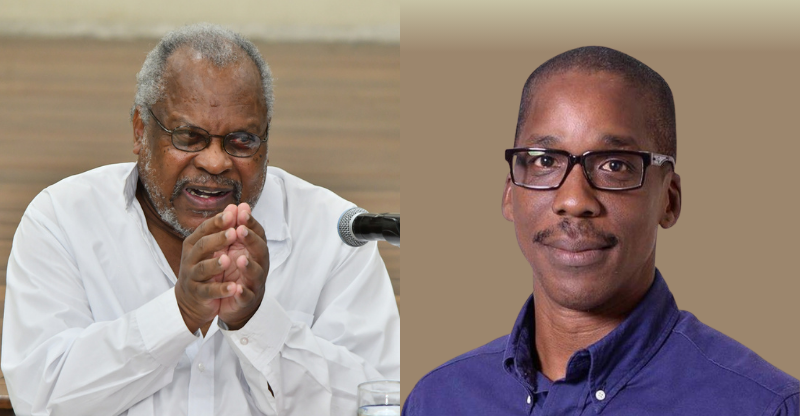
Barbados’ main opposition Democratic Labour Party (DLP) has entered a new period of uncertainty following a weekend leadership election that saw veteran former Cabinet minister Dr David Estwick claim a decisive victory, igniting fierce debate over the party’s future direction between two of the nation’s top political analysts.
Estwick’s win, which cemented the return of long-time party figures to top leadership posts, comes on the heels of three consecutive lopsided general election defeats that ended with the DLP holding no parliamentary seats — a 30-0 rout that signaled deep public dissatisfaction with the party’s existing brand. The outcome has defied widespread expectations that the DLP would use the leadership contest to break from its past, open space for younger emerging talent, and reset its strategy to regain electoral relevance.
Leading pollster Peter Wickham has emerged as one of the most vocal critics of the result, describing the decision to elevate an old guard figure while sidelining younger parliamentary-aligned leaders as a “shocking” misreading of voter sentiment that has pushed the DLP into a full-blown existential crisis. Wickham argued that the party’s executive has shown a stubborn refusal to modernize or heed the clear messages voters have sent over the last decade of electoral defeats. He pointed specifically to the exclusion of Ryan Walters — the only DLP figure with active parliamentary standing, widely viewed as the party’s de facto political leader — from the presidential contest as evidence of the party’s systemic disconnect from public opinion.
Widespread internal and external speculation had favored a full break from the DLP’s old guard in the lead-up to the vote, but the end result left political observers and social media commentators questioning whether the opposition has either the political will or the forward-thinking vision to rebuild its damaged public standing. Critics have zeroed in on the choice to sideline young, active representatives in favor of veteran leaders who oversaw the party’s three straight electoral collapses, a move that has exposed a deep organizational reluctance to welcome fresh perspectives even as public trust in traditional party structures continues to erode across Barbados.
“It sends a signal that the Democratic Labour Party does not understand what the public has been saying to it,” Wickham said in an interview. “There’s this constant effort to go back to the old state and try to resurrect them. It was a shocking outcome… I’m surprised that the Democratic Labour Party can so easily miss a message that is being sent.”
Wickham traced the party’s misstep to a toxic combination of internal talent stagnation, repeated misreads of electoral data, and what he called a selfish refusal by older DLP politicians to accept that voters have rejected their leadership. He noted that party insiders have incorrectly interpreted modest vote gains for individual DLP candidates in recent local constituency races as proof of a looming comeback, when in reality the data reflects a continued national rejection of the party’s old guard. He added that clinging to established leaders closes off the openings needed to attract new young talent, warning that without clearing space for new voices the DLP will never be able to rebuild.
“One of the best ways to attract new talent is to demonstrate that there are vacancies,” Wickham explained. “If the Democratic Labour Party demonstrated a willingness to clear the decks and to open up, I think that we may very well have a situation where more young people may come up.”
He also framed the decision by high-profile rising leaders including Senator Ryan Walters and General Secretary Corey Greenidge to skip the presidential contest as a calculated strategic move. Rather than legitimizing a flawed process stacked in favor of the old guard, Wickham argued the pair chose to step back to protect their long-term political credibility. “If you get into a race and you think the strategy is flawed, you legitimise that race by participating, and then if per chance you lose, your credibility has been even further impacted,” he said. “I think that they’ve both correctly read that this was not a serious race.”
The result has already sparked widespread frustration across Barbadian social media, with Wickham noting that virtually no public comment has emerged in support of the old guard leadership return. With the next general election on the horizon, Wickham warned that continued dominance by veteran leaders risks permanently alienating young voters — a demographic the DLP has already struggled to engage — and cementing the party’s status as an outdated legacy institution unable to adapt to 21st century political demands. “Young people are attracted most of all to success and opportunities, and the DLP doesn’t appear to be presenting either,” he said. “The conversation has moved on from there, and I think that the plot has been lost.”
But fellow leading analyst Dr George Belle offered a starkly contrasting perspective, rejecting calls for the full removal of the DLP’s experienced old guard and arguing that a healthy, dynamic political party requires a balance of continuity, new recruitment and gradual retirement. Belle argued that discarding all experienced leaders would leave the party without its historical identity and institutional memory, undermining its stability rather than strengthening it.
“I don’t agree with any statement by people that they want to get rid of the old guard,” Belle said. “A very dynamic political party has three elements in it: retention, recruitment, and retirement. Otherwise, it would be a dead party. You have to have retention because there must be continuity, a history of the party, and a culture. There must be recruitment to get fresh members who will provide vision for the future, and there will be retirement as part of the natural progression of human existence.”
Belle also pushed back on criticism over the attendance of former Prime Minister Freundel Stuart and former political leader Ralph Thorne at the party conference, arguing that their presence was nothing more than a routine appearance by long-standing party members, not a symbolic declaration of continued old guard control. “He is a member of the Democratic Labour Party, he is a former prime minister, and he attends the annual conference. That is simple and straightforward,” Belle said of Stuart’s attendance.
For Belle, the key test of Estwick’s leadership will not be his age or party tenure, but whether he can follow through on his public promise to unify the DLP’s competing factions and finally bring stability to a party that has been fractured by internal disputes for years. Estwick, who served as a minister in Freundel Stuart’s 2010-2018 administration, ran on a platform of healing internal rifts, and Belle said that unification is the non-negotiable foundation for any successful DLP recovery. “He said his intent was to unite the party, and the success of any political leadership is to be able to unite,” Belle noted. “An effective leader will be able to do that. If he does not do that, he will not be an effective leader, and he will not be able to sustain his leadership.”
Belle added that targeted youth recruitment will naturally follow once the DLP is stabilized and unified, rather than needing to be prioritized as a standalone political gesture. “If you unify the party, you will have recruitment, and it is necessary that young people will be a part of that recruitment,” he explained. “The DLP has not been stabilised up to this point. All the people that have been leaders before have not been able to stabilise it. If he can stabilise it, then the party, having been stabilised, would be able to engage the mass electorate, and that is when the test of whether the party has recovered will be made.”
The internal turmoil comes at a critical juncture for the DLP, which has struggled for years to rebuild support after its string of national election defeats and retain the interest of younger Barbadian voters. While brief periods of youth momentum emerged during past leadership transitions, recent internal disputes and reshuffles have derailed that progress, leaving the party at a crossroads ahead of the next national vote.