Ahead of Trinidad and Tobago’s 64th Independence Day celebration, a cross-section of the nation’s top religious leaders have shared unvarnished reflections on the country’s post-independence journey, balancing praise for hard-won democratic gains with pointed calls to address deep-seated social, economic and political fractures. The question of what successive governments have gotten right, where they have fallen short, and what path the nation should take next dominated the conversation, with some leaders opting to decline direct judgment on governing performance while others offered frank assessments of the country’s current state.
Nearly all leaders joined in consensus on the country’s most significant achievements over 64 years of independence: the steady preservation of democratic governance and meaningful progress expanding access to education, healthcare and national infrastructure. Many highlighted that the ability to maintain a functioning democratic system, with guaranteed freedoms of speech, movement, religion and fair elections, represents a major milestone after emerging from colonial rule. As the Inter-Religious Organisation president Dr. Ellis Burris noted, successive governments have successfully transitioned away from colonial rule and sustained a people-centered democracy that allows all citizens to openly express their views.
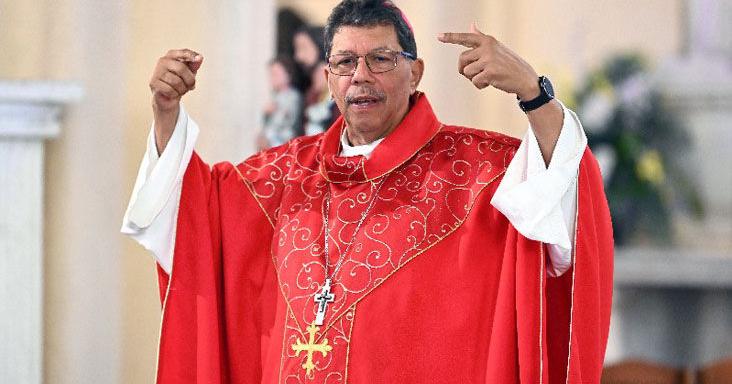
Beyond institutional gains, leaders celebrated the nation’s wealth of high-achieving citizens, who have earned global recognition in fields ranging from academia and athletics to arts and culture. Roman Catholic Archbishop Fr. Jason Gordon noted that Trinidadians’ stellar performances in track and field, football and scholarly pursuits give the nation ample reason for pride, echoing a sentiment shared across all participating religious groups.
Despite these highlights, leaders were unified in identifying pressing challenges that have gone unaddressed 64 years on, as well as core priorities for the nation moving forward. The most consistent call across all responses was a push for greater national unity, with leaders urging citizens and politicians alike to set aside divisions along racial, religious and partisan lines to prioritize the collective good of the country.
Gordon framed this as the nation’s defining unfinished task: “Two races were given their freedom, but it did not automatically build a nation. The challenge is to put Mother Trinidad ahead of our tribal and ancestral preferences. It’s about time 1.3 million people stop co-existing and start to become a people.” He added that individual gain-seeking has undermined nation-building, noting that rising wealth will only deepen divides without a shared commitment to equitable institutional development. Gordon also pointed to deep unaddressed problems: rising violent crime, persistent unemployment, growing poverty, a failing justice system, and the dire plight of unhoused residents scattered across Port of Spain after the closure of the city’s only homeless shelter. He also called for sweeping reform of an education system that has failed to serve large swathes of the population, while acknowledging positive recent steps including the Mercy Committee’s prisoner pardons and ongoing prison reform efforts.
Bishop Claude Berkley of the Anglican Diocese echoed the focus on unity as the central test for future governments, noting that uniting the nation’s multi-ethnic, multi-religious population remains the greatest governance challenge. “Historically, all the peoples have worked to build this cosmopolitan nation. We all have a stake in it. I encourage patriotism and love of country,” he said, declining to label specific government actions as successes or failures and instead urging continued collaboration through difficult times.
Bishop Dr. Victor Gill of Redemption Christian Centre added that while successive governments have maintained relative national prosperity that positions Trinidad and Tobago as the commercial heart of the Caribbean, major failures include the breakdown of the judiciary, repeated delays in bringing criminals to justice, unnecessary cultural changes including the removal of the Trinity Cross symbol and renaming of the nation’s highest honor, and crippling political polarization that has left voters consistently dividing along racial and partisan lines rather than supporting policies that benefit the entire nation.
Tobago Hindu Society president Pulwathy Beepath offered a more measured assessment, noting that while governments have made mistakes, they have kept the nation united and are taking meaningful steps to address pressing issues, including expanding education grants for low-income children ahead of the new school year and rolling out new community police posts that she hopes will curb rising crime. She called for expanded outreach to vulnerable groups including elders, single mothers and at-risk children, and voiced a core independence wish for an end to the wave of violent home invasions that have terrorized communities.
The sharpest critique of government performance came from Imam Alimool Rahim of Masjid ul-Raheem in Mayaro, who argued that low-income and marginalized communities have been largely forgotten after 64 years of independence. Rahim pointed to unfulfilled promises of basic infrastructure including pipe-borne water in long-underserved areas, deplorable road conditions that damage residents’ vehicles, inadequate equipment and medication in public hospitals that has led to preventable deaths, and unfair treatment of senior citizens whose pensions and benefits fail to meet basic needs. “Almighty God has blessed us with so many resources, yet we still have so much poverty and pain,” he said, questioning the longstanding political promise of “better days” that have yet to arrive for many citizens.
On emerging technological issues, Burris offered guidance on the growing use of artificial intelligence in public administration, urging leaders to treat AI as a supportive tool rather than a core governing pillar. “We should not lean heavily on AI. It should not be allowed to run the country. Instead, it should give support to individuals and organisations,” he said, adding that a core priority moving forward must be building economic stability that delivers shared prosperity for all citizens.
Across all reflections, leaders closed by calling for shared collective action, greater compassion for vulnerable populations, and renewed commitment to putting national interest above individual or partisan gain, extending blessings to the twin-island nation ahead of its 64th independence celebration.