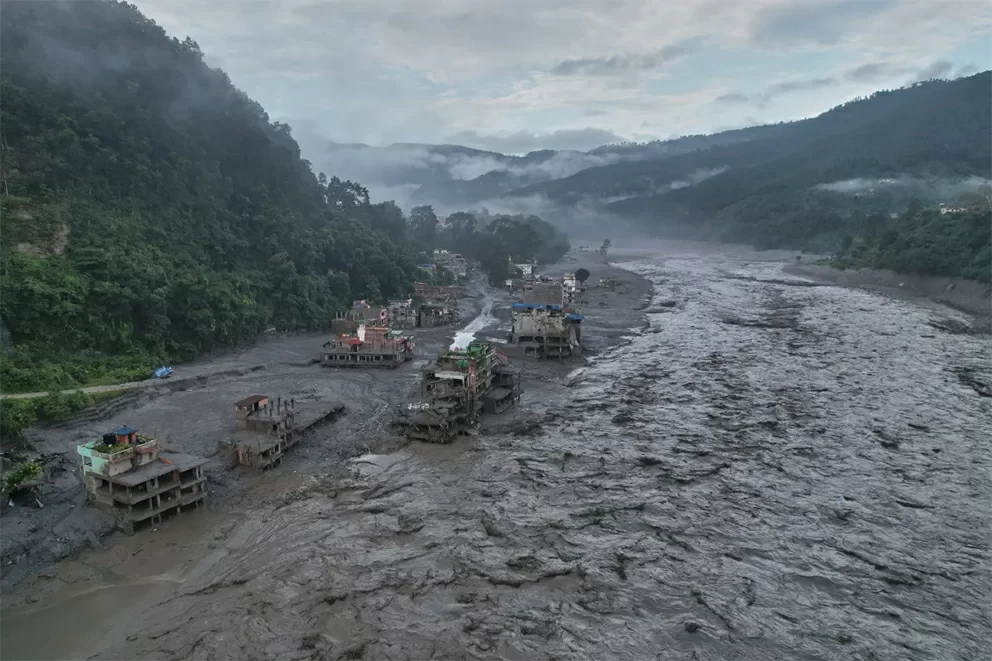
The devastating aftermath of a recent natural disaster in Nepal has left hundreds dead, countless more missing, and thousands of survivors stripped of every possession they owned. This catastrophe is not merely a tragedy of unprecedented scale for the small Himalayan nation; it is also a searing illustration of how climate change is unraveling lives in the world’s most climate-vulnerable regions. What makes this disaster even more agonizing is the stark climate injustice at its core: Nepal contributes barely a fraction of global greenhouse gas emissions, yet it is now forced to endure the catastrophic, immediate consequences of global warming first-hand. Across the Himalayas, Nepal’s iconic glaciers – the life-giving water sources that sustain entire communities across the region – are melting at an alarming rate. Rising global temperatures are shrinking these critical natural reserves, triggering cascading disasters that upend daily life for local populations. Catastrophic flash floods, destructive landslides, and widespread loss of access to safe drinking water are just a few of the cascading impacts the climate crisis has already unleashed on Nepal. This latest disaster lays bare the fundamental unfairness of climate change: nations that have contributed the least to planetary warming are too often the ones that suffer the worst consequences. Half a world away, Indonesia is grappling with its own climate-fueled emergency: raging, out-of-control wildfires that have destroyed millions of hectares of critical natural ecosystems, disrupted the lives of thousands of local residents, and released massive volumes of carbon dioxide into the atmosphere, further accelerating the climate crisis. Like Nepal, Indonesia is a nation with a relatively low per-capita greenhouse gas footprint, yet it is already bearing the brunt of accelerating climate change and its cascading impacts. The wildfires not longer worsen the global climate emergency, they also threaten the immediate health and safety of local communities, and push countless endangered native species to the brink of extinction. The climate catastrophes unfolding in Nepal and Indonesia are far from isolated incidents. They are two of thousands of similar stories playing out in vulnerable nations across every continent, as the impacts of a warming planet grow more severe by the year. Behind every official casualty count and damage statistic are millions of individual lives, fractured families, and displaced communities grappling with devastating loss, constant insecurity, and an uncertain future. No matter if the disaster strikes Nepal, Indonesia, or any other vulnerable corner of the globe, these events make clear that climate change does not impact abstract global temperature statistics alone – it alters and destroys human lives in deeply personal, irreversible ways. These repeated catastrophes are not random accidents. They are proof of a long-simmering global crisis, where low-income, low-emission nations are forced to pay the price for the overconsumption and excessive emissions of wealthy, high-emitting countries. Survivors of these climate disasters have lost not only their homes and livelihoods – they have lost their sense of security and their vision for a stable future. Their stories are not just accounts of suffering; they are an urgent call to action for global solidarity and climate justice. It is past time for the international community to recognize that climate change is not an abstract, distant problem for future generations to solve. It is a life-threatening reality that already endangers the lives of millions of people across the globe. The tragedies in Nepal and Indonesia serve as a clear warning: the global community bears a collective responsibility to act now to prevent further catastrophic harm, and to build a fairer future where no nation is forced to suffer unnecessarily for climate damage caused by others. As this moment makes clear: to ignore the melting glaciers of the Himalayas and the smoke-choked forests of Southeast Asia is to ignore the millions of people already paying the price for inaction.